
Rascal Does Not Dream of Santa Claus
Sequel to the film Seishun Buta Yarou wa Randoseru Girl no Yume wo Minai.
After encountering various girls going through Puberty Syndrome, Sakuta Azusagawa's high school days have come to a close, and he is now a university student. He enrolls at a university in Kanazawa-hakkei alongside his girlfriend Mai Sakurajima, a nationally famed actress. Off campus, he stumbles upon an out-of-season miniskirt Santa. Precognitive dreams, an anonymous online singer, poltergeists buzzing on social media... A mysterious tale with enigmatic phenomenons surrounding girls with wavering hearts starts again. Puberty continues...
(Source: Crunchyroll)
📺Anime Details
📝Editorial Analysis
The fluorescent hum of a Kanazawa-hakkei convenience store at 2 a.m., frost blooming on the glass door, Sakuta Azusagawa standing motionless as a girl in a too-short Santa miniskirt—knees raw, hair damp with winter air—steps inside like she’s walking out of a memory that hasn’t happened yet. Her eyes don’t focus on him. They look through, past, sideways—like she’s already half-unraveled. That’s the first breath of Rascal Does Not Dream of Santa Claus: not wonder, not dread, but recognition—a quiet, gut-level certainty that something essential has slipped its moorings.

This isn’t urban fantasy dressed up as realism. It’s realism infused with the weight of time misaligned—where college lectures blur with childhood echoes, where an idol’s practiced smile hides fractures no camera catches, where every “normal” interaction feels like stepping onto ice you know is thin, even if you can’t see the cracks. It makes you feel vertiginous, yes—but more precisely, tenderly disoriented. Like your own memories might be editing themselves while you sleep. It doesn’t ask “What’s supernatural?” It asks, “What if the person you love most is slowly forgetting how to be real—and you’re the only one who notices the glitch?” That ache isn’t melodrama. It’s the hush before a name is mispronounced, the pause before a laugh lands just a beat too late—fragile, intimate, aching.
BioShock Infinite shares that same vertigo—not from floating cities or sky-hooks, but from how Booker DeWitt’s debt isn’t just monetary; it’s chronological. His slate can’t be wiped because time isn’t linear for him—it’s a wound he keeps reopening. The player review nails it: “I know that some people are still bitter about the Bioshock Infinite we could have gotten.” That line is the anime’s emotional grammar: the sorrow of a reality that refuses to settle into the story you hoped it would tell. Like Sakuta watching Mai rehearse a role that mirrors her own erasure, Booker walks through Columbia knowing Elizabeth is both savior and symptom—a living paradox he helped create. Both works treat memory not as archive, but as architecture: tear one wall down, and the whole floor tilts.
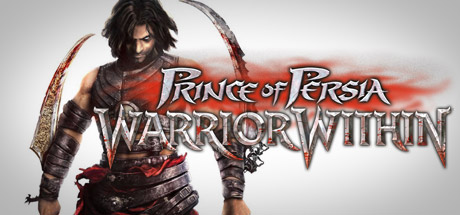
Then there’s Prince of Persia: Warrior Within, where Dahaka isn’t chasing the Prince—he’s catching up to him across fractured hours. The description says he’s “hunted by Dahaka, an immortal incarnation of Fate”—but the player review gives the truth: “Dahaka chase is still as goated as it was before.” That word—goated—is key. It’s not fear of death. It’s the relentlessness of consequence, the way trauma loops not as metaphor but as physics: jump, rewind, fail, repeat—until your body remembers the fall before your mind recalls the ledge. Sakuta’s precognitive dreams aren’t prophecies. They’re rehearsals—his nervous system practicing grief before the loss arrives. Both works make time feel sticky, resistant, thick with the residue of choices you haven’t made yet.
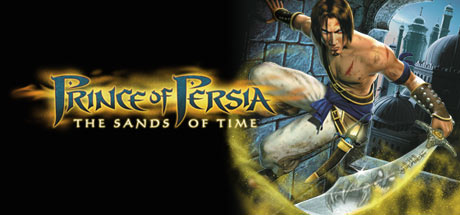
And Prince of Persia: The Sands of Time, where the Dagger doesn’t grant power—it exposes causality. The description calls it “a time borne by blood and ruled by deceit,” but the player review reveals the texture: “tactical platforming… satisfying due to the locked directions.” That constraint—locked directions—mirrors Sakuta’s world: no grand battles, no magic wands—just narrow corridors of cause and effect, where one misstep (a missed call, a withheld confession, a poorly timed joke) sends ripples that reconfigure someone else’s sense of self. The Dagger rewinds seconds; Puberty Syndrome rewinds identity. Both demand precision not of reflex, but of attention—to the tremor in a hand, the hesitation before a name, the exact shade of light that makes a face look suddenly unfamiliar.
This pairing isn’t for fans of “deep lore” or “epic stakes.” It’s for the person who replays a 15-second cutscene three times because the way Mai blinks just there—halfway through a line about “normalcy”—makes their throat close. It’s for the player who pauses Warrior Within not to strategize, but to watch Dahaka’s shadow stretch across cracked marble, wondering if their own regrets cast shapes that long. It’s for those who feel time not as a river, but as glass: clear, cold, and always threatening to shatter under the weight of one honest word.
🎮5 Games That Match the Vibe
Match Dimensions Explained
❓Frequently Asked Questions
Why does Prince of Persia: The Sands of Time feel so similar to Rascal Does Not Dream of Santa Claus?
Both hinge on time manipulation as emotional scaffolding—not just a mechanic, but a way to revisit, regret, and rewrite pivotal moments. Like Takumi’s rewind-and-replay loops during Yuki’s breakdowns, the Prince constantly rewinds time with his Dagger to undo mistakes in combat or platforming, especially in those tense palace corridors where one misstep means losing Kaileena’s trust—or her life. That ‘what if I’d chosen differently?’ ache? It’s baked into both, right down to how quiet, heavy silences linger after a rewind.
Is there a Rascal Does Not Dream of Santa Claus game adaptation?
No—there’s no official video game adaptation of *Rascal Does Not Dream of Santa Claus*. But if you’re craving that same blend of psychological weight, memory fragmentation, and emotionally charged time-bending, *BioShock Infinite* hits shockingly close: Booker’s fractured recollections of Elizabeth, the collapsing labyrinths of Columbia, and that gut-punch reveal about ‘constants and variables’ mirror Takumi’s struggle with identity, guilt, and looping trauma—just with more skyhooks and less school uniforms.
How is Prince of Persia: Warrior Within different from The Sands of Time in tone and themes?
While *Sands of Time* leans into melancholy wonder and second chances (think Prince replaying moments to save Kaileena), *Warrior Within* dials it dark: Dahaka’s relentless chase across crumbling ruins mirrors Takumi’s panic attacks—inescapable, personal, and tied to past sins. The grittier combat, morally ambiguous choices, and that haunting final scene where the Prince *embraces* his darker self? It’s like watching Takumi confront the version of himself he’s been running from all season—raw, adult, and unflinchingly Seinen.
What’s the best game like Rascal Does Not Dream of Santa Claus for when I want something introspective and heavy, not action-packed?
Go straight to *BioShock Infinite*—especially its quieter, dialogue-heavy moments aboard the airship or in Elizabeth’s private rooms. You won’t be dodging sword combos; you’ll be parsing loaded silences, questioning your own memories alongside Booker, and feeling that same slow-burn dread as reality frays. The player review nails it: it’s about what *could have been*, not just what is—and that existential weight, layered with time-as-metaphor, lands exactly where *Santa Claus* leaves you after Yuki’s confession scene.