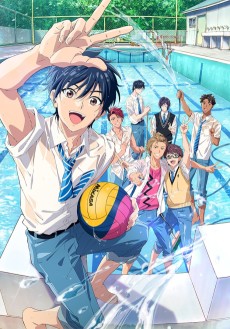
RE-MAIN
Just after winning a national water polo title in his third year of junior high, a car accident left Minato Kiyomizu in a coma. Nearly a year passes before he awakes, but with no memory of his last school year. Now in high school with a fresh start, he leaves the sport behind, but a promise has him returning to it. However, his new team is weak, and that’s just a sign for more problems to come.
(Source: Funimation)
📺Anime Details
📝Editorial Analysis
The chlorine sting hits first—not sharp, not clean, but heavy, like breathing in wet concrete. Minato Kiyomizu stands at the edge of the pool, bare feet gripping cold tile, staring down at water that doesn’t ripple. His fingers twitch—not from memory, but from muscle, a ghost of propulsion he can’t name. The whistle blows somewhere offscreen. No one cheers. No coach shouts his name. Just the hollow slap of a ball hitting water, distant and wrong. That silence—thick, unearned, aching—is where RE-MAIN lives.

This isn’t nostalgia. It’s disorientation with weight. The show’s atmosphere isn’t built on triumph or rivalry—it’s built on absence: the absence of memory, of continuity, of shared history between teammates who remember what Minato doesn’t. You don’t feel like you’re watching a sports anime—you feel like you’re holding your breath underwater, waiting for the moment your lungs betray you. It makes you think about how identity isn’t stored in trophies or titles, but in the quiet accumulation of unremarkable moments—shared locker-room jokes, the rhythm of synchronized breathing before a sprint, the way someone always forgets their towel. When those vanish, what’s left isn’t just amnesia—it’s grief for a self you never got to say goodbye to.
That emotional DNA—the slow burn of unresolved loss, the quiet dread beneath routine, the way trauma reshapes not just memory but relational physics—resonates sharply with Disco Elysium - The Final Cut. Its description calls it “a groundbreaking role playing game” where you play “a detective with a unique skill system… and a whole city to carve your path across.” But read between the lines: this is a man whose mind is fractured, whose past is a crime scene he keeps returning to, unable to close the case on himself. The player review quotes capital subsuming critique—a chilling echo of Minato’s struggle: no grand villain, no external antagonist, just systems (school, team, expectation) that absorb his confusion and repackage it as failure. Both works force you into the exhausting labor of reconstructing coherence from fragments—where every conversation feels like evidence you’re not sure how to file.
Then there’s Champions Online, described as a “comic book-style action MMORPG” where you “design your hero and costume from thousands of costume pieces” and “face super-villains.” On surface, it’s pure power fantasy—but its listed dimension is Emotional Narrative, and its player review praises “character customization” as “the best case.” That’s the link: Minato isn’t rebuilding a team—he’s rebuilding a version of himself he can wear in public. Every awkward pass, every misjudged throw, every time he hesitates before diving—it’s costume fitting in real time. He’s not choosing capes; he’s choosing gestures, postures, tones of voice that might fit the person others expect him to be. The game’s emotional core isn’t saving the city—it’s the vulnerability of assembling identity piece by piece, knowing the world will judge the whole outfit, even if you’re still stitching the seams.
And Strong Bad's Cool Game for Attractive People: Season 1, described as “wacky comedic adventures over 5 full episodes,” carries an unexpected resonance. Its player review longs for a remake “next” after Poker Night—a quiet, specific yearning for return, for continuity interrupted. That’s Minato’s entire heartbeat: the promise he made before the accident isn’t a plot device—it’s a lifeline thrown across a chasm of lost time. The game’s structure—episodic, self-contained, yet threaded with recurring emotional motifs—mirrors how RE-MAIN unfolds: not in climactic matches, but in small, accumulating ruptures—the way a teammate’s smile doesn’t quite land, the way a coach’s praise feels like speaking to a different boy.
This pairing isn’t for fans of underdog wins or training montages. It’s for the person who replays Disco Elysium’s dialogue trees not to optimize stats, but to hear the same line three different ways—hoping one version finally makes sense. It’s for the player who spends two hours in Champions Online tweaking a cape’s drape because how it falls matters more than the damage output. It’s for the viewer who watches Minato stare at his reflection in the pool’s surface—not waiting for recognition, but wondering if the face looking back is allowed to be tired. These are stories for people who understand that sometimes, the bravest thing isn’t diving in—it’s standing at the edge, remembering how to breathe.
🎮21 Games That Match the Vibe

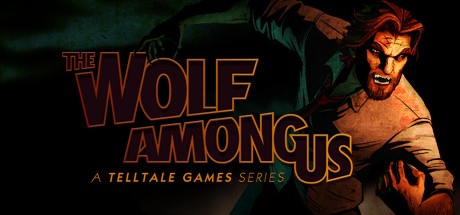
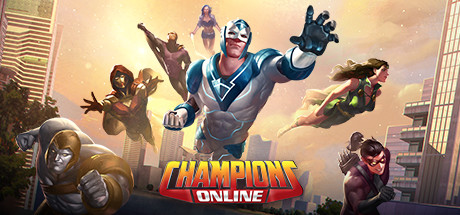
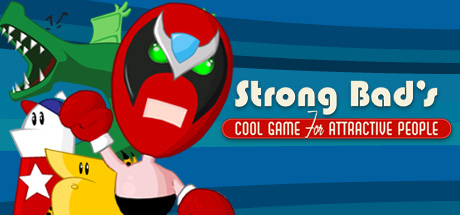
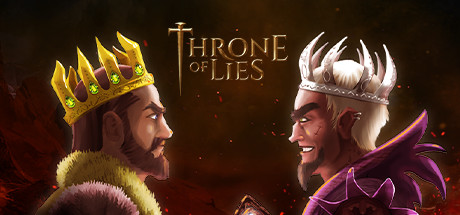



Match Dimensions Explained
❓Frequently Asked Questions
Why does RE-MAIN feel so much like Disco Elysium even though one’s about swimming and the other’s about detective work?
It’s all in the emotional weight and how both lean hard into internal struggle—RE-MAIN’s Ren’s quiet self-doubt and identity crisis mirror Disco Elysium’s Harry DuBois wrestling with addiction, memory loss, and fractured morality. Both use layered dialogue trees (like Disco’s skill checks or RE-MAIN’s team talks) to reveal character depth, and scenes like Ren staring at the pool at dusk or DuBois pacing the rain-soaked streets of Martinaise hit the same melancholic, introspective vibe.
Is there an anime adaptation of Crash Time 2?
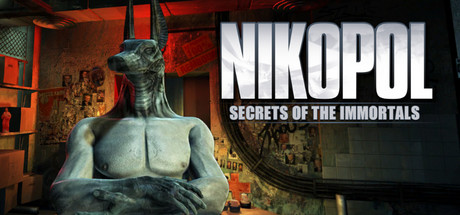
Nope—Crash Time 2 is purely a video game (and a notoriously janky one at that), with zero anime ties. The player review nails it: 'awful controls, almost no structure, janky physics'—definitely not the kind of polished, character-driven world that gets adapted into anime. If you're craving RE-MAIN’s sports-team warmth + mystery, skip Crash Time 2 and go straight to Nikopol: Secrets of the Immortals for its dystopian intrigue and emotional narrative.
How does Champions Online compare to Strong Bad's Cool Game for Attractive People in terms of storytelling and tone?
Champions Online leans into heroic wish-fulfillment—designing your own cape-wearing hero to battle Dr. Destroyer in comic-book spectacle—while Strong Bad’s game is pure absurdist comedy, with five tightly written, fourth-wall-breaking episodes full of mailroom mysteries and fake wrestling promos. Both share Competitive Spirit and Emotional Narrative, but Champions delivers earnest stakes; Strong Bad delivers sarcasm-soaked heart—think Ren’s quiet determination vs. Strong Bad yelling at a toaster while solving a case.
What’s the best game like RE-MAIN if I want something moody, atmospheric, and steeped in quiet personal discovery?
Nikopol: Secrets of the Immortals is your match—it’s got that same slow-burn, emotionally resonant pacing as RE-MAIN, just swapped out swim lanes for rain-slicked Parisian alleys under a hovering pyramid ship. The first-person point-and-click exploration, cyberpunk dread, and themes of identity in a broken world (like Ren’s return to competitive swimming after injury) land with similar weight. Plus, players praise its 'interesting story' and 'nice vibe'—exactly the grounded-yet-poetic mood you’re after.