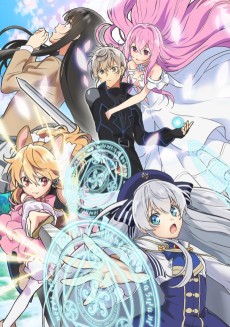
Seirei Gensouki: Spirit Chronicles
His past life and current life are intersecting--a boy with memories of two lives faces his destiny! After his mother was killed at an early age, the orphaned Rio fought his hardest to survive in the slums. One day, he awakens to the memories of Haruto Amakawa, who died in an accident while dreaming of being reunited with his childhood friend, and Rio realizing he has reincarnated in a world of swords and sorcery. Not only that, but after helping stop an attempt to kidnap a princess that he stumbled upon, he finds himself enrolled in a famous school where the children of the nobility gather… As Rio attempts to rise up from the bottom of a hierarchical society, he will have new encounters and say many goodbyes, as he fights to overcome fate.
(Source: Crunchyroll)
📺Anime Details
📝Editorial Analysis
The scent of rain on hot stone. Rio’s bare feet slapping wet cobble as he sprints through the slums—not away from danger, but toward it—his breath ragged, his small body trembling not with fear but with the raw, aching weight of two lifetimes pressing down at once: Haruto’s quiet grief for a childhood friend lost to time, and Rio’s feral will to survive after his mother’s blood dried in the dust. That moment—before the princess is saved, before the magic awakens, before the harem forms—is where Seirei Gensouki: Spirit Chronicles lives: in the gasp between memory and action, in the split second where grief becomes grit.
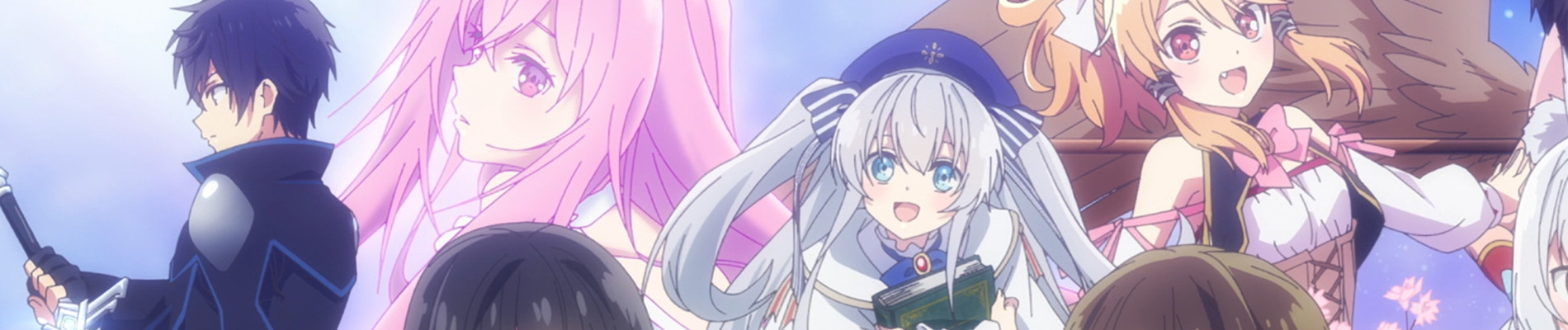
This isn’t just another isekai draped in fantasy finery. It’s the thickness of time—the way Haruto’s longing bleeds into Rio’s instincts, how a glance at a silver locket makes his throat close even before he remembers why. The medieval world doesn’t feel like a backdrop; it feels lived-in, heavy with consequence—every swordplay sequence carries the exhaustion of real muscle, every magical surge hums with the cost of emotional recall. You don’t watch it to escape. You watch it to remember—how love persists across lifetimes, how trauma reshapes reflexes, how identity isn’t chosen but reclaimed, one fractured memory at a time. It’s tender, yes—but never soft. It’s resonant, not escapist.
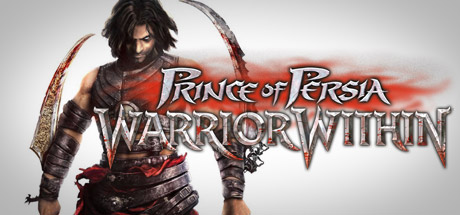
That resonance echoes sharply in Prince of Persia: Warrior Within™, where the Dahaka hunts the Prince not as a monster, but as an embodiment of time’s judgment—a relentless force dragging him back to choices he can’t outrun. Just like Rio, the Prince is haunted by what he was before: a boy who broke time, now forged into something harder, sharper, burdened by memory as both weapon and wound. A player writes, “Dahaka chase is still as goated as it was before”—and that’s the key: the terror isn’t just physical pursuit. It’s the visceral recognition of your own past gaining speed behind you. Rio doesn’t flee Dahaka—but when he shields the princess with his body, his hands shake the same way the Prince’s do when the sands reverse mid-fall: not from weakness, but from the sheer weight of carrying yesterday into today.
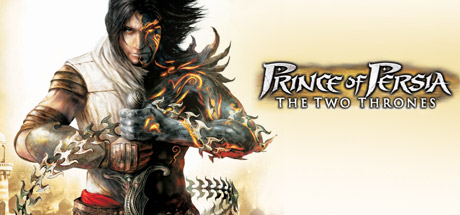
Then there’s Prince of Persia: The Two Thrones™, where the Prince returns home expecting peace only to find Babylon ravaged, his love Kaileena entangled in a war he didn’t start but must finish. His duality—light and darkness, prince and wraith—isn’t metaphorical. It’s physiological, visible, inescapable. Like Rio’s dual soul, it’s not a power-up—it’s a condition. A reviewer calls it “one of my best childhood games… still plays great”, and that nostalgia hits differently here: it’s not about simpler times, but about how deeply the game embeds emotional continuity. Rio doesn’t “level up” out of grief—he learns to wield it. So does the Prince, splitting his focus between saving a kingdom and saving himself from his own shadow.
Even Sacred Gold, with its janky combat and bug-riddled modern ports, shares that gritty persistence. Its description names a “shadow of evil” falling on Ancaria—not a sudden invasion, but a slow, suffocating descent. Rio’s world doesn’t explode into magic; it erodes into it—first whispers in the wind, then spirit contracts signed in blood, then kemonomimi allies whose loyalty is earned in mud and mutual loss. A player admits it’s “full of jank”, yet keeps playing—not despite the flaws, but with them, like Rio learning to fight with a rusted knife before he ever touches a spirit blade. The imperfection is the texture of survival.
Who would love this pairing? Not the casual fan chasing spectacle alone. It’s the person who replays a game after a decade because they need to feel that Dahaka chase again—not for the jump scares, but for the relief of being pursued by something that knows you. It’s the reader who pauses mid-episode when Rio touches a sun-warmed wall and suddenly smells his mother’s hair oil—not because it’s stated, but because the silence around the gesture holds it. It’s someone who understands that time skip isn’t a plot device—it’s a scar. And that the most devastating romance isn’t the one with the princess or the fox-eared healer, but the quiet, daily act of choosing to live with memory instead of burying it. That’s where these stories meet—not in worlds, but in wounds healed slowly, deliberately, sword in hand and heart wide open.
🎮6 Games That Match the Vibe
Match Dimensions Explained
❓Frequently Asked Questions
Why is Prince of Persia: Warrior Within recommended for Seirei Gensouki fans?
Because both lean hard into dark fantasy with morally gray protagonists hunted by unstoppable forces—like Ciel being pursued by the Dahaka, which mirrors Rio’s constant evasion of assassins and spirit-bound curses. The time-manipulation mechanics (rewind, slow-mo combat) and brooding, rain-slicked underworld aesthetics—especially in the Island of Time and Black Sands sequences—hit that same intense, high-stakes spiritual survival vibe.
Is there a Seirei Gensouki game adaptation?
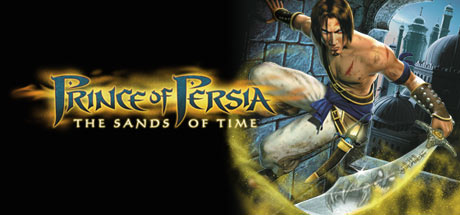
No—not yet. But if you're craving that same blend of reincarnation, spirit contracts, and tactical swordplay, Prince of Persia: The Sands of Time nails the 'reluctant hero mastering ancient powers' arc—think Rio’s dagger-fueled time-rewinds mirroring the Prince’s Dagger of Time, plus those tense, puzzle-platforming moments where one misstep means restarting a whole corridor.
How does Sacred Gold compare to Prince of Persia: The Two Thrones for Seirei Gensouki fans?
Sacred Gold leans into party-based dark fantasy chaos—fighting orcs and undead across sprawling maps—but it’s janky and unstable on modern systems, unlike Two Thrones’ polished action-spectacle flow. If you love Rio’s dual-wielding + spirit-summoning combos, Two Thrones’ seamless acrobatic combat and Kaileena’s spectral influence (like a living spirit contract) deliver far more consistent, cinematic payoff.
What’s the best game like Seirei Gensouki for that brooding, rain-soaked revenge mood?
Prince of Persia: Warrior Within—hands down. That oppressive atmosphere, the Dahaka’s relentless chases through crumbling temples and flooded catacombs, and the Prince’s grim transformation mirror Rio’s early isolation and vengeance arcs. Even the player review says it still feels 'goated' decades later—proof that its moody, weighty tone holds up better than Sacred Gold’s buggy world or Two Thrones’ brighter palette.