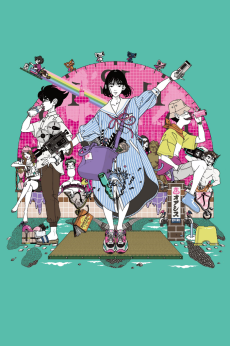
The Tatami Time Machine Blues
Spin-off of Yojouhan Shinwa Taikei.
It is August 12th. After the remote control to his boarding house's only air conditioning unit is inadvertently destroyed by spilled cola, "I" devises a plan to return to yesterday in a time machine to recover the remote before it breaks. However, his friend Ozu cannot resist playing with past events, even when it means bringing the universe to the brink of destruction. Now "I" finds himself racing through time to avoid disaster.
(Source: Disney+)
Note: Released in Japan as a standalone film on September 30, 2022 with the same content as episodes 1-5. The anime has an earlier episodic release on Disney+ starting September 14, 2022 and with an exclusive episode 6.
📺Anime Details
📝Editorial Analysis
The sticky weight of August 12th presses down—not from heat alone, but from the dread of a broken remote, cola-slicked plastic under fingernails, and the quiet panic of knowing the AC won’t turn on again unless you undo yesterday. That’s where The Tatami Time Machine Blues begins: not with a flash or a paradox, but with a mundane catastrophe so suffocating it feels like time itself has congealed—thick, humid, inescapable. You’re not watching a time-travel epic; you’re sweating alongside “I” as he stares at the ceiling fan’s lazy spin, calculating how many hours until the boarding house becomes an oven—and how many seconds until Ozu, grinning, flips the switch on causality just to see what pops.
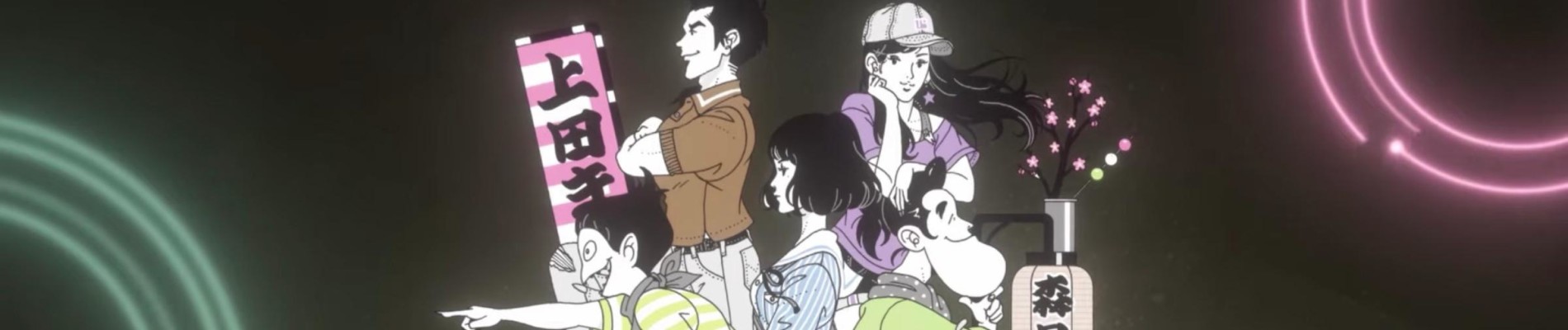
What makes this anime vibrate with such particular resonance isn’t its sci-fi premise—it’s the texture of adult stasis. It’s college life stripped of romanticized urgency: no grand ambitions, no looming exams, just the low hum of trains passing outside, the echo of footsteps in empty hallways, the way friendship curdles into complicity when boredom meets intellect. There’s no heroic resolve here—only exhaustion, irony, and the quiet horror of realizing your best friend treats time like a toy because nothing else feels real enough to hold. It makes you feel tired, yes—but also seen: that flicker of recognition when someone else understands how deeply absurd it is to try fixing a broken remote while the universe frays at the edges. It doesn’t ask you to believe in time travel—it asks you to believe in the weight of a single, unremarkable day stretching thin across infinite repetitions.
That same emotional gravity pulls hard toward BioShock Infinite, not because of its spectacle, but because of its description’s buried truth: “Indebted to the wrong people, with his life on the line…” Booker isn’t chasing salvation—he’s running from consequence, just like “I” races backward to retrieve a remote before it shatters. The player review admits something raw: “I know that some people are still bitter about the Bioshock Infinite we could have gotten.” That ache—the gap between what was promised and what actually lands—mirrors the anime’s core tension: Ozu’s playful manipulations aren’t grand villainy, but the unbearable lightness of choosing chaos when meaning feels out of reach. Both works sit in the hollow space between intention and outcome, where every rewind reveals not clarity, but deeper ambiguity.
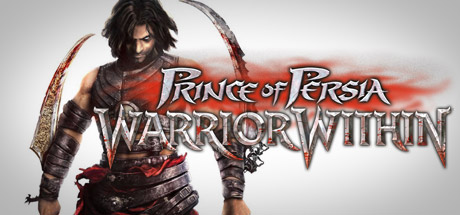
Then there’s Prince of Persia: Warrior Within, whose description names the Dahaka—an “immortal incarnation of Fate” hunting the Prince across fractured time. Not a villain, but consequence made flesh, relentless and inevitable. The player review calls the Dahaka chase “still as goated as it was before”—a testament to how viscerally inescapable it feels. That’s the pulse of The Tatami Time Machine Blues: not danger from without, but the slow, grinding dread of causality catching up—Ozu’s meddling isn’t abstract; it’s the sound of floorboards creaking at 3 a.m., the train whistle sharpening into a warning, the moment “I” realizes he’s not fixing time—he’s delaying collapse. Like the Prince sprinting through crumbling architecture, “I” runs not toward resolution, but away from the point where cause stops making sense.
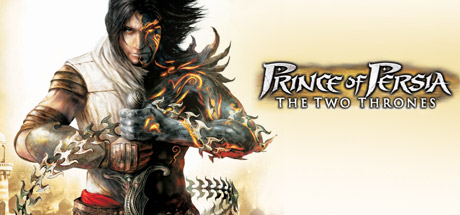
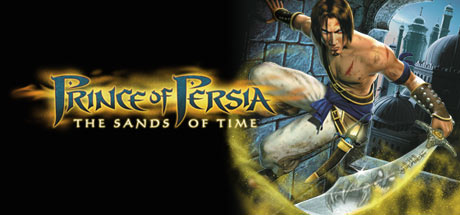
And Prince of Persia: The Sands of Time, with its dagger-born power to rewind seconds—not years, not lifetimes, but heartbeats—captures the anime’s most precise emotional rhythm. Its description centers on “a young Prince drawn to the dark powers of a magic dagger,” and the player review praises “tactical platforming… satisfying due to the locked directions.” That constraint—being forced to move forward, backward, sideways, but never truly out—is the anime’s entire architecture. Every jump back is tactical, every reset calibrated, every choice bounded by the narrow corridor of a single boarding house, a single week, a single broken remote. There’s no godlike control—just desperate, granular adjustments, each one tightening the knot.
This is for the person who replays Persona 5 Royal not for the jazz-fueled heists, but for the quiet moments—Ryuji sleeping on the couch at Leblanc, Ann staring out the window during Golden Week, the way time in Tokyo bends around loneliness and longing. Their score is lower, but their description nails it: “Lead the Phantom Thieves… explore Tokyo, build relationships.” Not save the world—build relationships. That’s the real engine beneath all these pairings: time as a vessel for intimacy, regret, repetition, and the fragile, stubborn hope that maybe—just maybe—if you rewind one more time, you’ll finally say the right thing, fix the remote, hold the silence long enough for someone to hear you.
🎮11 Games That Match the Vibe






Match Dimensions Explained
❓Frequently Asked Questions
Why does The Tatami Time Machine Blues remind me so much of Prince of Persia: The Sands of Time?
It’s that shared obsession with time as a fragile, personal tool—not just a plot device. Like the Prince rewinding his own clumsy jumps with the Dagger of Time, Tatami’s characters fumble with temporal mechanics in emotionally raw, low-stakes moments (think spilling tea, not saving cities). Both lean hard into ‘Adult & Dark Seinen’ vibes: quiet regret, unspoken tension, and time travel that feels intimate, not epic.
Is there an anime or movie adaptation of The Tatami Time Machine Blues?
Not yet—unlike BioShock Infinite, which inspired deep-dive YouTube essays and fan-made 'what if' timelines, Tatami remains firmly a game-first experience. That said, its tone echoes the melancholic, grounded time loops you’d find in Makoto Shinkai films—but no official adaptation exists, and none has been announced by Aniplex or the devs.
How does Persona 5 Royal compare to The Tatami Time Machine Blues in terms of time-loop storytelling?
They’re worlds apart: Persona 5 Royal uses time loops structurally (the calendar system, strict daily choices), but it’s all about momentum, confidence, and stylish rebellion—think Joker’s swagger and that killer jazz-funk soundtrack. Tatami is quieter, more Seinfeldian: small regrets, awkward silences, and time travel that feels like hitting Ctrl+Z on a bad conversation—not summoning Personas in a neon-lit Tokyo dungeon.
What’s the best game like The Tatami Time Machine Blues if I want that bittersweet, late-night, rain-on-the-window vibe?
Prince of Persia: Warrior Within nails that mood—especially the Dahaka chase sequences at midnight in crumbling ruins, where time isn’t power, it’s pressure. The dim lighting, the Prince’s exhausted voiceover, and that ever-present dread mirror Tatami’s emotional weight. It’s not flashy; it’s heavy, lonely, and soaked in ‘Adult & Dark Seinen’ atmosphere—just like watching rain blur the lights outside your tatami room.