
White Album 2
With only thirty days left until the cultural festival, Haruki Kitahara, a member of the light music club, has to find a way to make his dream of performing an original song on stage come true. When he recruits two new female members, including the school idol, his life becomes more complicated than he anticipated.
(Source: Anime News Network)
📺Anime Details
📝Editorial Analysis
The silence after the last chord fades — not the clean, resolved hush of a finished performance, but the brittle, hollow quiet that follows a rehearsal where someone walks out without saying why. Haruki stands alone on the clubroom floor, guitar still in hand, the sheet music for his original song crumpled at his feet, the cultural festival clock ticking down — thirty days, then twenty-nine — and the weight isn’t in the deadline. It’s in the way Sayaka’s voice didn’t rise to meet his harmony today. It’s in the way Rinko looked away when he asked if she’d sing the bridge. That silence isn’t empty. It’s charged: thick with unspoken history, half-retracted confessions, and the slow, grinding erosion of trust.

What makes White Album 2 ache like this isn’t its love triangle or even its tragedy — it’s how relentlessly interior it feels. This isn’t drama that unfolds in grand gestures, but in micro-fractures: a delayed text reply, a pause too long before “I’m fine,” the way a shared melody curdles into something bittersweet when sung by different mouths. It makes you feel the gravity of small choices — choosing to rehearse instead of calling, staying silent instead of confessing, letting a moment pass because naming it would shatter the fragile equilibrium. You don’t just watch Haruki’s world narrow; you feel your own breath catch when the light music club room, once warm with possibility, starts smelling faintly of dust and unopened windows — a space where dreams don’t die with a bang, but with the soft, suffocating weight of what wasn’t said.
That same emotional DNA pulses in Persona 5 Royal — not in its flashy heists or stylish UI, but in the stunning soundtrack that doesn’t just accompany life, it scores its quiet desperation. Like Haruki’s band rehearsals, the game’s daily rhythm — attending class, working part-time, building bonds — is saturated with unvoiced longing. The player review nails it: “the seamless transition between daily life…” That’s the core. Just as Haruki’s romance isn’t defined by declarations but by shared silences on the train home, Joker’s relationships deepen in stolen moments — walking with Ann under cherry blossoms, cooking with Makoto while rain streaks the window — where affection lives in the space between lines, not the lines themselves.
Dragon Age: Origins resonates for the same reason: its emotional narrative hinges on legacy forged in compromise, not conquest. The description asks, “What will be said about the hero who turned the tide?” — echoing how White Album 2 forces Haruki to confront what kind of person he becomes after the fall, not during the ascent. The player review mentions the “pause attack mechanic” helping “strategist your tactic.” That’s key: both works demand tactical vulnerability. Haruki doesn’t rush toward resolution; he pauses, recalibrates, weighs the cost of honesty against the cost of silence — just as the Warden must choose which bond to deepen, which truth to withhold, knowing every choice leaves a scar on the heart and the story.
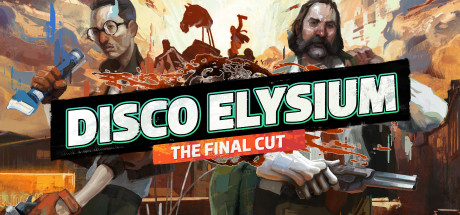
Even Disco Elysium - The Final Cut, with its dense, philosophical sprawl, shares this DNA — not in tone, but in texture. The player review quotes a line about capital subsuming critique — a chilling echo of how White Album 2 shows love itself becoming a system that absorbs pain, justifies betrayal, and recasts tragedy as inevitable. Both refuse catharsis. They sit with the discomfort of contradictions: loving someone while destroying them, wanting connection while weaponizing distance, believing in art while watching it become the very thing that isolates you. The silence after the chord isn’t an end — it’s the hum of unresolved tension, the low thrum of consequences still settling.
This pairing is for the person who replays a single conversation in their head for weeks — not because it was dramatic, but because of the tremor in a voice, the way a hand hovered near another’s before pulling back. For the one who finds deeper resonance in the weight of a paused relationship menu than in a kiss cut. For the listener who hears the melancholy in a major key, the exhaustion in a perfectly executed guitar solo, and knows — truly knows — that the most devastating stories aren’t told in climaxes, but in the quiet, aching space where the music almost comes together… and then doesn’t.
🎮12 Games That Match the Vibe







Match Dimensions Explained
❓Frequently Asked Questions
Why is Persona 5 Royal listed as similar to White Album 2 when it’s so action-packed and stylish?
Great question—it’s not about combat or aesthetics, but how both games make romance feel emotionally *heavy* and consequential. Like White Album 2’s snowbound confessions in the music room or Rina’s quiet breakdowns, Persona 5 Royal’s Confidant scenes (especially with Ann or Makoto) dig into guilt, self-worth, and slow-burn intimacy—often during rainy evenings or late-night rooftop talks. The shared 'Romance & Shoujo, Emotional Narrative' dimension (scored 79 for both) reflects that depth, not surface tone.
Is there an anime or manga adaptation of Dragon Age: Origins like there is for White Album 2?
No—unlike White Album 2, which got a full anime series and manga spin-offs, Dragon Age: Origins has *no official anime or manga adaptation*. There *are* canonical comics (like 'The Silent Grove') and novels, but nothing animated. Fans often compare its emotional weight—like Alistair’s bittersweet coronation scene or Morrigan’s ritual choice—to WA2’s pivotal 'Climax' arc, but it stays firmly in the game + lore-book space.
How does Disco Elysium compare to White Album 2 in terms of emotional impact?
Both hit hard—but in totally different keys. White Album 2 leans into delicate, melancholic realism (think Kousaka’s trembling hands during the 'Snow Song' performance), while Disco Elysium delivers raw, philosophical despair through internal monologue—like your detective staring at a broken mirror in Martinaise, hearing 24 voices dissect his own failure. They share the 'Romance & Shoujo, Emotional Narrative' tag (71 vs 79), but WA2’s pain is interpersonal; Disco Elysium’s is existential—and *exhausting* in the best way.
What’s the best game like White Album 2 if I want that quiet, snow-covered, 'heartbreaking but beautiful' vibe?
Go straight to Jade Empire™: Special Edition—yes, really. Its 'Path of the Open Palm' route mirrors WA2’s gentle tragedy: think Master Li’s final lesson in the misty mountains, or the understated sorrow in Sun Hai’s farewell scene—no grand battles, just stillness, wind chimes, and unspoken love. It’s the only match with that same hushed, painterly sadness (and shares the exact same 79 score in Romance & Shoujo + Emotional Narrative).