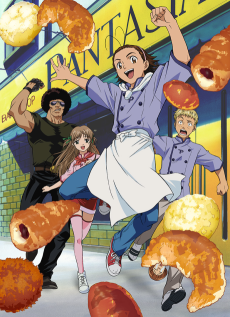
Yakitate!! Japan
📺Anime Details
📝Editorial Analysis
The first time Kazuma Azuma kneads dough, his hands don’t just move—they ignite. Not with fire, but with pure, unfiltered belief: a golden light flares as flour swirls like stardust, the camera tilts sideways, time stretches—a single second becomes three breaths—and the loaf rises not by yeast, but by sheer, ridiculous, life-affirming will. That’s not baking. That’s ritual. That’s Yakitate!! Japan.
This isn’t food-as-fuel or food-as-art—it’s food-as-catharsis. The show pulses with a kind of joyful, almost sacred absurdity: a man defeats a rival by baking bread that emits actual rainbow light, another’s sourdough starter gains sentience and argues philosophy, and yes—time bends around kneading rhythm like it’s obeying emotional physics. You don’t watch it to learn fermentation; you watch because it makes your chest swell with warmth, hope, and unapologetic silliness. It treats earnestness and parody not as opposites, but as twin ingredients in the same loaf—crunchy crust, tender crumb, absurdly golden. It’s healing not by quieting the world, but by amplifying it—turning flour into fireworks, failure into fuel, and national pride into something soft, shared, and deeply, deeply human.
That exact alchemy—where sincerity wears slapstick like a chef’s apron and healing arrives via surreal escalation—echoes in Prince of Persia, where time manipulation isn’t just mechanic, but mood. The description calls it “an all-new epic journey” built by Ubisoft Montreal—yet the player review hints at something deeper: it’s a reboot, yes, but one anchored in new lands, a new prince, a brand new story completely separate—not erasure, but reinvention with reverence. Like Azuma remaking Japanese bread from scratch while shouting “BANZAI!” at a toaster, Prince of Persia’s time-bending acrobatics feel less like puzzle-solving and more like emotional choreography: rewind a fall not to avoid death, but to reclaim grace, to stretch a moment of vulnerability into something lyrical and defiant. Both trust that slowing down—whether mid-air or mid-knead—is where meaning ferments.
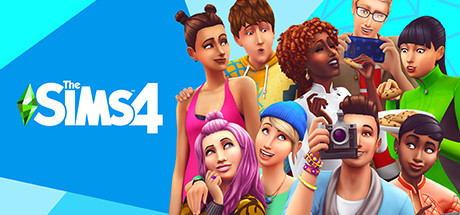
Then there’s The Sims™ 4, whose description invites you to “Play with life and discover the possibilities”—to “unleash imagination” and “customize every detail.” But the player review cracks open the real resonance: “TS4 has become awful… no fun without DLC… barely do a…” That frustration mirrors Yakitate!! Japan’s core joke: the gap between idealized craft and messy reality. Azuma’s bread fails constantly—not because he lacks skill, but because life intervenes: a rogue pigeon, a sudden rainstorm, his own overconfidence curdling into a loaf shaped like existential dread. The Sims™ 4’s broken DLC economy mirrors that same surreal friction—the game wants you to build perfect lives, yet forces you to negotiate with glitches, paywalls, and unintended chaos. Both celebrate process over polish, finding delight in the lopsided cake, the Sim who refuses to sleep, the baker whose “Japan Bread” accidentally summons a tiny, confused Shinto god. It’s healing precisely because it’s imperfect, iterative, gloriously uncontrolled.
And Bandle Tale: A League of Legends Story, tagged with Healing & Slow Life and Comedy & Parody, lands with the same gentle weight. Its very premise—a League of Legends story told through the lens of Bandle City’s pastel, fuzzy, tea-sipping whimsy—mirrors how Yakitate!! Japan treats national identity: not as rigid doctrine, but as something playful, baked fresh daily, served with extra butter and zero irony. No grand battles—just baking contests where the stakes are cultural dignity, and the weapons are sourdough starters and perfectly calibrated ovens. Like Bandle Tale’s low-stakes charm, Yakitate!! Japan’s stakes feel urgent and trivial at once—world peace hinges on whether a melon pan achieves true fluffiness. That duality—weightless gravity, sacred silliness—is the shared pulse.
You’ll love this pairing if you’ve ever cried laughing while watching someone passionately argue about the ideal hydration level for baguettes—or if you’ve spent three hours in The Sims™ 4 building a bakery only for your Sim to set it on fire while trying to water a plant. If you crave stories where joy is tactical, where absurdity is armor, and where healing doesn’t mean silence—it means turning up the music, dusting off the flour, and shouting “BANZAI!” into the steam of a rising loaf.
🎮9 Games That Match the Vibe





Match Dimensions Explained
❓Frequently Asked Questions
Why does Prince of Persia keep getting compared to Yakitate!! Japan?
Because both lean hard into absurd, over-the-top comedy with heartfelt sincerity—like when the Prince dramatically flips mid-air while delivering a deadpan roast of his own royal lineage, mirroring Kazuma’s ‘Bread of the Gods’ monologues where every knead feels like a spiritual ritual. It’s that rare blend of slapstick timing, earnest character growth, and healing, slow-life vibes (think sun-drenched desert towns vs. Sunflower Bakery’s warm glow) that makes them click.
Is there a Yakitate!! Japan video game adaptation?
No official Yakitate!! Japan game exists—but Burning Horns: A Bara Isekai JRPG nails the same energy: ridiculous stakes (saving a fantasy realm via cursed ramen), anime-logic combat, and characters who treat pastry-based power-ups with religious fervor. Like Kazuma’s ‘Milk Bread Explosion’, Burning Horns has ‘Horned Dough Slam’—a move so silly it loops back to genius.
How does Bandle Tale compare to The Sims 4 for Yakitate!! Japan fans?
Bandle Tale gives you focused, story-driven baking-as-bonding (think Pudding’s emotional croissant delivery in Chapter 3), while TS4 offers chaotic, open-ended kitchen shenanigans—if you can stomach the DLC grind and bugs. Both hit Healing & Slow Life + Comedy & Parody, but Bandle Tale’s got tighter narrative warmth; TS4’s more about building your own Sunflower Bakery… then watching your Sim set it on fire trying to ‘perfect the sourdough’.
What’s the best Yakitate!! Japan-like game if I just want to feel cozy and slightly unhinged?
Go straight to Bandle Tale: A League of Legends Story—it’s got that exact vibe: pastel-colored chaos, zero-stakes drama (Jinx trying to ‘bake peace’ with glitter-bomb macarons), and quiet moments where you water flowers *and* debate the metaphysics of flaky crusts. It shares Yakitate!! Japan’s DNA: deeply silly, emotionally generous, and weirdly therapeutic—no sandworms or sim-crashes required.