
YuruYuri
Right after starting middle school, Akari Akaza joins the Amusement Club which is composed solely by her two childhood friends, Kyouko Toshinou and Yui Funami. Chinatsu Yoshikawa, Akaza's classmate, becomes a member after finding out about the dissolution of the Tea Club.
The Amusement Club, situated at the tea room facility since the Tea Club disbanded, has no clear purpose, being free for the girls to do whatever they want.
(Source: Anime News Network)
📺Anime Details
📝Editorial Analysis
The teacup wobbles. Not because of a tremor, not from a clumsy hand—but because Akari’s giggling has made the whole table vibrate, and Kyouko, leaning in with eyes half-lidded and syrup-slow, lets her chin rest just on the rim as if testing gravity’s patience. Chinatsu watches, mouth slightly open, then bursts into laughter that makes Yui drop her spoon—clatter—into the saucer, where it spins like a tiny, dazed planet. No stakes. No timer. No club constitution. Just four girls in a sun-dappled tea room, suspended in the warm, weightless drift of now.

That’s YuruYuri’s heartbeat: not plot, but presence. It doesn’t ask you to care about outcomes—it asks you to feel the soft resistance of a chair cushion, the sticky-sweet residue of melon soda on your lip, the way time bends when someone leans too close just to whisper nonsense. It’s lightness—not emptiness, not fluff, but the kind of lightness that comes from absolute safety: no judgment, no escalation, no hidden trauma waiting behind the sliding door. The Amusement Club isn’t a plot device; it’s a container for unstructured joy—and its magic lies in how deeply it trusts that joy needs no justification. You don’t laugh at the surreal cutaways or slapstick spirals—you laugh with them, because they’re born from the same gentle absurdity as a friend suddenly miming a teapot spout with their elbow. It’s intimate, unhurried, and quietly, fiercely kind.
So why does Prince of Persia—a franchise reboot built for next-gen spectacle—share this emotional DNA? Look past the sandstorms and acrobatics: its listed dimension is Healing & Slow Life. That’s the key. Like YuruYuri, it trades urgency for rhythm—swinging across crumbling arches feels less like combat and more like dancing through time itself. A player review calls it “the 3rd reboot… completely separate from the sands”—and that separation echoes YuruYuri’s own refusal to inherit drama. Both exist in self-contained, sun-warmed worlds where movement is lyrical, consequences are soft-edged, and romance isn’t plotted—it blossoms, quiet and inevitable, like steam rising from a freshly poured cup.
Then there’s Garry's Mod—a physics sandbox with no predefined aims or goals. Just tools. Just play. Just what if? That’s the Amusement Club translated into code: no win condition, no tutorial, no objective beyond the shared delight of watching a teacup fly off a table because someone nudged a crate at just the right angle. A player review, nostalgic and grounded, contrasts it with S&Box’s AI clutter—calling back to something purer, simpler. That’s YuruYuri’s ethos: anti-bloat, anti-optimization, anti-efficiency. It’s not about building the tallest tower—it’s about watching the tower wobble, then laughing together as it collapses into glitter and giggles.
Even Bully: Scholarship Edition, with its jocks and preppies and dodgeball chaos, resonates—not through tone, but texture. Its description names “the hilarity and awkwardness of adolescence,” and a review nails its essence: “it never had aspirations to be more than a fun b-movie game.” That’s YuruYuri in a nutshell: no grand statement, no hidden thesis—just the radiant, unapologetic fun of being sixteen and utterly unburdened by consequence. When Jimmy trips over his own shoelaces mid-prank, it lands with the same affectionate, slapstick warmth as Kyouko face-planting into a stack of cushions during a “serious club meeting.”
This pairing isn’t for fans of high stakes or narrative payoff. It’s for the person who replays the opening minutes of a game just to hear the café ambience loop again. For the one who saves screenshots of idle character animations—not for lore, but for their softness. For the viewer who watches YuruYuri not to track shipping arcs, but to memorize the exact shade of light filtering through the tea room’s rice-paper windows at 3:17 p.m. on a Tuesday. They love worlds that breathe with them—not ahead of them, not around them, but alongside, slow, sweet, and utterly, unshakeably safe.
🎮9 Games That Match the Vibe







Match Dimensions Explained
❓Frequently Asked Questions
Why does Prince of Persia show up in 'games like YuruYuri' lists when it’s an action-adventure game?
Great question—it’s all about shared *vibe*, not genre! Prince of Persia (2023) leans hard into Romance & Shoujo and Healing & Slow Life dimensions—think quiet, sun-drenched moments between the Prince and Zola, gentle banter during downtime, and story beats that prioritize emotional warmth over combat intensity. That slow-burn, character-driven sweetness mirrors YuruYuri’s slice-of-life charm far more than its parkour might suggest.
Is there a YuruYuri visual novel or dating sim adaptation?
No official YuruYuri visual novel exists—but Bully: Scholarship Edition is the closest *spiritual* match in tone and structure: it’s a school-based comedy with defined cliques (jocks, preppies, nerds), lighthearted social minigames (dodgeball, pranks), and recurring, expressive character dynamics—like Jimmy’s exasperated-but-fond rapport with headmaster Crabblesnitch echoing Akari’s patient teasing of Chinatsu.
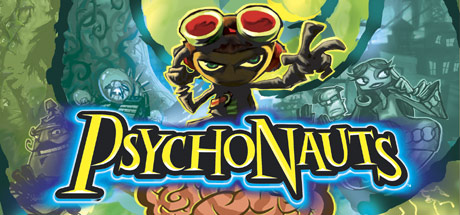
How does Psychonauts compare to YuruYuri in terms of humor and heart?
Psychonauts nails YuruYuri’s brand of absurdist, character-led comedy—like Raz’s deadpan reactions to Coach Oleander’s over-the-top pep talks or the surreal, pastel-hued mental worlds that mirror YuruYuri’s fourth-wall-breaking gags. But where YuruYuri stays breezy, Psychonauts weaves melancholic exploration into its core (e.g., Gloria’s library world reflecting her loneliness), giving it deeper emotional texture without losing the silliness.
What’s the best ‘YuruYuri-like’ game if I just want something cozy, low-stakes, and full of girl-group energy?
Go straight to Prince of Persia (2023)—yes, really! Its Healing & Slow Life dimension shines in quiet campfire scenes with Zola, playful dialogue choices that build trust, and zero fail-states or timers. It’s got the same ‘hanging out, laughing, sharing snacks’ rhythm as the Amusement Park arc in YuruYuri S4, just swapped for desert dunes and ancient ruins instead of cherry blossoms.