
Yuyushiki
Everyone knows you can learn a lot on the internet, and some of it is even true. But if you want to know what's REALLY going on and important, then there's just one place to go: the computer club!
Okay, so maybe it's not the club itself, but the three girls you're most likely to find there. And maybe they do spend more time chatting about their social lives and debating things like the virtues of ketchup versus mayonnaise than they do learning about the ins and outs of a keyboard, but whatever they're up to, it's sure to put a smile on your face.
(Source: Sentai Filmworks)
📺Anime Details
📝Editorial Analysis
The fluorescent hum of the computer lab at noon—three chairs pushed close, a half-eaten bag of strawberry Pocky passed hand to hand, the screen glowing with a Wikipedia page about the history of the semicolon, abandoned mid-scroll because Yuzuko just asked, “Do you think mayonnaise has existential dread?” No one answers. No one needs to. The cursor blinks. A fan whirs. Someone sighs—not in frustration, but in recognition: this is enough.

That’s Yuyushiki’s quiet magic—not the punchline, but the breath after it. It doesn’t chase catharsis or growth arcs; it luxuriates in the uneventful gravity of being known. You don’t watch it to do anything. You watch it to unclench. Its atmosphere isn’t cozy—it’s porous: thoughts leak between characters like steam from a teacup, logic bends just enough to let absurdity nestle beside sincerity, and time doesn’t move forward so much as pool. It makes you feel safe in smallness, like the world shrunk just enough for three girls debating ketchup viscosity to matter as much as any grand truth. There’s no urgency here—only presence, gentle and stubborn.
Which is why The Sims™ 4, despite its player-reviewed frustrations—“TS4 has become awful, the packs are insanely expensive and often broken… you can barely do a…”—still shares its soul. Not because of the gameplay, but because of the intention: “Play with life and discover the possibilities.” That phrase—play with life—is pure Yuyushiki. When a Sim idly rearranges bookshelves for the third time in an hour, or stares out a window while rain streaks the glass, or sits cross-legged on the floor eating cereal straight from the box—that’s the same unhurried reverence for micro-moments. The anime and the game both treat triviality as sacred terrain. The bugs, the DLC fatigue? They’re noise. What remains—the act of tending, of arranging, of letting a character exist without demand—is healing.
Then there’s Stardew Valley, where you “inherit your grandfather’s old farm plot… and set out to begin your new life.” The player review confesses exhaustion: “Spent the first 2 years trying to do everything and never having enough time… constantly running around trying to find the town…” But that’s the pivot—the moment you stop optimizing and start belonging. Like when Yuzuko, Yukari, and Chika abandon the club’s stated purpose (learning keyboards) to build a shared mythology around a broken printer, or when you finally stop rushing to upgrade tools and instead sit on the pier at 5 a.m., watching the mist lift off the lake with Linus, saying nothing. Both prize rhythm over reward, ritual over result. The romance options aren’t about conquest—they’re about soft accumulation: shared glances, seasonal gifts, quiet walks home. That’s shoujo not as genre, but as ethos: love as gentle consistency.
Even Disco Elysium - The Final Cut, with its dense political monologues and player review quoting Marxist irony—“Capital has the ability to subsume all critiques into itself…”—holds a warped mirror to Yuyushiki’s surreal comedy. Not in theme, but in structure: both fracture logic to expose emotional truth. When Yuyushiki’s characters debate whether a cloud is “more of a noun or a verb,” it’s not nonsense—it’s a shield against meaninglessness. Likewise, Disco Elysium’s detective talks to his own failed ideologies like roommates. Both use absurdity not to escape feeling, but to hold space for it—to make melancholy playful, doubt communal, despair ridiculous enough to survive. The comedy & parody dimension isn’t decoration; it’s oxygen.
This pairing isn’t for the completionist, the lore-hunter, or the speedrunner. It’s for the person who replays the same five minutes of a game just to hear a character laugh again. For the viewer who rewatches Yuyushiki’s cafeteria scenes not for plot, but for the way light catches Yukari’s hair when she tilts her head—just so. For anyone who’s ever needed permission to pause, to linger, to care deeply about something utterly inconsequential. Who finds healing not in triumph, but in the shared, blinking silence between thoughts—where three girls, a broken printer, and a half-open Wikipedia tab feel like the most important thing in the world. Enough. Soft. Known. Real.
🎮12 Games That Match the Vibe


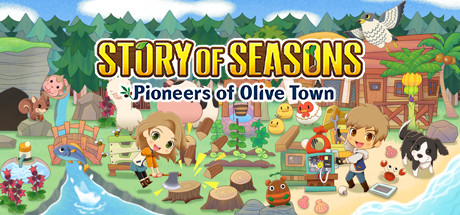







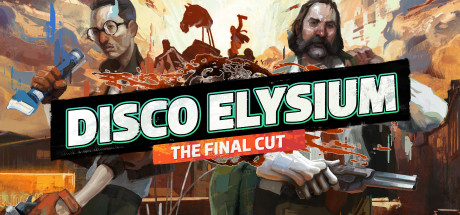
Match Dimensions Explained
❓Frequently Asked Questions
Why does Stardew Valley feel so much like Yuyushiki despite having farming mechanics?
Because both lean hard into low-stakes, slice-of-life rhythm—think Yuyu’s classroom banter or Stardew’s daily routines like watering crops while chatting with Emily about her sewing or Sebastian sipping coffee in the basement. The healing/slow life + romance/shoujo dimensions overlap perfectly, and players consistently mention how Stardew’s gentle pacing and character-driven downtime (e.g., watching the sunset at the beach with Leah) mirrors Yuyushiki’s cozy, unforced warmth.
Is there an anime adaptation of Prince of Persia that captures Yuyushiki’s tone?
No—Prince of Persia has no anime adaptation, and its actual tone is *nothing* like Yuyushiki’s: it’s melancholic exploration with a brooding new Prince navigating mythic ruins and existential weight (not classroom shenanigans). While both share Healing & Slow Life *and* Romance & Shoujo dimensions on paper, PoP’s vibe is closer to a watercolor-tinged fable than Yuyushiki’s deadpan comedy—so don’t expect Yukari cracking jokes while scaling a sand-covered ziggurat.
How does The Sims 4 compare to Stardew Valley for Yuyushiki fans who just want chill hangout energy?
Stardew wins hands-down for pure Yuyushiki-style hangout energy: its fixed town schedule, seasonal festivals, and organic friendships (like befriending Abigail at the mine or Shane at the saloon) mirror Yuyushiki’s episodic, character-led flow. TS4 *can* replicate that vibe—but only if you’ve bought half a dozen expensive DLCs (like City Living or Cottage Living) to unlock apartments, cafes, and social venues; otherwise, it’s barebones and buggy, per that player review calling it 'no fun without DLC.'
What’s the best game like Yuyushiki if I’m craving something soothing but with subtle romantic tension?
Stardew Valley—it nails that quiet, hopeful romance vibe: think blushing during heart events (like Haley’s flower confession at the beach), slow-burn bonds built over shared lunches or rainy-day chats, all wrapped in healing/slow life pacing. Disco Elysium also fits *on paper* (same Romance & Shoujo + Melancholic Exploration dims), but its tone is philosophically dense and emotionally heavy—not the light, sun-dappled sweetness Yuyushiki fans usually seek.