
Zatch Bell!
Takamine Kiyomaro, a depressed don't-care-about-the-world guy, was suddenly given a little demon named Gash Bell to take care of. Little does he know that Gash is embroiled into an intense fight to see who is the ruler of the demon world. All of the demons have to pick a master on Earth and duke it out with other demons until one survives. Needless to say, Kiyomaro becomes Gash's master, and through their many battles, Kiyomaro learns the importance of friendship and courage.
📺Anime Details
📝Editorial Analysis
Rain slicks the pavement of Kiyomaro’s neighborhood—cold, grey, and quiet—until a tiny, golden demon crashes through his window like a firework wrapped in chaos. Gash Bell lands face-first in a potted fern, giggling, tail wagging, eyes wide with unfiltered joy, while Kiyomaro just blinks, soaked and hollow, staring at this impossible thing that refuses to acknowledge his exhaustion. That moment—not the battle, not the magic, but the sheer, stubborn warmth of a being who chooses you before you’ve chosen yourself—is where Zatch Bell! lives.
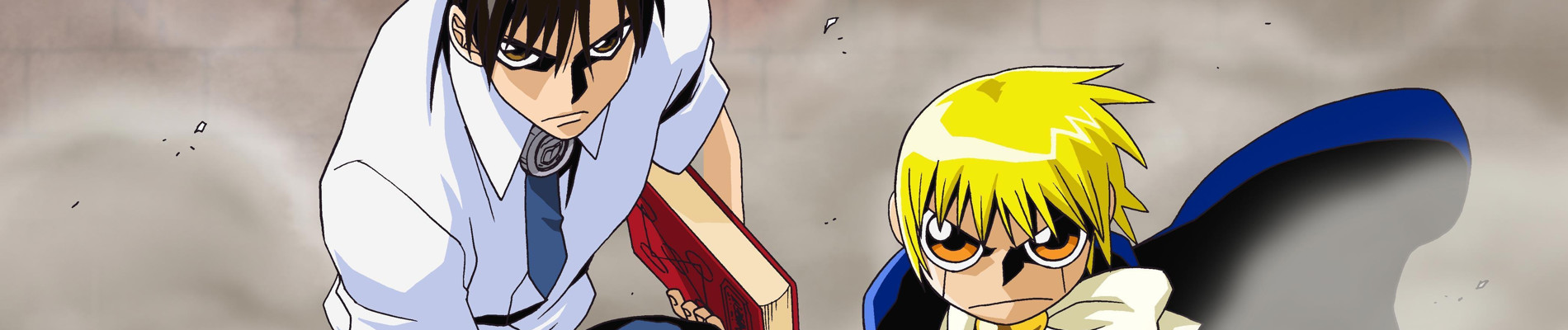
It doesn’t feel like a shounen battle show. It feels like holding your breath after someone hands you a key you didn’t know you’d lost—and then watching them use it to open doors you’d boarded up years ago. The amnesia isn’t literal for Kiyomaro; it’s emotional—he’s forgotten how to trust, how to hope, how to lean. The memory manipulation in the world isn’t just plot device—it’s metaphor: demons erase human bonds to weaken their masters, and every time Kiyomaro rebuilds one, it’s an act of quiet rebellion. The kaiju-scale fights aren’t about spectacle alone—they’re eruptions of feeling made visible, roaring out what Kiyomaro can’t yet say aloud. This is tenderness disguised as thunder, vulnerability armored in lightning, and friendship as survival strategy.
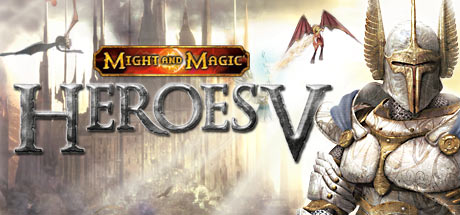
That emotional DNA pulses strongest in Heroes of Might & Magic V, where players don’t just command armies—they steward fragile alliances across fractured realms, balancing resource scarcity with moral weight. Its description calls it “a next-generation phenomenon, melding classic deep fantasy with next-generation visuals and gameplay”—but what mirrors Zatch Bell! isn’t the maps or spells. It’s the narrative rhythm: each campaign chapter begins with quiet diplomacy, tense negotiation, a shared meal under siege, then erupts into desperate, high-stakes conflict where loyalty—not just stats—decides who stands at the end. A player review shouts, “Best HoMM game ever made… this game nukes both HoMMIII and HoMMII from orbit”—that same fervent, almost protective love echoes how Kiyomaro defends Gash long before he believes he can.
Then there’s Persona 5 Royal, whose description promises “dungeon crawling, party customization, strategic combat, and Persona fusion,” but its soul lives in the daily life loop—the train rides, the confessions whispered over coffee, the slow unfurling of trust between broken people who learn to hold space for each other’s shadows. The player review praises “the seamless transition between daily life…”—exactly how Zatch Bell! moves: one episode, Kiyomaro’s memorizing formulas in silence; the next, he’s screaming Gash’s name mid-air, shielding him with his own body, because routine became ritual became revelation. Both treat time as sacred ground—not just a meter to manage, but soil where empathy takes root.
Even Condemned: Criminal Origins, with its grim question—“What twists the mind of an ordinary human into a serial killer?”—resonates in unexpected harmony. Not because Zatch Bell! is dark, but because both hinge on perception under pressure: Kiyomaro sees Gash as nuisance, then liability, then lifeline—his vision warping with each truth revealed. The player review calls it “a gem” you must hunt down, “whether it’s a steam key from G2A or from another platform.” That urgency? That devotion to something raw and unpolished that matters? It’s the same energy Kiyomaro channels when he runs—not toward victory, but toward Gash, again and again, even when his legs shake.
This pairing isn’t for fans of “power-ups” or “epic lore dumps.” It’s for the person who cries during a grocery store scene because the cashier remembered their name. For the player who saves before a dialogue choice—not to optimize, but to honor the weight of the words. For anyone who’s ever held a hand too tightly, laughed too loud to hide a tremor, or believed in someone before they believed in themselves. These are stories that treat kindness like a muscle—and make you remember, fiercely and fondly, how good it feels to finally flex it.
🎮17 Games That Match the Vibe





Match Dimensions Explained
❓Frequently Asked Questions
Why does Heroes of Might & Magic V keep popping up in 'Games Like Zatch Bell!' lists?
Because HoMM V nails that same epic, high-stakes fantasy bonding vibe—think Kiyo and Zatch strategizing before a big duel, but scaled to kingdom-level warfare where you’re commanding heroes like Sandro or Gelu across richly detailed maps. Its JRPG Narrative + Survival & Crafting dimensions mirror how Zatch Bell builds emotional stakes through long-term alliances and escalating magical consequences.
Is there a Zatch Bell! anime or game adaptation with detective elements like Persona 5 Royal?
No official Zatch Bell! adaptation leans into detective work—but Persona 5 Royal is the closest match *in spirit*: it’s got that same sharp teen-led team dynamic (Phantom Thieves ≈ Zatch’s human partners), stylish turn-based combat where timing and persona synergy matter like spell combos, and deep relationship-building that directly unlocks new abilities—just like how Kiyo’s growth unlocks Zatch’s stronger spells.
How does The Ship: Murder Party compare to Condemned: Criminal Origins for mystery vibes?
The Ship is chaotic, darkly comedic multiplayer murder where you’re both detective and suspect aboard a luxury liner—think Zatch Bell’s unpredictable, high-energy rival encounters, but with betrayal instead of friendship. Condemned, meanwhile, is a grim, first-person psychological descent into serial killer psychology—more like if Zatch Bell had a gritty, rain-soaked noir spin-off where every clue feels unnervingly personal.
What’s the best ‘Zatch Bell!-style hype and teamwork’ game when I’m in a playful, competitive mood?
Go straight to The Ship: Murder Party—it’s got that same electric, anything-can-happen energy as Zatch’s arena battles, but with real-time bluffing, improvised weapons, and hilarious chaos when someone fakes their death on the pool deck. Players love how it captures that ‘rivalry-with-heart’ spark—even if your ‘partner’ is secretly trying to shove you off the balcony.