
A Journey Through Another World: Raising Kids While Adventuring
📺Anime Details
📝Editorial Analysis
The kettle whistles—not shrill, but low and steady—while steam curls like breath in the morning light of a cottage nestled between ancient oaks and a softly glowing mana-vein. Inside, the protagonist kneels beside twin toddlers, their small hands pressing damp earth into clay pots as he guides them to plant moonpetal seeds. One child giggles when a fox-sprite flickers into view, tail brushing their wrist; the other leans into his shoulder, thumb in mouth, eyes already heavy with the quiet fatigue of magic-saturated naps. No battle cries. No villain’s shadow. Just soil under fingernails, shared silence, and the deep, unspoken weight of choosing tenderness when the world offers spectacle.
That’s the heart of A Journey Through Another World: Raising Kids While Adventuring: not escapism, but anchoring. It doesn’t soften parenthood—it renders it tactile, sacred, and stubbornly ordinary amid fantasy. The magic isn’t in spellcasting, but in how a lullaby hummed over a sleeping child resonates with the same frequency as a warding rune etched into doorframe wood. The adventure isn’t measured in dungeons cleared, but in milestones witnessed: first steps on mossy stone, first words tangled with elvish phonemes, first time a summoned griffin lowers its head—not to attack, but to let tiny fingers trace the ridge of its beak. This is iyashikei not as passive balm, but as active, daily devotion. It makes you feel grounded, seen, and strangely brave—not because danger vanishes, but because love becomes your compass, your shield, your slow, unwavering rhythm.
Prince of Persia (score: 84) shares that same melancholic reverence for time and care. Its description calls it “an all-new epic journey” built on “melancholic exploration”—and the player review notes it’s “completely separate” from past iterations, emphasizing new lands, a new prince, a brand new story. That deliberate reset mirrors the anime’s core emotional pivot: adulthood isn’t an endpoint, but a threshold crossed with children, reshaping identity not through conquest, but through continuity. Both ask you to move deliberately—not just across sand-dunes or enchanted forests, but through memory, loss, and the quiet labor of rebuilding something meaningful. The whistling kettle and the Prince’s solitary walk across crumbling ruins? Same hush. Same weight.
The Sims™ 4 (score: 84) might seem jarringly mundane next to mana-veins—but look past the player review’s frustration (“awful,” “broken,” “no fun without DLC”) and into its raw, stated purpose: “Play with life and discover the possibilities.” That phrase—play with life—is the exact heartbeat of the anime. Both are systems where meaning emerges from micro-rituals: arranging furniture just so, teaching a toddler to stir batter, watching sunlight hit a newly planted herb garden at exactly 4:17 p.m. The anime’s “Primarily Adult Cast” and “Adoption” tags aren’t demographic footnotes—they’re design choices mirroring TS4’s open-ended simulation: no scripted endings, only evolving relationships, domestic textures, and the profound creativity of sustaining a home in spite of chaos. The exhaustion in the review isn’t a flaw—it’s proof the game feels real, just like the anime’s tired-but-tender protagonist rubbing his temples after three bedtime stories.
Chains (score: 83), described as “a relaxing arcade match 3 casual game” where “the object… is simple, link adjacent bubbles… the challenge comes from increasingly difficult physics-driven” play, resonates in its rhythm. That “link adjacent bubbles” echoes the anime’s constant, gentle act of connecting: parent to child, human to creature, past to present, magic to mundane. The player review calls it “basically link 3 or more of the same color and clear enough till you can proceed”—a perfect metaphor for the anime’s pacing: small, repeated acts of care (feeding, soothing, tending) that accumulate, stabilize, and unlock deeper emotional resonance. No grand climax—just the satisfying pop of alignment, again and again.
This pairing sings for the person who’s folded laundry at 2 a.m. while listening to rain on the roof, who’s held a feverish child and whispered nonsense words until breathing slowed, who finds heroism not in victory poses but in showing up—again, still, here. Not the teen chasing destiny, but the thirty-eight-year-old refilling the kettle, checking the moonpetals, and smiling when the fox-sprite returns—not as a familiar, but as family.
🎮16 Games That Match the Vibe










Match Dimensions Explained
❓Frequently Asked Questions
Why does Prince of Persia keep showing up in 'Games Like A Journey Through Another World' lists when it’s all about platforming and time manipulation?
Because its 'Melancholic Exploration' and 'Healing & Slow Life' dimensions deeply mirror the quiet, reflective parenting moments in 'A Journey Through Another World'—like when the Prince pauses in ruined gardens to tend to a wounded companion (a mechanic echoing caregiving), or when time rewinds not for combat wins, but to gently undo a child’s accidental fall. It’s less about speedruns and more about those weighted, tender breaths between adventures.
Is there a mobile adaptation of A Journey Through Another World: Raising Kids While Adventuring?
No official mobile port exists—but Chains nails that same soothing, rhythm-of-care vibe on phones: linking bubbles feels like tucking kids in one by one, and its physics-driven chain reactions mimic how small choices (like choosing bedtime stories) ripple through your day. Players even call it 'connect 4 in nutshell'—a gentle, tactile loop perfect for stolen five-minute parenting breaks.
How does Bandle Tale compare to The Sims 4 for raising kids while adventuring?
Bandle Tale leans into 'Melancholic Exploration' with Yuumi’s soft-spoken journey through misty, storybook forests—where finding a lost kit or sharing tea with a tired elder mirrors quiet caregiving—while TS4’s 'Romance & Shoujo' and 'Healing & Slow Life' dimensions let you literally schedule naps, homeschooling, and bedtime rituals in a customizable home. One’s poetic vignettes; the other’s hands-on life sim—both honor the duality of adventure and routine.
What’s the best game like A Journey Through Another World if I want something deeply emotional but not fantasy-heavy?
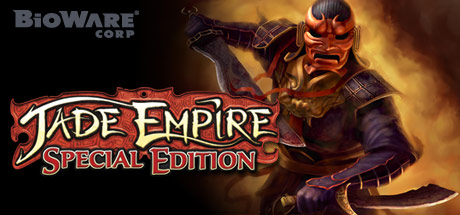
Jade Empire™: Special Edition—it swaps high magic for grounded mythological weight, where your martial arts choices shape relationships with mentors like Master Li (whose quiet guidance echoes parental wisdom) and romance options unfold with shoujo-style emotional nuance. Its 'Emotional Narrative' and 'Romance & Shoujo' dimensions deliver heartfelt stakes without elves or portals—just people, choices, and consequences that feel real.