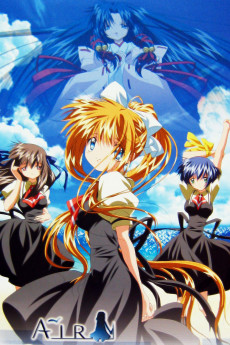
Air
Yukito Kunisaki is on a journey in search of the Winged Maiden who was bound to the sky centuries ago, after hearing an old childhood tale from his mother. As Yukito shows his puppet show to people in an attempt to make some money, he finds himself in a small town in which he did not expect to stay very long. However, when he meets an unusual girl named Misuzu, things take a drastic turn as he is invited to stay with her.
By staying in the quaint town, Yukito soon becomes friends with the locals. As he gets to know them better, he learns of their problems and decides to help, putting his search for the Winged Maiden on hold. With his search on hold, and his growing attachment to Misuzu and the small town, will Yukito ever find the Winged Maiden, or is she closer than he thought?
[Written by MAL Rewrite]
Note: Includes episode 13, Soushuuhen (Summary).
📺Anime Details
📝Editorial Analysis
The scent of rain on dry earth. A wooden puppet’s joint creaking as Yukito lifts it in the fading light—its painted face half-shadowed, its strings trembling not from wind, but from his own unsteady breath. Misuzu sits barefoot on the sun-warmed porch, humming a tune with no words, her fingers tracing the grain of the floorboards like she’s memorizing them. There’s no grand magic flare, no thunderclap revelation—just this: the unbearable tenderness of two people sharing silence while time itself feels thin, fragile, already slipping.
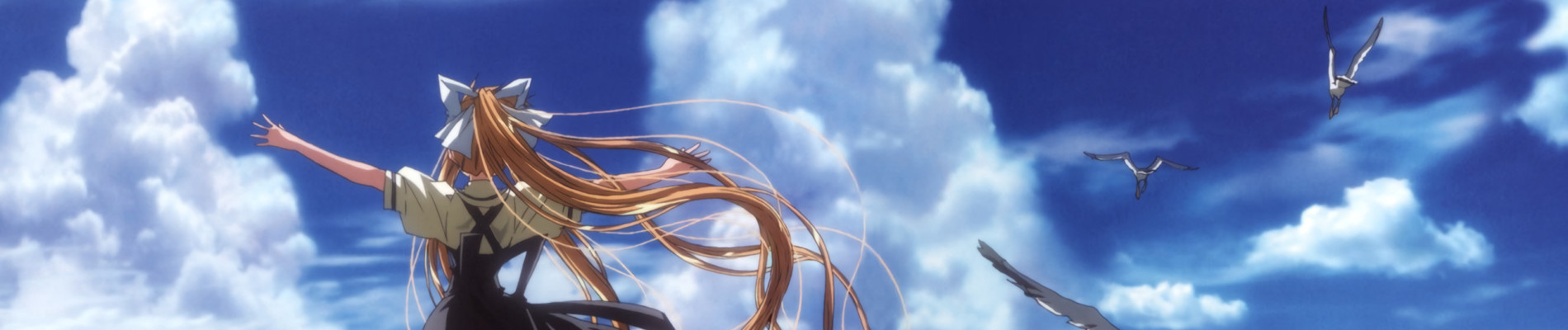
That’s Air’s atmosphere—not melancholy as decoration, but as texture. It’s the weight of memory you can’t access yet still carry; the quiet dread of knowing love is bound to loss before you’ve even learned how to hold someone’s hand properly. It makes you feel homesick for a place you’ve never lived, grief-stricken for futures that haven’t happened yet, and awake in a way that borders on painful—like your nerves have been gently peeled open and left exposed to the soft, relentless light of rural summer. This isn’t tragedy for spectacle. It’s tragedy as breath. As cohabitation. As the slow, inevitable unraveling of amnesia—not just of facts, but of how to stay.
So why does Chains, a match-3 arcade game built on linking colored bubbles, resonate so deeply? Because its core loop—link adjacent bubbles, clear enough to proceed, repeat—is a physical echo of Air’s emotional architecture. The player review calls it “connect 4 in nutshell”—and yes, it’s simple, but its physics-driven difficulty mirrors how Yukito’s journey unfolds: small, deliberate connections (a shared meal, a repaired puppet, a whispered name) that accumulate until something irreversible shifts. There’s no rush, no explosion—just the quiet weight of alignment. That’s the healing dimension: not fixing, but sustaining. Not solving, but holding space. You don’t win Chains by force—you win by patience, by noticing subtle affinities, by letting color find color. Just like Yukito learns to hold Misuzu’s hand without flinching at the tremor in it.
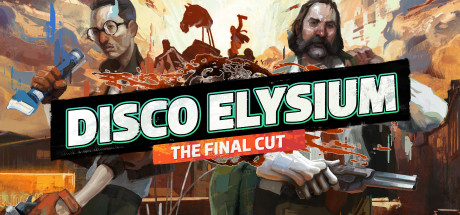
Then there’s Disco Elysium - The Final Cut, where a detective with fractured cognition wanders a city that subsumes all critiques into itself. The player review nails it: “It’s a cruel irony.” That cruelty—the kind where truth doesn’t liberate but deepens the wound—is kin to Air’s reincarnation logic. Yukito doesn’t recover his past through exposition; he recovers it through repetition: déjà vu in a rusted swing set, a lullaby surfacing mid-sentence, the visceral panic of heights he’s never experienced. Like Harry Du Bois parsing his own shattered psyche street by street, Yukito pieces together centuries of sorrow not via flashback, but via somatic echo. Both works treat memory not as data, but as gravity—a force that pulls you toward what you’re meant to mourn, whether you remember why or not.
And though Crash Time 2’s player review dismisses it as “awful controls… janky physics,” that very awkwardness—the resistance between intention and outcome—mirrors Yukito’s helplessness. He wants to protect Misuzu. He tries to understand the winged maiden legend. But the world won’t bend to his will; it stutters, glitches, refuses clean causality. His amnesia isn’t narrative convenience—it’s embodied disorientation, like trying to steer a car with unresponsive brakes across an open highway. The emotional narrative survives despite the friction. That’s the shared nerve: stories where feeling precedes understanding, where sincerity lives in the stumble.
This pairing isn’t for fans of catharsis or closure. It’s for the person who re-watches the scene where Misuzu watches the sky—not because she’s waiting for wings, but because looking up is the only thing that doesn’t hurt. It’s for the player who lingers on a bubble chain long after it’s cleared, just to feel the hum of alignment one more time. For the reader who underlines a line in Disco Elysium about capital swallowing critique—and then closes the book to stare out the window, thinking not about economics, but about how love, too, can be a system that consumes its own tenderness. These are works for those who know tenderness and fragility aren’t opposites—they’re the same breath, drawn slow, held too long, released like a puppet’s string finally going slack.
🎮20 Games That Match the Vibe


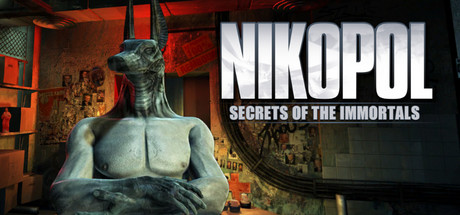


Match Dimensions Explained
❓Frequently Asked Questions
Why does Air feel so similar to Chains even though one’s a visual novel and the other’s a match-3?
It’s all about that shared 'Healing & Slow Life' dimension—both prioritize quiet emotional pacing over action. In Air, you spend hours watching Hanako gently tend to her garden or listening to Misuzu hum while clouds drift across the screen; Chains mirrors that with its soothing bubble-linking rhythm, soft pastel palette, and zero time pressure—just like Air’s unhurried storytelling. Players even call Chains 'connect 4 in a nutshell', which fits Air’s gentle, meditative flow.
Is there an anime adaptation of Chains or Disco Elysium that captures the same mood as Air?
No official anime adaptations exist for either—but Disco Elysium comes closest in *spirit* to Air’s emotional weight, thanks to its deep character writing and melancholic, rain-soaked worldbuilding (think: RCM’s monologues echoing Air’s bittersweet reflections on memory and loss). Chains has no adaptation, but its ‘Healing & Slow Life’ vibe—like Air’s focus on small, tender moments—is baked into its core loop: no timers, no penalties, just calm color-chaining under soft ambient music.
How does Nikopol: Secrets of the Immortals compare to Air in terms of emotional impact?
Nikopol trades Air’s pastoral intimacy for cyberpunk grandeur—but both anchor big themes in personal stakes. Where Air breaks your heart with Misuzu’s fading voice and the lullaby motif, Nikopol uses its dystopian Paris setting and that haunting pyramid ship to explore loss and legacy. Player reviews praise its 'interesting story' and 'cyberpunk atmosphere', but unlike Air’s slow-burn warmth, Nikopol leans into mystery and political tension—so it’s emotionally resonant, just sharper-edged and less serene.
What’s the best game like Air if I want something calming but with light detective elements?
Disco Elysium is surprisingly perfect for that blend—it’s got Air’s rich emotional narrative and quiet introspection, but layers in detective work through skill checks like 'Logic' or 'Empathy' during conversations with unforgettable characters like the talking dog or the grieving dockworker. It’s not relaxing in the same way Chains is (no bubble-popping zen), but its deliberate pacing, poetic dialogue, and emphasis on inner life make it feel like Air crossed with a rainy noir novel—just swap cherry blossoms for cigarette smoke and existential dread.