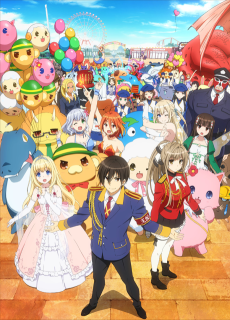
Amagi Brilliant Park
When new transfer student Isuzu asks Seiya Kanie out on a date at gunpoint, he knows something odd is going on. Especially since she wants to go to Amagi Brilliant Park, where the rides are either dangerous or mind-numbingly dull and the only costumed performers who aren’t rude or apathetic are the ones who didn’t show up for work.
So when Isuzu asks Seiya to take over as the park’s new manager, he knows she’s crazy (Well, crazy-er, given the gunpoint thing.). But when Seiya learns that Amagi Brilliant Park is a REAL Magic Kingdom, that the costumed performers aren’t wearing costumes, that they live off the energy created by attendees, and that unless they can attract 250,000 attendees in three months, they’ll lose their jobs and homes… he goes a little crazy himself.
But, even with the aid of scantily clad fairies, giant mice and sniper-trained sheep, can anyone rescue a park that’s sunk so low that its own bus doesn’t stop there anymore? The race is on to get the turnstiles turning and save Amagi Brilliant Park!
(Source: Sentai Filmworks)
📺Anime Details
📝Editorial Analysis
The smell of burnt popcorn and ozone hangs in the air—not from a malfunctioning ride, but because the park’s mascot, a grumpy raccoon named Mochi, just short-circuited mid-wave after his magical animatronic core overloaded again. Seiya Kanie stands there, clipboard in hand, watching sparks fizzle into the damp concrete near the ticket booth, while Isuzu—still holding that absurdly small pistol—says, “We’re down 37% on cotton candy revenue. Fix it by lunch.” It’s not chaos. It’s bureaucratic magic: cursed contracts signed in triplicate, fairy union grievances filed in triplicate, rides that work only if you hum the park anthem in C-sharp, and a budget spreadsheet that blinks ominously every time someone mentions “solvency.”

What makes Amagi Brilliant Park vibrate isn’t its fantasy or comedy—it’s the exhausted tenderness of trying to keep something fragile alive in plain sight. You feel the weight of unpaid invoices, the quiet panic when a fairy’s wings flicker out during a children’s parade, the way Seiya’s amnesia isn’t about forgetting who he is, but forgetting how much he cares—until he catches himself adjusting Mochi’s earpiece so the kid in the front row doesn’t see the frayed wiring. This isn’t urban fantasy as spectacle. It’s urban fantasy as maintenance: scrubbing glitter off tile at 3 a.m., negotiating with a disgruntled dryad over shift differentials, loving a place so deeply you’ll lie to the tax office and a fire-breathing goblin just to keep its gates open. It’s hopeful fatigue—the kind that settles in your shoulders when you’ve patched the same leak three times, but still bring the wrench.
That emotional DNA—tired devotion, systemic absurdity, magic buried under spreadsheets—echoes sharply in Persona 5 Royal. Its description names “dungeon crawling, party customization, strategic combat,” yes—but the player review nails it: “The seamless transition between daily life…” That’s the heartbeat. Just like Seiya toggles between calming a weeping will-o’-the-wisp HR complaint and recalibrating the haunted carousel’s torque settings, Joker toggles between cram school exams and dismantling a corrupt politician’s psyche in a neon-lit Metaverse. Both are about structure as salvation: routines that hold back entropy, whether it’s Tokyo’s moral decay or Amagi Brilliant Park’s fiscal collapse. The music? Not just “stunning”—it’s propulsive care, the same rhythm as Seiya sprinting across the park at closing time to re-tape a loose animatronic jaw before the night shift arrives.
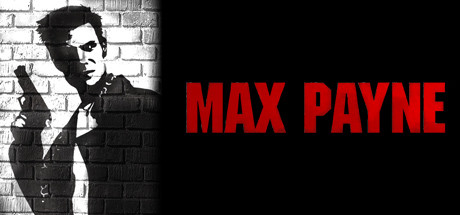
Then there’s Max Payne, where the description paints him as “a fugitive undercover cop framed for murder, hunted by cops and the mob… with his back against the wall.” But read the player review: friends passing the controller after each death, turning trauma into shared ritual. That’s the same exhausted camaraderie—not heroic, but persistent. Seiya doesn’t win fights; he negotiates, delegates, hides behind the snack bar counter, then emerges with a half-baked incentive plan for the goblin custodial staff. Max doesn’t triumph—he survives another night, same as Seiya survives another quarter, same as the park survives another rainstorm that threatens to dissolve the illusion entirely. It’s not about victory. It’s about not letting the lights go out.
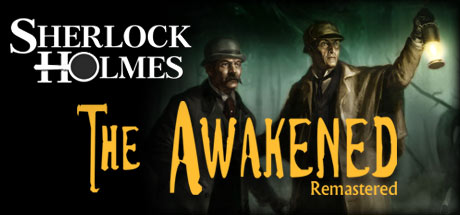
Even Sherlock Holmes: The Awakened (2008) resonates—not through deduction, but through layered dread disguised as procedure. Its description says it “brings a whole new dimension” to the original, embedding occult horror beneath Victorian rationality. That’s Amagi Brilliant Park’s secret architecture: every safety inspection report hides a binding curse; every vendor contract has eldritch fine print; every “employee of the month” plaque glows faintly violet if you look sideways. The horror isn’t jump scares—it’s the slow realization that the system works, but only because everyone pretends the magic isn’t real while quietly reinforcing it. Like Holmes parsing a crime scene where the bloodstains form sigils no one dares name aloud, Seiya parses balance sheets where the deficit column pulses like a sleeping heart.
This pairing isn’t for fans of “whimsy” or “gritty realism.” It’s for the person who’s ever stayed late to fix the office printer knowing it’ll break again tomorrow, who’s memorized the exact tone to use when asking their boss for one more extension, who finds poetry in a well-organized filing cabinet—and who, when they see a raccoon mascot sparking on asphalt, doesn’t flinch, but grabs the multimeter and mutters, “Okay. Let’s get this damn thing breathing again.”
🎮30 Games That Match the Vibe

















Match Dimensions Explained
❓Frequently Asked Questions
Why does Amagi Brilliant Park have so many fans comparing it to Persona 5 Royal?
Because both lean hard into the 'dual life' fantasy—running a theme park by day and solving supernatural mysteries by night, just like Joker balancing school life and Phantom Thieves heists in Tokyo. Persona 5 Royal’s stylish UI, jazz-fueled soundtrack, and party banter between Ann, Ryuji, and Morgana hit that same upbeat-yet-subversive energy as the park staff’s chaotic charm in Amagi Brilliant Park.
Is there an anime or game adaptation of Condemned: Criminal Origins?
No—Condemned: Criminal Origins has never been adapted into an anime or narrative-driven game sequel; it remains a standalone PS2/Xbox thriller focused on forensic investigation and descent-into-madness body horror. Fans who love its gritty detective work and psychological dread often pivot to Sherlock Holmes: The Awakened (2008), where Holmes investigates occult murders across Victorian London using deduction minigames and sanity-shaking cutscenes.
How does Max Payne compare to Sherlock Holmes: The Awakened for mystery lovers?
Max Payne trades Holmes’ methodical clue-gathering and dialogue trees for noir monologues, bullet-time shootouts, and visceral urban decay—think rain-slicked alleys and hallucinatory dream sequences instead of gaslit study rooms and cryptic cipher puzzles. But both nail the 'haunted investigator' vibe: Max’s grief-fueled descent mirrors Holmes’ confrontation with Lovecraftian entities in The Awakened, especially during the asylum and asylum-like nightmare sequences.
What’s the best game like Amagi Brilliant Park if I want something uplifting but still with mystery and heart?
Go straight to Persona 5 Royal—it’s the closest match in tone and structure: a vibrant, character-driven story where building relationships (like with Ann Takamaki or Futaba Sakura) and uncovering hidden truths (the Palace dungeons, the conspiracy behind Mementos) feels as joyful and meaningful as reviving Amagi Brilliant Park with Koyuzu, Latifah, and the gang. Its 76 Metacritic score reflects how perfectly it balances lighthearted charm with weighty themes—no body horror, just heartfelt stakes and killer jazz.