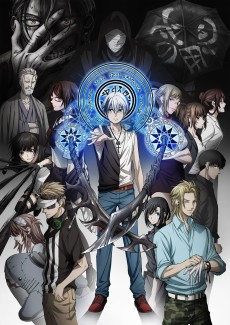
Dead Mount Death Play
As a legendary hero nears victory against a necromancer known as The Corpse God, things take an unexpected turn with the dark sorcerer’s final gambit—reincarnation magic. This last-ditch effort catches the brave fighter off guard, and now he’s a boy named Polka Shinoyama in a whole new world! The showdown between good and evil just got epic.
(Source: Crunchyroll)
📺Anime Details
📝Editorial Analysis
The air in Shinjuku doesn’t smell like rain—it smells like ozone and burnt sugar, the kind of scent that clings after a ghost slips through a subway tunnel just as the train doors hiss shut. That’s the first breath Dead Mount Death Play forces you to take: not wonder, not awe, but disorientation, thick and physical—like waking up in your own childhood bedroom only to find the wallpaper is peeling in fractal patterns and your reflection blinks a half-second too late.

This isn’t fantasy as escape. It’s fantasy as interrogation. The anime’s atmosphere lives in the dissonance between Polka Shinoyama’s quiet, sun-bleached Tokyo school life and the cold, recursive logic of necromancy—a magic system that treats death not as an end but as infrastructure, as bureaucracy, as something you file paperwork for in triplicate. You feel it in the way streetlights flicker just when a spirit manifests—not with fanfare, but with the weary precision of a faulty circuit breaker. It makes you question what’s anchored: not just Polka’s identity, but the city itself, the laws of physics, the very idea of linear time. There’s no heroic swell of strings here—just the low hum of surveillance cameras, the muffled thump of bass from a convenience store, the weight of being watched by something ancient that remembers your name before you do.
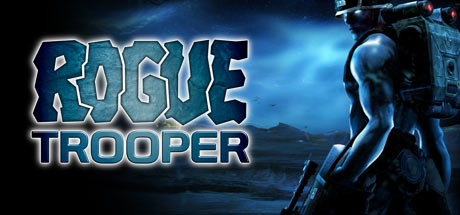
That same tension—the suffocating press of systems both mundane and occult—pulses through Rogue Trooper. Its description nails it: “Nu Earth: a poisoned planet where endless war rages… a futile struggle on a hostile planet with no end in sight.” Not epic conquest. Not noble sacrifice. Just grinding, chemical-soaked persistence. Like Polka navigating Shinjuku’s neon-lit alleys while sensing the Corpse God’s sigils etched into manhole covers, Rogue Trooper drops you into a world where every tactical decision feels like triage—where victory isn’t winning, but not collapsing under the weight of the machine. A player calls it “ps2 era game no bullshiet”—and that’s the resonance: raw, unvarnished cause-and-effect, where magic and warfare are equally procedural, equally exhausting.
Then there’s Act of War: Direct Action, whose description frames conflict as “a frightening tale of suspense, international intrigue and geopolitical military conflict”—but crucially, its dimensional tag includes Body Horror & Occult. Not as spectacle, but as leakage: the way ideology calcifies into flesh, how conspiracy becomes literal anatomy. Polka doesn’t just fight ghosts—he reanimates them, reassigns their purpose like shifting assets in a ledger. So does Act of War, where biotech merges with black ops until soldiers mutate mid-mission and data centers bleed static like open wounds. A review dismisses its dialogue as “dumb and a bit cringe,” but that tonal awkwardness mirrors Dead Mount Death Play’s own refusal to romanticize power—it’s all jarring transitions, abrupt cuts, the disquiet of seeing sacred things reduced to operational terms.
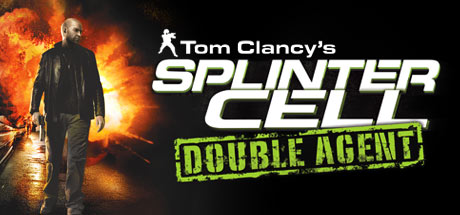
And Splinter Cell: Double Agent®, with its core directive—“infiltrate a ruthless terrorist organization, and destroy it from within”—echoes Polka’s impossible position: he’s not just reborn into this world, but inside its hidden architecture. He walks among civilians who unknowingly live atop ley-line junctions, speaks to teachers who channel spirits during PTA meetings, all while his own soul hums with the Corpse God’s final, mocking incantation. The player review notes “two completely different games” depending on version—one built on trust, one on betrayal—and that duality is Dead Mount Death Play’s spine: every ally might be a vessel; every safe space, a trap layered with forgotten wards.
These pairings aren’t for fans of “cool powers” or “epic battles.” They’re for people who get chills when a character checks their phone and sees three missed calls—from numbers that don’t exist in any directory. For those who pause mid-stride because the sidewalk tile pattern almost spells a binding glyph. For players who reload a checkpoint not to win, but to verify—did that shadow move before the light changed? Did that NPC blink exactly when the background music dropped out? This is fiction for the chronically suspicious, the quietly observant, the ones who’ve learned to read cities like grimoires—and who know the most terrifying magic isn’t fire or lightning, but the slow, patient unraveling of what you thought was real.
🎮7 Games That Match the Vibe

Match Dimensions Explained
❓Frequently Asked Questions
Why does Dead Mount Death Play feel so similar to Rogue Trooper?
It’s that shared 'Neon Noir, Tactical Warfare' vibe—both drop you into a grim, poisoned world where lone warriors operate outside broken systems. Rogue Trooper’s Nu Earth (a toxic wasteland crawling with Norts and Southers) mirrors DMDP’s cursed, rain-slicked hellscape, and both hinge on methodical, cover-based combat where positioning matters more than reflexes—just like when you’re lining up a sniper shot as Rogue or coordinating a silent takedown in DMDP.
Is there an anime or manga adaptation of Desperados 2: Cooper's Revenge?
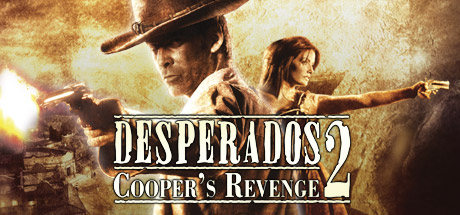
Nope—Desperados 2 is purely a game, and it’s actually the *sequel* to Wanted Dead or Alive, not adapted from any anime or manga. That said, its tone and structure—tight western noir storytelling, multi-character tactics, and those gorgeous 3D set-pieces like the Santa Fe train yard ambush—feel like they *could* be adapted, especially since its expansion Helldorado leans even harder into cinematic outlaw drama.
How is Helldorado different from Tom Clancy's Splinter Cell Double Agent?
Helldorado is a wild-west tactical stealth game where you command a crew of distinct outlaws—like Doc, the sharpshooting gambler—in dusty, reactive towns; Splinter Cell: Double Agent puts you solo as Sam Fisher infiltrating terrorist cells in sleek, high-tech urban zones with light/shadow mechanics and moral choice tension. Both are 'Neon Noir, Tactical Warfare', but Helldorado’s about chaos and character synergy, while Double Agent’s about isolation, precision, and two radically different versions—one even called 'version 1' by players for its jarring design splits.
What’s the best game like Dead Mount Death Play if I want something gritty, political, and body-horror-adjacent?
Go straight to Act of War: Direct Action—it’s the only match with 'Political Thriller, Body Horror & Occult, Tactical Warfare' dimensions. It’s got real-time strategy tension ripped from headlines, dialogue that reviewers call 'dumb but cringe-fun', and a vibe that channels DMDP’s oppressive dread through military-industrial paranoia and unsettling bio-tech threats—not unlike how DMDP twists resurrection and decay into narrative fuel.