
DON'T TOY WITH ME, MISS NAGATORO
"A girl in a lower grade just made me cry!"
One day, Senpai visits the library after school and becomes the target of a super sadistic junior! The name of the girl who teases, torments, and tantalizes Senpai is "Nagatoro!" She's annoying yet adorable. It's painful, but you still want to be by her side. This is a story about an extremely sadistic and temperamental girl and you'll feel something awaken inside of you.
(Source: Crunchyroll)
📺Anime Details
📝Editorial Analysis
The library’s fluorescent lights hum, low and steady, as Senpai flinches—not from pain, but from the anticipation of it: Nagatoro’s fingers already hovering near his ear, her grin sharp as broken glass, breath warm against his neck just before she flicks his earlobe. He jerks, stammers, face burning—not from humiliation alone, but from the dizzying, unmoored thrill of being seen, teased, held in orbit by someone who knows exactly how much he’ll tolerate… and how much more he secretly wants.

That’s the core vibration of DON'T TOY WITH ME, MISS NAGATORO: not bullying as cruelty, but as charged proximity. It’s the ache of being perpetually off-balance—laughing while wincing, blushing while scowling, wanting to flee while leaning in. The tanned skin, the school corridors, the all-female cast orbiting Senpai like planets around a nervous sun—it’s not about power dynamics in the abstract. It’s about the physical grammar of attention: a poke, a pull of hair, a stolen sketchbook, the way silence after teasing hangs thicker than any shout. You don’t watch it to escape adolescence—you watch it to relive the vertigo of realizing someone’s fascination with you is messy, inconsistent, and utterly alive. It makes you feel tender, exposed, and weirdly safe in the chaos—all at once.
Which is why Bully: Scholarship Edition lands with such startling resonance. Its description nails it: Jimmy Hopkins navigating “the hilarity and awkwardness of adolescence,” beating jocks at dodgeball, pranking preppies, saving nerds. Not as satire, but as embodied ritual. Like Nagatoro’s teasing, Jimmy’s antics aren’t nihilistic—they’re social calibration, testing boundaries with slapstick precision. A player review calls it “hilarious” and “awkward,” echoing Nagatoro’s blend of torment and tenderness. Both works treat adolescent friction not as pathology, but as language: the shove, the smirk, the shared eye-roll after chaos—that’s how connection gets forged when words fail. The melancholic exploration dimension fits perfectly—the quiet walks home after a prank, Senpai’s solitary sketching, Jimmy staring at the moonlit campus—moments where the comedy exhales, revealing soft, vulnerable underbellies.
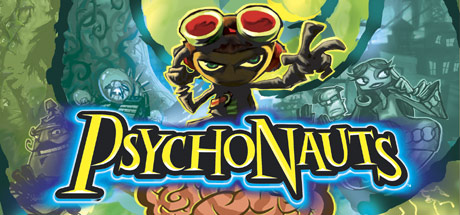
Then there’s Psychonauts, described as “A Psychic Odyssey Through the Minds of Misfits, Monsters, and Madmen.” That phrase—misfits, monsters, madmen—is Nagatoro’s entire emotional ecosystem refracted through surrealism. Her teasing isn’t random; it’s diagnostic. She probes Senpai’s shyness like Raz probes mental worlds: with curiosity, absurdity, and startling empathy disguised as chaos. A player review mentions “milking… highly creamy men”—a garbled, affectionate absurdity that mirrors Nagatoro’s brand of intimacy: ridiculous, tactile, deeply personal. The comedy & parody dim isn’t just jokes—it’s the way both works weaponize silliness to disarm defensiveness. When Nagatoro draws Senpai as a blushing potato or Raz navigates a camp counselor’s Freudian nightmare, the laughter isn’t distancing. It’s bridging. The melancholic exploration surfaces in the stillness between gags—the way Nagatoro’s bravado cracks for half a second when Senpai actually stands up to her, or how Raz’s psychic dives reveal childhood wounds beneath cartoonish panic.
And Just Cause 2, with its “400 square miles of rugged terrain and hundreds of weapons and vehicles,” shares something quieter but vital: physics-based vulnerability. Nagatoro’s world runs on slapstick physics—Senpai stumbling, tripping, getting yanked off-balance. Just Cause 2’s chaos isn’t scripted; it’s emergent, unpredictable, gloriously bodily. A player review calls it “a fun b-movie game with lots of stunts and explosions”—but what makes those stunts joyful is their consequence: the wobble before the leap, the car flipping just so, the way gravity insists on its rules even amid mayhem. That’s Nagatoro’s genius: her teasing only lands because Senpai’s reactions are physically real—the blush, the sweat, the flinch. Both trust the body’s honesty over dialogue.
This pairing isn’t for fans of tidy romances or polished power fantasies. It’s for the person who remembers the electric dread of walking past their crush’s classroom, hoping—and dreading—they’ll notice. For the player who grins when their character trips mid-parkour, then spends ten minutes recreating the fall just to feel that same delicious, uncontrolled lurch again. For anyone who’s ever been teased not to hurt, but to pull them into the light—roughly, hilariously, irrevocably.
🎮10 Games That Match the Vibe




Match Dimensions Explained
❓Frequently Asked Questions
Why does Prince of Persia keep showing up in 'Games Like DON'T TOY WITH ME, MISS NAGATORO' lists?
It’s not about romance or school life—it’s the *melancholic exploration* + *comedy & parody* combo that matches Nagatoro’s tonal whiplash. Like when Nagatoro teases Senpai then suddenly drops a vulnerable line about her brother, Prince of Persia’s new Prince wanders ruined palaces while cracking dry, self-aware jokes about destiny—exactly the bittersweet, emotionally off-kilter rhythm fans love.
Is there an anime or game adaptation of DON'T TOY WITH ME, MISS NAGATORO?
There’s a well-received anime (2 seasons + OVA), but no official game adaptation—yet. That’s why fans lean into titles like *Bully: Scholarship Edition*, where Jimmy Hopkins’ chaotic school life, prank-driven power dynamics with bullies and teachers, and surprisingly tender moments with characters like Gary or Pete mirror Nagatoro’s push-pull teasing and quiet emotional growth.
How is Psychonauts different from Bully when both are listed as similar to Nagatoro?
Bully nails the *school hierarchy satire*—think Nagatoro cornering Senpai in the art room—with grounded, character-driven mischief. Psychonauts goes full surreal: you literally dive into classmates’ messed-up minds (like the paranoid, conspiracy-obsessed kid whose level is all flickering security cameras and whispering intercoms), matching Nagatoro’s blend of absurd humor and unexpected emotional weight—but through psychic metaphors instead of hallway banter.
What’s the best game like Nagatoro if I want that ‘awkward-but-heartfelt’ vibe without combat or fantasy?
Go straight to *Bully: Scholarship Edition*. It’s got zero swords or psychic powers—just Jimmy navigating Bullworth Academy’s cliques, doing detention chores, bonding with nerds over chemistry lab disasters, and even getting quietly protective of kids like Russell. That same mix of cringe comedy, low-stakes emotional stakes, and authentic teenage awkwardness? Pure Nagatoro energy.