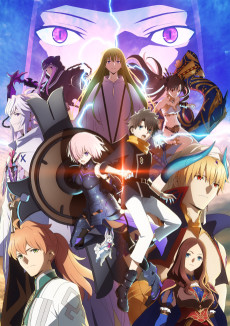
Fate/Grand Order Absolute Demonic Front: Babylonia
A seventh Singularity has been discovered in ancient Mesopotamia in the year 2655 B.C.
The land of Uruk, governed by the wise King Gilgamesh after he returned from his quest for immortality, was grand and prosperous until three goddesses and countless Demonic Beasts appeared. These enemies have brought Uruk to the brink of destruction. With a Rayshift—a method of traveling across both time and space—Fujimaru and Mash journey to the land of Uruk, where they encounter the fortress city of Uruk and the Absolute Demonic Front, where a terrible battle against the fearsome onslaught of the Demonic Beasts rages. There, the citizens of Uruk, who live their lives to the fullest despite facing an existential threat, continue to fight for their future. Deities and Demonic Beasts attack with terrifying force, and mankind pushes back with all its might... This is the era where humans and gods are destined to part ways.
Fujimaru and Mash, the pair who have fought through all six previous Singularities, embark on their final battle.
(Source: Aniplex of America)
Note: Based on the Babylonia Singularity of Fate/Grand Order, the Japanese smartphone role-playing game created by Delight Works based on the Fate series by Type-Moon.
📺Anime Details
📝Editorial Analysis
The dust doesn’t settle in Uruk—it hangs, thick and golden, caught between breaths. You feel it first in the silence after Mash’s shield shatters against a Demonic Beast’s claw: not the clean crack of glass, but the groan of ancient stone giving way under impossible weight. Then Gilgamesh’s voice cuts through—not booming, not theatrical, but tired, like a king who has watched empires rise and rot in the same afternoon. He stands atop the ziggurat, spear held low, not as a weapon, but as a witness. That moment—where myth isn’t spectacle but burden, where divinity feels less like power and more like gravity—is where Fate/Grand Order Absolute Demonic Front: Babylonia lives.
This isn’t fantasy as escape. It’s fantasy as archaeology of feeling: the ache of civilizations that knew their own fragility, the quiet dread beneath grandeur, the way gods don’t descend—they linger, half-remembered, half-regretted. You don’t just watch Uruk burn; you feel the weight of its clay tablets, the echo in its canals, the exhaustion in Fujimaru’s hands as he grips his Rayshift device—not as a tool, but as the last fraying thread tying him to a timeline already slipping. It makes you think about legacy not as monuments, but as what survives the telling: the cracks in the wall, the hesitation before a vow, the way Mash’s armor gleams not with invincibility, but with the stubborn shine of something refusing to rust.
That emotional DNA pulses strongest in Rise of the Argonauts, where Jason’s grief isn’t cathartic—it’s architectural. The description says he had “a prosperous kingdom, the respect of his peers, and a beautiful fiancé”—then she’s gone. Just like that. Player review confirms it: “If you love games based on ancient history this one does it right…” Not flashy, not flawless—but right, in the way Babylonia is: grounded in the soil of consequence, where mythology isn’t backdrop, but the very air the characters breathe—and choke on. Both treat gods not as plot devices, but as forces that warp human scale: Gilgamesh’s pride isn’t arrogance, it’s the slow erosion of empathy across millennia; Jason’s quest isn’t heroism, it’s the desperate, flawed arithmetic of love versus time.
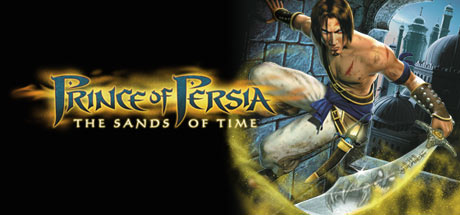
Then there’s Prince of Persia: The Sands of Time, where the dagger doesn’t grant control—it exposes how thin the line is between memory and ruin. The description places the Prince “amidst the scorched sands of ancient Persia,” drawn to “dark powers” that unravel truth. Player review nails the texture: “The tactical platforming that is satisfying due to the locked directions… yet still challenging.” That tension—between precision and collapse, between remembering and repeating—is Babylonia’s heartbeat. Fujimaru doesn’t master time; he stumbles through it, every Rayshift a gamble with causality’s brittle edges. Like the Prince rewinding seconds only to watch the same sand slip through his fingers, Babylonia’s time manipulation feels physical, gritty, never clean.
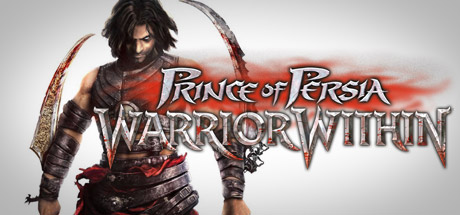
And Prince of Persia: Warrior Within—where Dahaka isn’t a boss, but time’s teeth. Hunted, not by an enemy, but by the consequence of choice. The player review calls the chase “goated”—not for flash, but for relentlessness, for how it turns every corridor into a throat. That’s Babylonia’s third goddess, Ishtar—not a villain, but inevitability made flesh, her presence warping reality like heat haze over ruins. Her arrival doesn’t escalate conflict—it compresses it, making every second in Uruk feel borrowed, every alliance fragile, every victory provisional. The game’s dim of Time & Memory isn’t thematic window-dressing; it’s the tremor in your wrist as you hold Mash’s hand while the sky bleeds black.
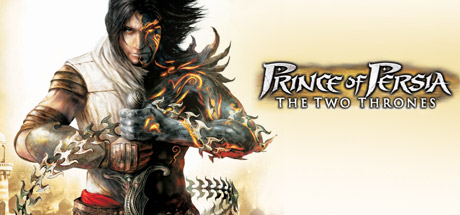
This pairing isn’t for fans of lore dumps or power fantasies. It’s for the person who replays The Two Thrones not for the swordplay, but for the way Kaileena’s voice breaks when she says “You’re not the same prince I knew”—because they recognize that fracture. It’s for the viewer who watches Gilgamesh stare at the Euphrates and feels the weight of 4,600 years pressing down—not as distance, but as intimacy. They love stories where myth isn’t worn like armor, but carried like a wound: raw, sacred, and unforgettable.
🎮7 Games That Match the Vibe
Match Dimensions Explained
❓Frequently Asked Questions
Why is Rise of the Argonauts listed as similar to Fate/Grand Order: Babylonia?
Because both lean hard into mythological worldbuilding and cinematic action—Rise of the Argonauts puts you in Jason’s sandals as he rallies Greek heroes like Achilles and Medea to reclaim the Golden Fleece, with combat that mirrors Babylonia’s spectacle-driven set-pieces (think Enkidu’s rampages or Gilgamesh’s gate openings). It’s got that same ‘epic quest across sacred lands’ vibe, and players who loved Babylonia’s Babylon, Uruk, and Eridu sequences often cite Argonauts’ faithful, atmospheric take on ancient myth as a major draw.
Is there an anime or manga adaptation of Loki that ties into Babylonia’s lore?
No—Loki here isn’t the Marvel or Fate version; it’s a standalone mythological RPG where you play one of four culture-specific heroes (like a Norse warrior or Slavic sorceress), and it has zero narrative or licensing ties to Fate/Grand Order. The match is purely thematic: both games use deep mythic frameworks (Norse, Mesopotamian, etc.) and prioritize visual grandeur over shared continuity.
How does Prince of Persia: Warrior Within compare to Babylonia in terms of tone and pacing?
Warrior Within is grittier and more relentless—imagine Babylonia’s darker arcs (like the Hanging Gardens’ despair or Romani’s sacrifice) dialed up with Dahaka’s terrifying, time-bending chases through crumbling Persian ruins. Unlike Babylonia’s dialogue-heavy interludes, Warrior Within keeps tension high with tight combat, oppressive sound design, and that iconic ‘running from fate’ mechanic—so if you loved the urgency of Babylonia’s final battles but wanted them more visceral and less exposition-heavy, this fits.
What’s the best game like Babylonia if I want that melancholic, time-obsessed atmosphere with emotional weight?
Go straight to Prince of Persia: The Sands of Time—it nails that bittersweet, memory-laced gravity: the Prince’s guilt over the dagger’s curse, rewind mechanics that feel like desperate second chances, and quiet moments like his conversations with Farah echoing Babylonia’s themes of loss and legacy (think Mash’s devotion or Ritsuka’s resolve). Reviewers even call out its ‘tactical platforming’ as emotionally resonant—each jump and rewind feels earned, just like Babylonia’s story beats.