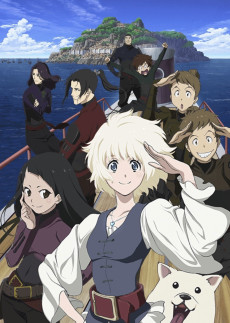
Fena: Pirate Princess
Fena Houtman is a young orphan girl that has been raised on an Island where there is no hope of becoming anything more than chattel, to be used and discarded by soldiers of the British Empire. But Fena is more than just another powerless orphan. When her mysterious past comes knocking, Fena will break the chains of her oppressors. Her goal: forge a new identity, free of bondage, and search for a place where she can truly belong and find out the true mysteries behind a keyword "Eden." It is the story of a lifetime adventure she and her crew of misfits and unlikely allies will have, in pursuit of her goals!
(Source: Crunchyroll)
📺Anime Details
📝Editorial Analysis
The salt stings before the blade does—Fena’s bare feet slap against wet deck planks as she pivots, hair whipping across her face, sword raised not with flourish but desperation. She’s not swinging for glory; she’s carving space between herself and the man who called her “chattel” minutes ago. Her breath is ragged, her knuckles white—not from fear alone, but from the sudden, electric shock of remembering something—a flash of light, a name whispered like a prayer: Eden. That moment isn’t just action—it’s the first crack in a dam built over years of silence, of erasure, of being told her memory isn’t hers to keep.
What makes Fena: Pirate Princess ache so deeply isn’t its pirates or swordplay—it’s how it treats time and selfhood as contested territory. This isn’t swashbuckling fantasy dressed in colonial linen; it’s a story where every cut of steel echoes a suppressed past, where every harbor approached feels less like escape and more like excavation. You don’t just watch Fena fight—you feel the weight of what she’s unlearning: obedience as instinct, silence as safety, her own name as something borrowed, not owned. It’s haunting, not because of ghosts, but because of gaps—gaps in her memory, in history’s record, in the empire’s ledger where her life was never meant to be counted. You think about inheritance—not of land or title, but of voice, of continuity, of whether identity can survive deliberate fragmentation.
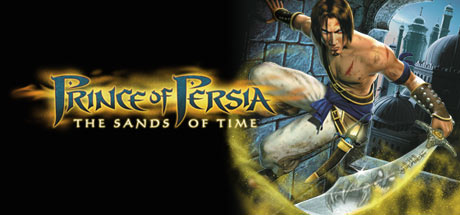
That emotional resonance lands hardest with the Prince of Persia trilogy—not as spectacle-first adventures, but as memory-adjacent odysseys. Look at Prince of Persia: The Sands of Time: its description names “a legend spun in an ancient tongue… ruled by deceit,” and its player review praises “tactical platforming” that’s “satisfying due to the locked directions”—a perfect metaphor for Fena’s world, where movement is constrained, choices are narrow, yet mastery emerges within those limits. Like Fena, the Prince doesn’t wield time as power—he fights its distortion, rewinding missteps not for convenience, but because consequence is too heavy to bear twice. His dagger doesn’t grant control—it exposes how fragile agency is when history has already been rewritten.
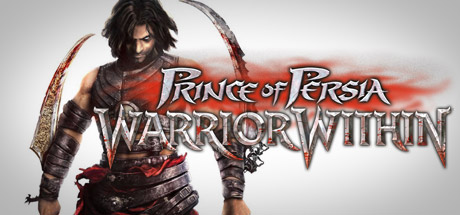
Then there’s Prince of Persia: Warrior Within, where the Prince is “hunted by Dahaka, an immortal incarnation of Fate.” The player review calls the Dahaka chase “goated”—not for its difficulty, but for its relentlessness, its refusal to let the Prince rest in any version of himself. That’s Fena’s truth too: Eden isn’t a place on a map—it’s the ghost of a self she’s been forbidden to become. The Dahaka doesn’t just pursue; it mirrors, forcing confrontation with what’s been buried. Both stories treat pursuit as psychological archaeology—every corridor run, every leap across crumbling ruins, every parry against an unstoppable force—is a step toward reclaiming narrative sovereignty.
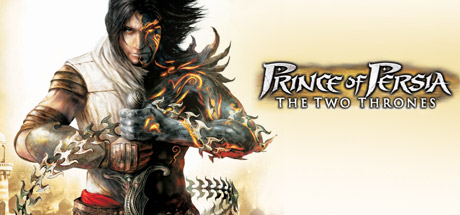
Even Prince of Persia: The Two Thrones, with its Prince returning to a “homeland ravaged by war,” mirrors Fena’s impossible homecoming—not to a place, but to a truth that’s been weaponized against her. Its description frames peace as illusion; Fena’s island isn’t paradise—it’s a gilded cage where “no hope of becoming anything more than chattel” is policy, not prophecy. The player review notes it “still plays great,” hinting at endurance—the same quiet stamina Fena shows when she stands, breathless, after being knocked down again, not because she believes she’ll win, but because she refuses to let the story end where someone else wrote the last line.
This isn’t about pirates loving pirates, or swordplay fans craving more swordplay. It’s for the viewer who holds their breath during a flashback—not waiting for exposition, but feeling the vertigo of a mind reassembling itself. It’s for the player who replays Warrior Within after a decade—not for nostalgia, but because the Dahaka chase still feels like their own unresolved reckoning. It’s for anyone who’s ever had to fight not just enemies, but the architecture of forgetting—whether carved into colonial records, encoded in cursed daggers, or stitched into the seams of a stolen name. They’ll recognize Fena’s swing not as bravado, but as testimony. And they’ll know, bone-deep, why Eden isn’t a destination—it’s the first word she gets to speak without permission.
🎮10 Games That Match the Vibe


Match Dimensions Explained
❓Frequently Asked Questions
Why is Prince of Persia: The Sands of Time always listed as a top match for Fena: Pirate Princess?
It’s all about that swashbuckling blend of acrobatic platforming, time-bending mechanics (like rewinding mistakes with the Dagger), and a charismatic, quick-witted protagonist—just like Fena’s clever, sword-flipping energy. The desert ruins, palace infiltrations, and those tight corridor combat sequences (think the Hourglass Chamber fight) mirror Fena’s agile, story-driven action—and fans love how the locked-direction movement makes every leap feel intentional and satisfying.
Is there an anime or manga adaptation of Prince of Persia like there is for Fena?
Nope—unlike Fena: Pirate Princess (which originated as a manga), the Prince of Persia games have never gotten an official anime or manga adaptation. There *was* a 2010 Disney movie (loosely inspired by The Sands of Time), but it’s not canon—and no animated series or manga has ever been greenlit, despite years of fan clamoring, especially after the 2024 remake announcement.
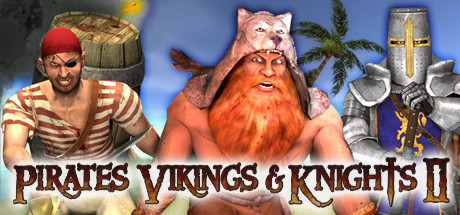
How does Pirates Vikings & Knights II compare to Fena: Pirate Princess in terms of pirate vibes?
PVKII nails the chaotic, over-the-top pirate *aesthetic*—think hook swords, drunken cannon barrages, and boarding ship maps—but it’s purely multiplayer mayhem with zero story or character depth. Fena’s got heart, lore, and emotional stakes (like her bond with Yukimaru or the haunting flashback scenes aboard the *Mistress*), while PVKII is all about yelling ‘ARRR!’ mid-air before yeeting a Viking off a mast. Great for laughs, zero for narrative immersion.
What’s the best game like Fena if I want that same adventurous, sun-drenched, ‘crew-on-a-mission’ feeling?
Go straight to Prince of Persia: The Two Thrones—it’s got that exact vibe: you’re returning home (Babylon) with your found family (Kaileena, Farah), navigating war-torn cities and crumbling palaces, all while balancing swagger and sorrow. The rooftop chases, sandstorm ambushes, and the way the Dark Prince persona adds moral tension? Feels like sailing into a storm with Fena’s crew—visually lush, emotionally charged, and full of momentum.