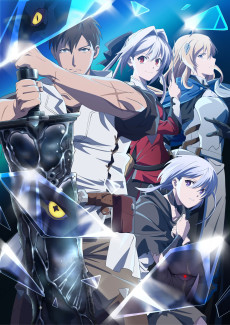
I Parry Everything
The Kingdom of Clays faces a dire crisis: an assassination attempt has just been made on its own Princess Lynneburg, and its neighboring countries eye the aftermath like starving vultures, plotting the Kingdom’s downfall. The ensuing conflict will shape the face of the continent for centuries to come...but Noor doesn’t have a clue about any of that! Having freshly arrived at the royal capital after over a decade of rigorous, isolated training at his mountain home, he’s dead set on achieving his childhood dream of becoming an adventurer, even if the only skills he possesses are useless ones. Sure, he can [Parry] thousands of swords in the span of a single breath, but everybody knows you need more than that if you want to be an adventurer! Our hero’s road to making his dream come true will be long(?) and arduous(?)—but if there’s one thing Noor’s not afraid of, it’s some good ol’ fashioned hard work!
(Source: J-Novel Club)
📺Anime Details
📝Editorial Analysis
Noor’s sword clangs—not against steel, but against time itself. He parries a falling roof tile mid-air, then a startled pigeon, then the very arc of a sunbeam slicing through palace dust motes. His wrist flicks, his breath steadies, and the world bends just enough to let him slip between consequence and chaos—like he’s been doing since childhood, alone on that mountain, training not for war, but for presence. The Kingdom of Clays is fracturing around him: assassins lurk, dragons coil in the periphery, Princess Lynneburg bleeds quietly in a gilded corridor—but Noor doesn’t flinch. He parries everything, not because he understands the stakes, but because his body remembers rhythm before reason. That’s the first truth: this isn’t about mastery. It’s about reflex as philosophy.

What makes I Parry Everything vibrate with such uncanny warmth isn’t its fantasy scaffolding or even its time skip—it’s how it treats absurdity as emotional gravity. The surreal comedy isn’t layered on top of the coming-of-age; it is the coming-of-age. When Noor misreads royal protocol as a sparring cue, or mistakes wartime diplomacy for a sword-dance form, the humor doesn’t undercut the tension—it translates it into something tactile, survivable. You don’t feel dwarfed by war—you feel alongside someone who meets apocalypse with the same calm focus he’d use to peel an apple. It’s grounded euphoria: the joy of being so utterly, stubbornly in your body, even while the world burns maps behind your back. Orphanhood isn’t tragedy here—it’s quiet preparation. Survival isn’t grit—it’s grace under perpetual misapprehension.
That feeling—the whiplash of high-stakes spectacle fused with bone-deep, almost childlike levity—is why Team Fortress Classic lands like a memory you didn’t know you had. Its nine wildly mismatched classes—Medic sprinting with a syringe, Spy vanishing mid-sneer—don’t simulate realism; they celebrate collision. Like Noor parrying a dragon’s yawn, TFC treats physics as suggestion and consequence as punchline. A player says it “gives [them] dreams”—not because it’s deep, but because its chaos sticks in the nervous system, the way Noor’s mountain training stuck in his tendons. Both are built on rhythm over realism, where timing isn’t tactical—it’s ritual.
Then there’s DeathSpank: Thongs of Virtue, whose description calls it “one of the funniest action-RPGs to date,” and whose player review frames it as “a romp of misadventure through a kingdom to bring about the second coming of justice.” That phrase—romp of misadventure—is pure I Parry Everything DNA. Noor doesn’t march toward destiny; he stumbles into it, adjusting his stance mid-fall. DeathSpank’s art style and humor “still quite fun” precisely because they refuse solemnity—even when holding cosmic stakes. Both treat virtue not as doctrine, but as improvisation: Lynneburg’s fragile sovereignty, DeathSpank’s Thongs—objects of myth that only gain weight because someone keeps showing up, sword raised, eyebrow cocked, utterly unimpressed by grandeur.
And though Devil May Cry® 3 Special Edition scores slightly lower (76), its player review nails the shared pulse: “Awful port, fantastic game.” That dissonance—flawed delivery, undeniable core—mirrors I Parry Everything’s own texture. Dante battles demons with flamboyant, almost theatrical precision, his combat styles shifting like moods—just as Noor’s parries shift from defense to dance to deadpan commentary. Both weaponize style as survival, turning trauma (Dante’s past, Noor’s isolation) into vocabulary—not through exposition, but through how the body moves when the world won’t stop moving first.
This pairing isn’t for fans of “epic fantasy” or “hardcore action.” It’s for the person who grins when a boss fight dissolves into slapstick, who feels more trust in a character who trips while drawing their sword, who finds courage not in speeches—but in the quiet, unshakeable certainty of a wrist flick at exactly the right millisecond. It’s for the kid who learned to breathe by counting sword swings on a mountain—and the adult who still does, whenever the world gets too loud.
🎮15 Games That Match the Vibe
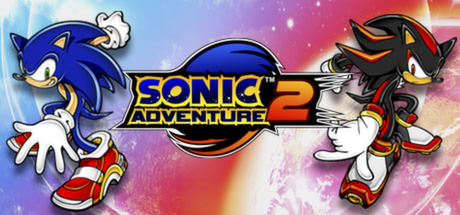

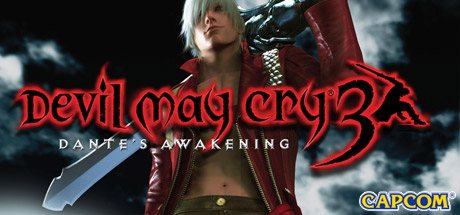
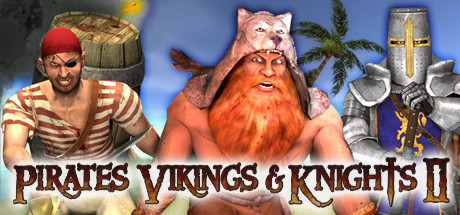



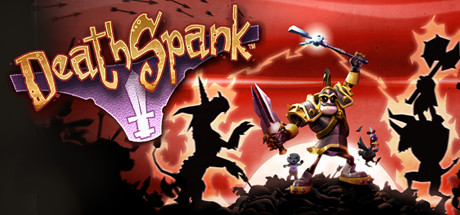

Match Dimensions Explained
❓Frequently Asked Questions
Why does the I Parry Everything match list include Prince of Persia when it’s not a parody?
Great question — it’s because the match algorithm weights 'Action Spectacle' and 'Comedy & Parody' *together*, and this specific Prince of Persia (the 2008 reboot, not Sands of Time) leans hard into over-the-top acrobatics, fourth-wall-breaking quips from the Prince and Elika, and absurdly cinematic set-pieces like flipping off crumbling palace domes — all wrapped in a self-aware, almost satirical tone. Player reviews even call out its 'brand new story completely separate' vibe, which mirrors I Parry Everything’s playful genre subversion.
Is there a mobile version of DeathSpank: Thongs of Virtue or The Baconing?
Nope — neither DeathSpank: Thongs of Virtue nor The Baconing was ever officially ported to mobile. They remain PC/console exclusives (originally on PS3/X360/PC), and the player review for The Baconing even hints at why: 'You can tell the Director of the first was not really involved,' suggesting rushed dev cycles that never extended to mobile adaptation. If you want that same loony loot-hunt energy on phone, you’d need to look elsewhere — these two stayed firmly on big screens.
How is Team Fortress Classic different from Devil May Cry 3 in terms of parrying?
Totally different beasts! TFC has *no parry mechanic at all* — its 'parry everything' energy comes from chaotic, class-based slapstick: Spy backstabs, Medic ubercharges, and Demoman sticky-jump chaos creating that same 'oh crap, I dodged *that*?' adrenaline rush. DMC3, meanwhile, gives Dante *actual* parry frames (like blocking Vergil’s Judgement Cut with perfect timing), but the match list groups them both under 'Action Spectacle + Comedy & Parody' — think TFC’s 'Medic screaming 'MEDIC!' mid-air versus Dante yelling 'Jackpot!' after a 50-hit combo.
What’s the best game like I Parry Everything if I just want pure chaotic co-op fun?
Team Fortress Classic — hands down. It’s built for 16-player mayhem where your Heavy’s minigun spin-up sounds like a lawnmower possessed, your Spy’s disguise sputters hilariously, and every round ends in a pile of ragdolled mercenaries screaming nonsense. Player reviews call it 'simply the best nostalgic game' with dreams about it — that’s the exact kind of unhinged, shared-moment energy I Parry Everything nails. DeathSpank’s co-op (via Roesha in The Baconing) exists, but the review bluntly calls it 'by far the worst of the 3' — skip to TFC for real co-op chaos.