
I've Been Killing Slimes For 300 Years And Maxed Out My Level Season 2
The second season of Slime Taoshite 300-nen, Shiranai Uchi ni Level Max ni Nattemashita.
Get ready for more relaxing tales! Azusa Aizawa is a powerful witch who finally reached level 99 and now busies herself with laid-back quests instead. Her family continues to grow as some familiar faces are joined by bright-eyed newcomers. From trips to the beach to a martial arts tournament, you’re invited on Azusa’s carefree and heartwarming adventures of leisure.
(Source: Crunchyroll)
📺Anime Details
📝Editorial Analysis
The scent of salt and sunscreen hangs in the air as Azusa leans back on her beach towel, bare feet buried in warm sand, watching a tiny slime—translucent, wobbling, utterly unthreatening—bounce gently off the rim of a seashell. She doesn’t cast a spell. Doesn’t level up. Doesn’t even need to blink. A breeze lifts a strand of hair; she lets it. That’s the heartbeat of I've Been Killing Slimes For 300 Years And Maxed Out My Level Season 2: not victory, but permission—the quiet, radiant permission to exist without urgency, without consequence, without performance.

This isn’t just “relaxing anime.” It’s weightlessness made narrative. The medieval fantasy setting isn’t a stage for conquest—it’s wallpaper. Gods appear like neighbors dropping by with baked goods. Battles are resolved with sighs and shared tea. Even “martial arts tournaments” unfold less like competitions and more like group calisthenics choreographed by someone who deeply loves napping. What lingers isn’t plot momentum but texture: the rustle of a witch’s robe brushing grass, the clink of mugs during a late-night kitchen chat, the way sunlight catches dust motes above a hearth where no one is saving the world—because no one has to. It makes you exhale longer than you realized you’d been holding your breath. It makes you wonder why so much of life feels like sprinting when stillness could be this full.
That emotional resonance echoes sharply in Chains, the match-3 arcade game built on physics-driven bubbles and gentle progression. Its description calls it “relaxing,” its core loop defined by linking colors—not conquering, not optimizing, just connecting, again and again, until the screen clears and you breathe into the next soft challenge. A player says it “reminds me of connect 4 in nutshell”—not grand strategy, not high stakes, but tactile, rhythmic, kind. Like Azusa arranging herbs on a windowsill or watching slimes mimic her yoga poses: small acts, repeated with care, yielding quiet satisfaction. No timers. No penalties. Just color, motion, and the soft pop of release—exactly how Season 2 lands every scene.
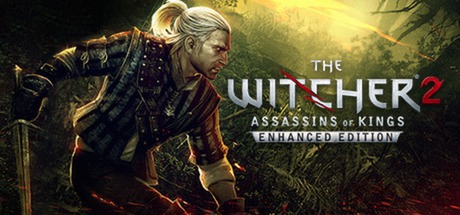
Then there’s the uncanny kinship with The Witcher 3: Wild Hunt, though not for its dragons or destiny—but for how both anchor profound emotional narrative in domestic gravity. Geralt’s most resonant moments aren’t sword clashes at Skellige, but sitting beside Yennefer on a sun-dappled bench in Novigrad, talking about nothing important. The anime’s found-family warmth mirrors that same dimension: Azusa’s home isn’t a fortress or throne room—it’s a cottage where gods bicker over dessert recipes and witches debate pillow fluffiness. A player review notes the DLC “keeps getting better” eleven years later—not because of new lore dumps, but because the emotional architecture holds. Like Azusa’s world, Geralt’s feels lived-in, tenderly detailed, emotionally unhurried. Both trust that love, loyalty, and quiet presence matter more than scale.
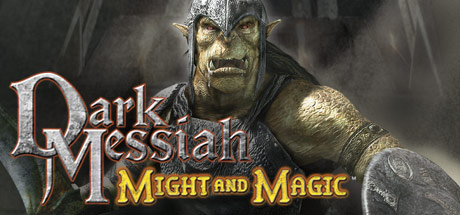
Even Dark Messiah of Might & Magic, with its “dark and immersive” combat and body horror undertones, shares a subtle thread—not in tone, but in embodied ease. Its player review praises “ferocious combat that still holds up,” yet what binds it to Azusa’s beach day is physical fluency: Geralt moves through crowds like water; Azusa floats through magical bureaucracy like smoke. Neither strains. Both inhabit their bodies—and their worlds—with unselfconscious mastery. In Dark Messiah, that fluency is kinetic; in Slime Taoshite, it’s stillness as power. Same confidence. Different grammar.
This pairing sings for the person who replays The Witcher 3’s bathhouse scenes just to hear the steam hiss and the dialogue meander. For the player who opens Chains not to beat the clock, but to watch bubbles drift and collide in slow, satisfying arcs. For the viewer who watches Azusa sip mint tea at dawn—not waiting for something to happen, but reveling in the fact that nothing needs to. They’re not avoiding stakes. They’ve outgrown them. What they crave is texture, tenderness, and the deep, shimmering truth that sometimes—the most radical magic isn’t summoning storms. It’s choosing, again and again, to stay.
🎮14 Games That Match the Vibe






Match Dimensions Explained
❓Frequently Asked Questions
Why is Chains recommended for fans of 'I've Been Killing Slimes For 300 Years' Season 2?
Because Chains nails that same soothing, slow-life rhythm — think Aiko calmly tending her slime garden or brewing potions while background music hums like wind chimes. Its healing-focused match-3 gameplay (linking bubbles to clear stages) and emotional narrative layer mirror the show’s gentle pacing and heartfelt character moments, not the combat-heavy stuff.
Is there a Witcher game adaptation of 'I've Been Killing Slimes For 300 Years'?
No — there’s no official Witcher crossover or adaptation of the Slimes anime. But The Witcher 3, Witcher 2, and the original Enhanced Edition all share the *emotional narrative* and *dark fantasy* dimensions that resonate with Slimes’ deeper themes: Geralt’s weary wisdom feels like Aiko’s quiet confidence, and choices in Witcher 2 (like siding with Roche or Iorveth) echo how Slimes explores consequence without melodrama.
How does Chains compare to Dark Messiah of Might & Magic for someone who loves Slimes’ vibe?
Chains is pure chill healing energy — imagine Aiko sipping tea while chaining pastel bubbles — while Dark Messiah is gritty, body-horror melee chaos where you kick enemies down stairs like it’s your job. If you want Slimes’ cozy, low-stakes serenity, Chains (84 score, Healing & Slow Life focus) is the only real match; Dark Messiah (60 score, Body Horror & Occult) leans into grimdark intensity instead.
What’s the best game like 'I've Been Killing Slimes For 300 Years' if I just want to unwind after work?
Chains is hands-down the best pick — its physics-driven bubble-linking is meditative, not stressful, and reviewers call it ‘connect 4 in a nutshell,’ which fits Slimes’ effortless charm. No monster hunts, no moral quandaries — just soft colors, satisfying clears, and that same warm, healing vibe as Aiko’s 300-year zen routine.