
JoJo's Bizarre Adventure: Stardust Crusaders
In a Japanese jail sits 17-year-old Jotaro Kujo: punk, fighter, delinquent...and possessed by a force beyond his control! Around the world, evil spirits are awakening: "Stands," monstrous invisible creatures which give their bearers incredible powers. To save his mother's life, Jotaro must tame his dark forces and travel around the world to Cairo, Egypt, where a hundred-year-old vampire thirsts for the blood of his family. But the road is long, and an army of evil Stand Users waits to kill JoJo and his friends...
(Source: VIZ Media)
📺Anime Details
📝Editorial Analysis
The air in the Cairo desert shimmers—not with heat alone, but with tension, thick and electric, as Jotaro’s Stand, Star Platinum, materializes mid-air with a crack like splitting bone. His knuckles bleed. His breath rasps. He doesn’t shout. He stares—not at the enemy, but through him—as if time itself is a fraying thread he’s holding between his teeth. That silence before impact—the way his jacket flaps like a wounded bird’s wing, the sweat tracing salt-lines down his temple, the sheer weight of consequence hanging over every punch—that’s where JoJo's Bizarre Adventure: Stardust Crusaders lives.
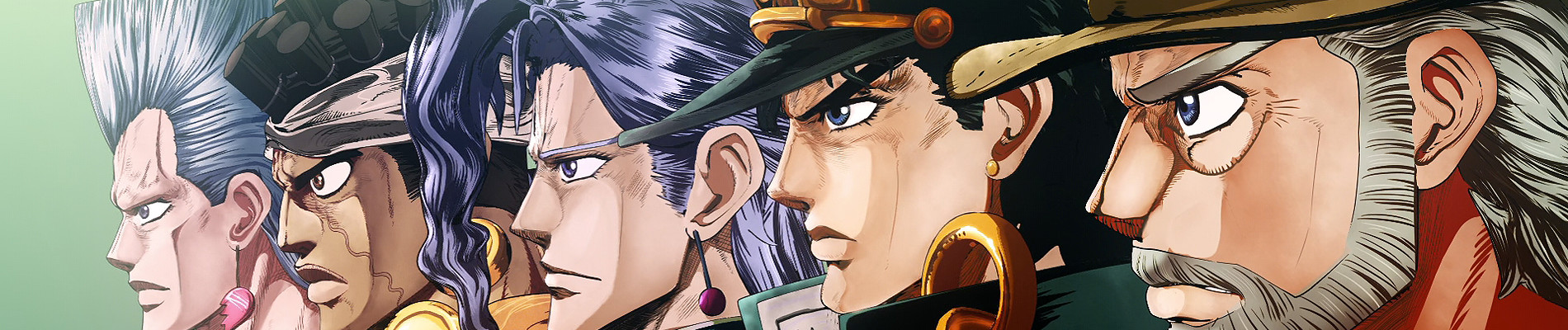
It’s not just action. It’s ritual. Every battle is a confrontation with fate, identity, and inherited violence—wrapped in flamboyant poses and absurd names, yes, but grounded in something raw: a boy learning that power isn’t freedom—it’s responsibility sharpened to a lethal edge. The travel isn’t scenic; it’s exhausting, punctuated by train delays, visa frustrations, and cramped hotel rooms where Jotaro stares at the ceiling, jaw clenched, thinking of his mother’s fading breath. The gore isn’t shock for shock’s sake—it’s visceral proof of stakes: blood on tile, splintered ribs visible through torn fabric, the wet thunk of a Stand’s fist meeting flesh. This is melancholic exploration: moving forward because stopping means losing her—and every mile deepens the ache, the loneliness, the quiet dread beneath the bravado.
That emotional DNA—this blend of weary pilgrimage, existential weight masked by stylized theatrics, and battles that feel less like sport and more like spiritual duels—resonates sharply with Hollow Knight. Its description promises “an epic action adventure through a vast ruined kingdom of insects and heroes,” and its player review calls it “Lovely story” with a “Great OST”—but what binds it to Stardust Crusaders is how both make solitude sacred. You don’t just traverse Hallownest—you absorb its silence, its decay, its buried grief. Like Jotaro walking Cairo’s dust-choked alleys, the Knight moves through crumbling cathedrals and hollowed-out graves, each step echoing with loss you didn’t cause but must carry. The art style isn’t just beautiful—it’s hauntingly restrained, mirroring JoJo’s visual minimalism: stark silhouettes, deliberate pauses, color used like punctuation—blood red against sand, gold against void.
Then there’s DARK SOULS™ III, whose description dares you to “Embrace The Darkness!”—not as spectacle, but as condition. Its player review asks, “Why Do We Still Reach for the Fire When It Is Dying?” That question is Jotaro’s entire arc: chasing a flicker of life (his mother) across continents while surrounded by forces that thrive on entropy—vampires, cursed Stands, betrayal, time itself unraveling. Both demand endurance over speed, reading intent over reflex, and reward patience with revelation—not loot, but understanding. When Jotaro finally grasps time-stop, it’s not a cheat code—it’s earned through near-death clarity, just as parrying in Dark Souls III becomes second nature only after dozens of failed attempts, each failure etching the rhythm of mortality deeper into your muscle memory.
Even Sacred Gold, flawed as its player review admits (“Full of jank, bugs… not very stable”), shares that same gritty pilgrimage pulse. Its description sets you in “a shadow of evil [that] has fallen on the kingdom of Ancaria”—a world already worn, where heroism isn’t gleaming armor but battered resolve. You “journey into the perilous world,” battling “blood-thirsty orcs & lumbering ogres,” and that verb—journey—is key. Like the Crusaders’ slow, uncertain trek from Japan to Egypt, Sacred Gold’s quests aren’t linear triumphs. They’re detours, setbacks, moments where the map glitches and you wander, lost, wondering if the next save point even exists. That instability isn’t a flaw—it’s atmosphere. It mirrors how Jotaro’s Stand first manifests: uncontrollable, frightening, breaking the rules of his own body.
This pairing isn’t for fans of clean power fantasies. It’s for the ones who pause mid-battle to watch rain streak a window in Hollow Knight, who re-read a cryptic journal entry in Dark Souls III three times, who grin when Stardust Crusaders cuts from a brutal fight to Jotaro silently sharing tea with Joseph on a Cairo rooftop—steam curling, no words needed. It’s for people who love weight, silence, and the fierce, stubborn warmth of human connection forged in exhaustion. Not the ones who want to win—but the ones who understand that sometimes, just keeping your eyes open while the world burns is the most bizarre, beautiful power of all.
🎮8 Games That Match the Vibe


Match Dimensions Explained
❓Frequently Asked Questions
Why does Stardust Crusaders' Cairo arc feel so different from Hollow Knight's vibe?
Stardust Crusaders’ Cairo arc is all about explosive Stand battles, over-the-top charisma, and rapid-fire momentum—think Jotaro vs. DIO’s time-stop showdowns. Hollow Knight swaps that for quiet, melancholic exploration of Hallownest’s decaying ruins, where you’re often alone with your thoughts and a haunting OST. It’s less about flashy duels and more about uncovering sorrowful lore through silent bugs and crumbling shrines—beautiful, but emotionally opposite to Cairo’s fiery intensity.
Is there a JoJo's Bizarre Adventure: Stardust Crusaders game adaptation on PC?
No official PC port of the *Stardust Crusaders* anime or manga exists as a standalone game—but games like *DARK SOULS™ III* capture its tonal weight and boss-fight gravitas (e.g., facing Lothric Knights feels like squaring up to Vanilla Ice’s ‘The World’). That said, none replicate Jotaro’s ‘ORA ORA’ combos or the exact Stand mechanics—you’ll need mods or fan projects for that level of fidelity.
Hollow Knight vs. DARK SOULS™ III—which one nails Stardust Crusaders’ ‘epic journey with heavy stakes’ better?
DARK SOULS™ III edges it out for sheer *Stardust Crusaders*-style gravity: every boss feels like a climactic Stand duel—think Abyss Watchers echoing the tension of Jotaro vs. Polnareff’s early trust struggles, or Yhorm’s sacrifice mirroring Joseph’s desperate gambits. Hollow Knight’s quieter, more introspective tone—while gorgeous and lore-rich—leans into melancholy solitude rather than the Crusaders’ tight-knit, high-stakes caravan across Egypt.
What’s the best game like Stardust Crusaders if I just want that ‘melancholic but majestic adventure’ feeling?
Go straight to *Hollow Knight*: its ruined kingdom of Hallownest, haunting OST, and layered tragedy (like the Pale King’s fall) hit that same bittersweet grandeur as the Crusaders’ pilgrimage—just swapped for insect royalty instead of Hamon and Stands. Player reviews even call out its ‘lovely story’ and ‘beautiful art style’, matching the anime’s emotional weight without needing time stops or golden wind.