
K
Yashiro Isana has lived a relatively ordinary, simple life. He lives in the technologically advanced Shizume City and attends Ashinaka High School, a notable high school that is located on an island just outside the areas. Yashiro is friendly with everyone. Nothing seems wrong about him, except perhaps his habit of forgetting where his school-issued PDA is.
However, nothing normal has been happening since the recent murder of Tatara Totsuka, prominent member of the infamous HOMRA. No one knows who exactly killed him but the man responsible bears an uncanny, identical appearance to Yashiro. Seeking vengeance, the Red Clansmen of HOMRA set out to get Yashiro and kill him. Everyone suspects that Yashiro is the murderer.
(Source: Wikipedia)
📺Anime Details
📝Editorial Analysis
Rain slicks the pavement of Shizume City like oil on black glass—cold, reflective, swallowing light. Yashiro Isana stands alone on the bridge overlooking Ashinaka Island, wind tugging at his uniform, PDA missing again. Not lost. Gone. The silence after Tatara Totsuka’s murder isn’t empty—it’s thick with the weight of what wasn’t said, what can’t be remembered, what shouldn’t be known. His fingers brush the railing, not searching, just holding on. That moment—not the fight, not the power flare, but this quiet, suspended breath before memory collapses—is where K lives.

It doesn’t feel like a supernatural action series. It feels like standing in an elevator shaft while the building burns around you—no flames visible, just heat rising through the vents, distant alarms muffled by concrete, and the slow, sickening realization that the floor you’re standing on was never meant to hold your weight. K trades spectacle for resonance: every gang emblem is a scar, every title (“Colorless King,” “Silver King”) a wound dressed as honor, every act of revenge already haunted by the ghost of its own justification. You don’t watch it to see who wins—you watch because you recognize the ache of identity slipping sideways, of being known by others before you’ve finished knowing yourself. It’s amnesia not as plot device but as atmosphere—fog you breathe in, not walk through.
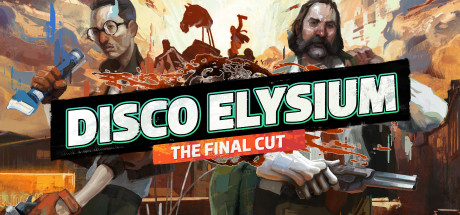
That same suffocating, cerebral gravity lives in Disco Elysium - The Final Cut, where the city of Revachol isn’t a backdrop but a character breathing judgment into your skull. Its description calls it a “groundbreaking role playing game” built on “a unique skill system” and “a whole city to carve your path across”—but the player review cuts deeper: “Capital has the ability to subsume all critiques into itself. Even those who would critique capital end up reinforcing it instead.” That’s K’s tragedy in syntax: the Red Clan’s ideology, the Green Clan’s surveillance state, the Gold Clan’s manufactured order—they aren’t villains opposing a hero. They’re systems so deeply interlocked that resistance becomes another gear in the machine. Both refuse catharsis. Both make you feel the weight of thought itself—the exhaustion of remembering why you care when every truth dissolves on contact.
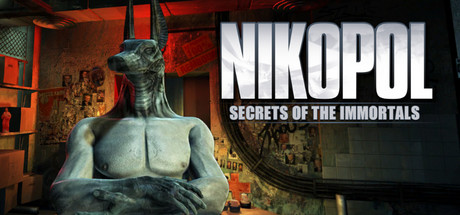
Then there’s Nikopol: Secrets of the Immortals, a “first-person dystopian point-and-click sci-fi adventure” set in a 2023 France ruled by “an iron-fist religious dictatorship,” where a pyramid ship hangs over Paris like a question mark no one dares voice. The player review notes its “cyberpunk atmosphere” and how “the animations and cutscenes enhance” its mood—not its puzzles or combat, but its vibe. That’s the connective tissue: K’s Shizume City isn’t neon-lit cyberpunk, but it breathes the same air—oppressive architecture, sacred geometry in street grids, divine power masquerading as municipal infrastructure. Both treat urban space as theological terrain. You don’t solve cases in either—you navigate dogma made manifest in concrete, steel, and sanctioned violence. The mystery isn’t who did it, but what covenant was broken—and whether the world still holds.
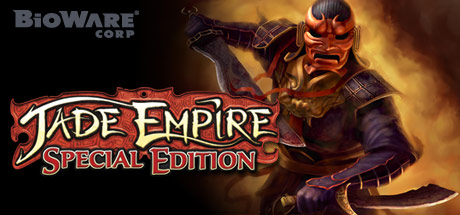
Jade Empire™: Special Edition, meanwhile, frames its martial-arts mastery around “the path of the open palm or the closed fist”—a duality that echoes K’s core tension between surrender and sovereignty, memory and erasure. Its description avoids naming gods or clans outright, but the mythic scaffolding is unmistakable: choices aren’t moral binaries, they’re ontological alignments. And though the player review fixates on technical hurdles—“Copy and paste ‘steam.dll’”—that very friction mirrors K’s narrative resistance: both demand you work with the instability, not around it. The glitches aren’t bugs. They’re texture.
This isn’t for the viewer who wants clean resolutions or the player who craves mastery. It’s for the one who lingers in train stations at midnight, watching reflections warp in rain-streaked glass—someone who feels most awake when the ground feels least solid. Someone who reads a line like “Even those who would critique capital end up reinforcing it instead” and doesn’t flinch, but nods, because they’ve already lived inside that loop. They’ll recognize Yashiro’s missing PDA not as forgetfulness—but as the first tremor before the fault line opens. They’ll play Disco Elysium, Nikopol, and Jade Empire not for answers, but for the quality of the silence between them—heavy, aching, true.
🎮22 Games That Match the Vibe








Match Dimensions Explained
❓Frequently Asked Questions
Why does Disco Elysium keep coming up when people search for games like K?
Because both lean hard into morally ambiguous detective work layered over emotionally raw, dialogue-driven narratives—like when you’re interrogating the dockworkers in Martinaise while your Skill Checks whisper self-loathing or radical ideology. It’s not just the mystery; it’s how the world *judges* you back, just like K’s own fragmented psyche and political weight.
Is there a TV adaptation of Nikopol: Secrets of the Immortals?
Nope—no TV show, no movie, not even a comic reboot. Nikopol stays firmly in its 2008 point-and-click lane: that eerie first-person view of dystopian Paris under the pyramid ship, with cutscenes that lean into cyberpunk atmosphere and religious authoritarianism, just like the player review says—'the animations and cutscenes enhance it.' Pure cult-game energy, no Hollywood meddling.
How is Crash Time 2 similar to Disco Elysium if one’s a racing game and the other’s a detective RPG?
At first glance? They’re worlds apart—but both slot into 'Mystery & Detective' + 'Emotional Narrative' because Crash Time 2 frames your Autobahn cop work as investigative storytelling: chasing suspects across open roads, piecing together crime scenes mid-chase, and dealing with systemic rot (like corrupt precincts), all while your character’s voiceover drips with weary irony. That said—don’t expect deep dialogue trees; the 'emotional narrative' here is more vibe than script, especially given the janky physics and 'awful controls' the player review warns about.
What’s the best game like K if I want something weird, philosophical, and deeply sarcastic?
Disco Elysium — hands down. Think of your Skills literally arguing with each other mid-interrogation ('Logic says this suspect is lying—but Empathy says he’s grieving'), or that brutal line about capital subsuming critique while you stare at a rain-soaked corpse in the Whirling-in-Rags district. It matches K’s tone in how it weaponizes irony, philosophy, and emotional exhaustion—not through action, but through every damn sentence you choose.