
Kannagi: Crazy Shrine Maidens
📺Anime Details
📝Editorial Analysis
The air in the shrine courtyard smells like rain-damp cedar and burnt incense—sharp, ancient, slightly off-kilter—just as Nagi snaps her fingers and the cherry blossoms freeze mid-air, petals hovering like paused frames in a VHS tape glitch. Her grin is too wide, her eyes too still, and when she tilts her head, the light catches the edge of something not quite human in the way her shadow doesn’t quite match her movement. That’s the heartbeat of Kannagi: Crazy Shrine Maidens: not awe or terror, but the dizzying, unmoored thrill of standing where myth and meme collide—and realizing neither is kidding.
This isn’t supernatural as spectacle. It’s supernatural as static: the hum beneath classroom chatter when Nagi’s voice cracks open into three overlapping tones; the way memory manipulation feels less like plot device and more like forgetting your own name mid-sentence, then laughing because oh right, that’s just how Tuesdays work here. The atmosphere is warmly dissonant—like listening to a J-pop idol track while walking past a torii gate that flickers between wood and pixelated wireframe. It leans hard into otaku culture not as backdrop but as ritual: cosplay isn’t costume—it’s invocation; fan art isn’t homage—it’s scripture. And the love triangle? It’s less about choosing between girls and more about watching identity itself fray at the seams—shrine maiden, goddess, fractured self—all speaking in the same voice, all insisting they’re the real one. You don’t feel wonder. You feel vertigo, then sudden, giddy recognition—like your brain just caught its own reflection in a funhouse mirror made of shrine lanterns and manga panels.
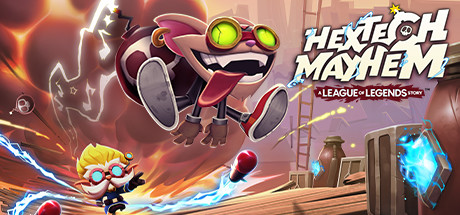
That exact tonal alchemy—the playful sacred, the parodic devotion—pulses through Hextech Mayhem: A League of Legends Story™. Its 81-score alignment on Music & Idol and Comedy & Parody isn’t accidental: it weaponizes pop spectacle the same way Kannagi weaponizes shrine rites—turning arena chants into battle spells, idol choreography into combat combos, synth drops into divine pronouncements. When Vi and Powder drop a beat mid-chase through Zaun’s neon alleys, it’s not just rhythm—it’s ritual reenactment, just as Nagi’s dance during the festival isn’t performance, but summoning. Both treat mythmaking as improv comedy with real stakes—and real basslines.
Then there’s Strong Bad's Cool Game for Attractive People: Season 1, scoring 77 on Comedy & Parody and Music & Idol. The description nails it: “Enjoy Strong Bad’s wacky comedic adventures over 5 full episodes!”—and that episodic, self-aware, fourth-wall-licking energy mirrors Kannagi’s structure perfectly. Nagi doesn’t walk into class—she strolls through a punchline, her shrine maiden robes flapping like a cartoon cape. The player review (“With the recent remake of Poker Night…”) hints at the same cultish, nostalgic irreverence: both works thrive on inside jokes that double as theology, where a poorly timed “YOU’RE DOOMED!” feels as spiritually weighty as a purification chant. Neither asks you to believe—they ask you to lean in and laugh until your ribs ache, then whisper a prayer anyway.
Even Prince of Persia, at 76 on Comedy & Parody and Romance & Shoujo, shares this DNA—not in desert vistas or acrobatics, but in how it reboots devotion. The player review notes it’s “the 3rd reboot… completely separate from the sands…”—that deliberate, almost ceremonial severing of continuity echoes Kannagi’s treatment of kami: Nagi isn’t a relic. She’s a remix, a new iteration of an old god who wears school uniforms and quotes anime tropes like sutras. Romance here isn’t confession under sakura—it’s two people trying to hold each other together while their memories keep rewriting themselves, much like the Prince’s timeline keeps folding, bending, restarting—not as tragedy, but as playful necessity. Love isn’t stable. It’s liturgical improvisation.
You’d love these pairings if you’ve ever cried laughing during a shrine festival, or paused a game just to stare at how a character’s hair moves exactly like wind through bamboo—and felt that wasn’t coincidence, but communion. If you keep shrine charms in your laptop bag and know the BPM of your favorite ending theme by heart. If you don’t want myth to be distant or solemn—you want it sticky, silly, sweat-stained, and humming with the same frequency as your playlist. Not believers. Co-conspirators.
🎮10 Games That Match the Vibe




Match Dimensions Explained
❓Frequently Asked Questions
Why does Kannagi: Crazy Shrine Maidens match with Prince of Persia?
Because both lean hard into romanticized shoujo aesthetics and playful, self-aware parody—like Prince of Persia’s flirtatious banter between the Prince and Elika mirroring Kannagi’s shrine maiden antics, and both use lush, painterly visuals to sell their fairy-tale-meets-comedy vibe. The match isn’t about combat or platforming—it’s that shared DNA of swoony romance + gentle satire.
Is there an anime or manga adaptation of Kannagi: Crazy Shrine Maidens?
No official anime or manga exists—but if you love its tone, Strong Bad's Cool Game for Attractive People nails that same off-kilter, fourth-wall-breaking comedy energy, especially in Episode 3 where Strong Bad hosts a mock talent show just like Kannagi’s idol-saturated shrine festivals. Fans even compare its meta-humor to Kannagi’s wink-at-the-audience shrine rituals.
How does Kannagi: Crazy Shrine Maidens compare to Hi-Fi RUSH?
Both are rhythm-infused, hyper-stylized comedies where music drives the action—Kannagi’s shrine dances sync to J-pop beats like Hi-Fi RUSH’s combat combos lock to bass drops—but Kannagi leans more into idol culture and shrine folklore, while Hi-Fi RUSH goes full punk-rock action. They share that ‘joyful chaos’ spark, though: think Kannagi’s ‘Purification Dance’ minigame vs. Hi-Fi RUSH’s record-scratching boss fights.
What games like Kannagi: Crazy Shrine Maidens are best for feeling playful and absurd?
Hextech Mayhem is your top pick—it’s got that same infectious, over-the-top idol-energy (Ziggs’ glitter-bomb concerts, Yuumi’s squeaky voice) and sharp parody of fandom culture, just like Kannagi’s shrine-maiden variety shows. Strong Bad’s Cool Game also delivers absurdist gold—imagine playing a ‘sacred ritual’ mini-game where you convince Coach Z that a toaster is a divine relic… very Kannagi-core.