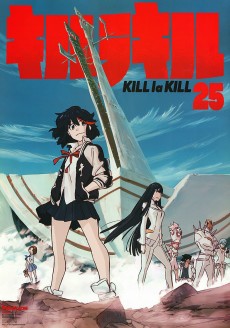
Kill la Kill: GOODBYE AGAIN
Unaired episode included with the 9th Blu-ray and DVD volumes.
📺Anime Details
📝Editorial Analysis
The air crackles—not with tension, but glorious, unhinged static—as Ryuko Matoi’s scissor-blade slices sideways, not at an enemy, but through the fourth wall itself, revealing behind it a rotating reel of cartoonish film sprockets, a rubber-hose animation gag, and a single floating subtitle that reads: “CUT. (But also: no, we’re not stopping.)” That’s Kill la Kill: GOODBYE AGAIN in one breathless, unapologetic frame: a post-credits detonation disguised as an epilogue, stuffed into the 9th Blu-ray like a secret note slipped into a locker. It doesn’t resolve—it recoils, then grins.
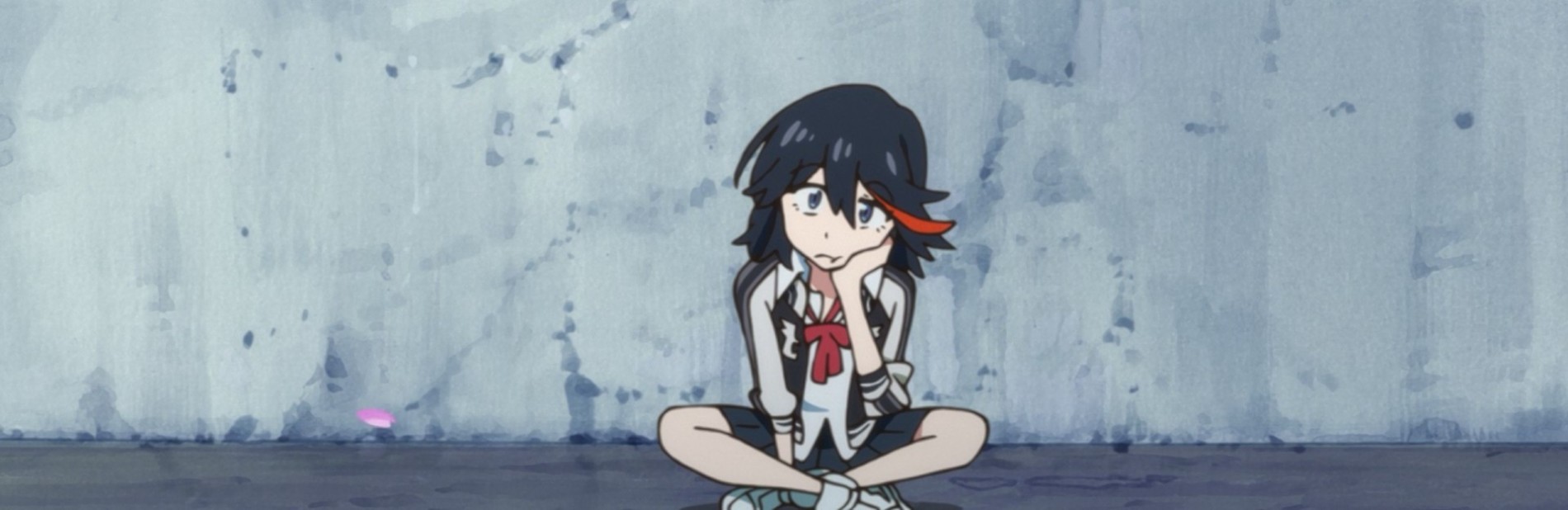
What makes this thing vibrate isn’t its school setting or henshin tropes—it’s the delirious velocity of commitment. Every frame feels like it’s been hand-drawn by someone who just mainlined espresso, glitter glue, and three decades of anime history—and then decided to mock, magnify, and melt it all down in real time. You don’t watch it; you get swept up in its manic rhythm, where absurdity isn’t a garnish but the structural steel. It makes you feel giddy, yes—but also seen, like it knows exactly how exhausting it is to care this much about nonsense, and rewards you for leaning in harder. It’s not satire of genre—it’s satire in love with genre, sweating, yelling, and doing backflips on the edge of coherence. That’s the feeling: feral joy.
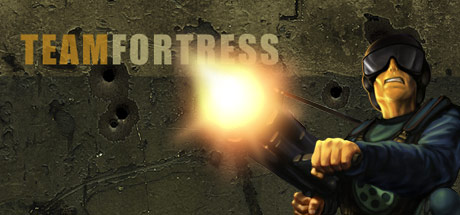
That same electricity surges through Team Fortress Classic—not because it’s about schools or uniforms, but because it shares that same action spectacle fused with surreal, self-aware parody. Its nine wildly distinct classes—Medic, Spy, Demolition Man—aren’t balanced archetypes; they’re cartoon identities weaponized, each with physics-defying quirks and dialogue that winks while it stabs. A player review nails it: “simply the best nostalgic game, i have dreams about this game.” That’s the resonance—GOODBYE AGAIN doesn’t want to be remembered politely. It wants to live in your dreams, too: half-memory, half-hallucination, vibrating with the same chaotic warmth. Both are artifacts built to linger, not just entertain.
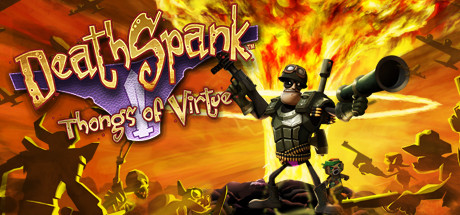
Then there’s DeathSpank: Thongs of Virtue, whose description promises “one of the funniest action-RPGs to date!”—and whose player review confirms it’s a “romp of misadventure… to bring about the second coming of justice.” That phrase—second coming of justice—is pure GOODBYE AGAIN DNA. Ryuko doesn’t fight for world peace; she fights for a shirt, for her father’s truth, for the sheer ridiculous dignity of refusing to be reduced. DeathSpank swings a sword named “The Sword of Many Things” to retrieve thongs—not as punchline, but as sacred MacGuffin. The humor isn’t at the stakes—it’s in service of them. Both treat cosmic silliness and emotional sincerity as inseparable, like two blades of the same scissor.
Even Devil May Cry® 3 Special Edition, with its “Dante’s past revealed” and “multiple fighting styles while battling never before seen demons,” taps the same current—not through tone, but through physical language. Dante flips, reloads mid-air, taunts mid-combo, and turns combat into choreographed theater. Like Ryuko’s battle cries synced to fabric rip and blade spark, DMC3’s action isn’t just flashy—it’s performative, self-referential, and deeply, unironically felt. A player calls it “Awful port fantastic game…”—that split-second dissonance? That’s the GOODBYE AGAIN heartbeat: the mess is the message. The jank, the excess, the sheer audacity of motion—it all serves the feeling, not the polish.
This pairing isn’t for people who want clean allegories or tidy arcs. It’s for the ones who still pause mid-game to admire how a Spy’s cigarette smoke curls just so before he vanishes—or who rewatch Ryuko’s scarf flutter in slow-mo not for beauty, but because it feels like watching confidence take physical form. It’s for fans who remember the exact sound of a TF2 Heavy’s minigun winding up—the whiiiiiiine before the roar—and feel the same rush when Mako’s voice cracks mid-yell. They’re the ones who don’t just laugh at the absurd—they lean in, grin wider, and whisper, “Yes. More. Faster. Harder.”
🎮15 Games That Match the Vibe




Match Dimensions Explained
❓Frequently Asked Questions
Why does Kill la Kill: GOODBYE AGAIN feel so much like Devil May Cry 3 Special Edition?
Because both lean hard into over-the-top action spectacle with stylish, combo-driven combat—Dante’s Rebellion and Royal Guard styles mirror Ryuko’s scissor-blade slashes and textile-based transformations. The tone matches too: cheeky fourth-wall winks, absurd villain monologues (like Arkham’s theatrics vs. Ragyo’s fashion fascism), and that same delicious blend of gothic flair and self-aware parody.
Is there a Kill la Kill anime or game adaptation that’s actually good?
Not as a direct adaptation—but if you love Kill la Kill’s energy, Team Fortress Classic nails the same chaotic, class-based action-comedy vibe: Spy’s disguises and Medic’s Ubercharge feel like Satsuki’s tactical command and Mako’s unpredictable chaos. One player even said they ‘have dreams about this game’ since age 9—same nostalgic, adrenaline-fueled devotion fans bring to Kill la Kill.
How does DeathSpank: Thongs of Virtue compare to Prince of Persia (2008) for Kill la Kill fans?
Both deliver high-energy action spectacle and sharp parody—but DeathSpank leans into absurdist RPG humor (think Ryuko yelling at sentient underwear while wielding the Thongs of Virtue), while Prince of Persia (2008) swaps satire for mythic grandeur and acrobatic precision (like Ryuko’s wall-runs and fabric-swinging). Both hit 80/100 on the ‘comedy & parody’ and ‘action spectacle’ dimensions—just different flavors of glorious excess.
What’s the best game like Kill la Kill: GOODBYE AGAIN if I just want pure chaotic fun with friends?
Team Fortress Classic—hands down. Its nine wildly distinct classes (Medic’s healing beams, Demoman’s sticky bombs, Spy’s backstabs) create the same kind of fast-paced, personality-clashing mayhem as Kill la Kill’s ensemble battles. And with co-op built into its DNA since 1999, it’s got that same ‘shout-laugh-panic-repeat’ energy—especially when your Scout tries to outrun a rocket while wearing a giant taco hat.