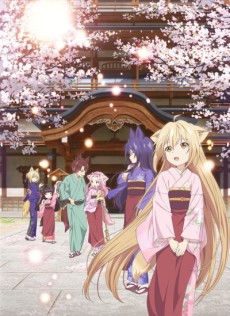
KONOHANA KITAN
The manga's story is set in Kokohana-tei, a hot spring hotel located in an inn town between our world and the other world, where many people go to visit. The story portrays the lives of fox spirits, who take the form of girls and work at the hotel.
(Source: Anime News Network)
📺Anime Details
📝Editorial Analysis
Steam rises in slow, silver curls from the onsen’s surface, catching the late afternoon light like suspended breath. A fox girl—ears twitching faintly, tail curled just so—kneels at the edge of the stone rim, dipping a wooden bucket into the water, her reflection fracturing and reforming with each gentle ripple. She doesn’t speak. She doesn’t need to. The quiet hum of cicadas, the distant chime of wind bells, the scent of hinoki wood and warm mineral steam—it all settles into you, not around you. This isn’t pause. It’s presence.
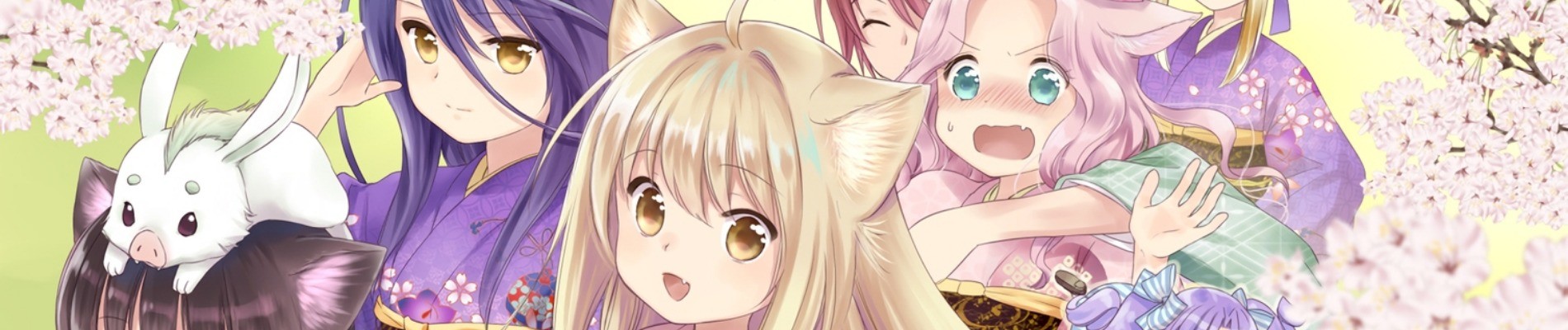
What makes KONOHANA KITAN singular isn’t its kemonomimi or its youkai lore—it’s how deeply it trusts stillness. There’s no looming threat, no ticking plot clock, no grand transformation arc. Growth here is measured in the weight of a folded towel, the rhythm of polishing tatami, the way a guest’s shoulders finally loosen after three days of quiet meals and shared silence. It makes you feel held. Not rescued, not challenged, but gently, unconditionally witnessed. It asks you to notice the warmth of tea in your palms, the softness of a kimono sleeve brushing your wrist, the quiet pride in mastering the exact pressure needed to pour sake without spilling a drop. It’s healing not as recovery—but as return: to breath, to body, to the ordinary sacredness of showing up, day after day, for something tender and small.
That feeling echoes unmistakably in The Sims™ 4, despite its fractured player reception. The official description invites you to “play with life” and “explore and customize every detail”—not conquest, not crisis, but tending. Even amid complaints about DLC bloat and bugs, players still seek that core loop: arranging furniture just so, watching a Sim sip coffee while sunlight pools on the floor, choosing whether they’ll nap or water the garden or sit by the window and watch rain. It’s the same reverence for domestic ritual—the healing and slow life dimensions align precisely because both ask you to find meaning in maintenance, in care, in the unglamorous grace of daily repetition.
Then there’s Stardew Valley, where the player review confesses exhaustion—not from danger, but from too much tenderness: “Spent the first 2 years trying to do everything and never having enough time.” That ache is kin to KONOHANA KITAN’s emotional grammar. Both are saturated with romance & shoujo not as melodrama, but as deep attunement—to soil, to seasons, to the shy smile of a neighbor, to the way a fox girl’s ears flatten just slightly when she’s flustered. You don’t win Stardew; you settle in, learning the cadence of Pelican Town just as the staff of Kokohana-tei learn the subtle shifts in a guest’s mood across breakfast service. It’s melancholic only in the Japanese sense of mono no aware—a gentle sorrow at the passing of moments so quietly perfect they ache to hold.
Even Prince of Persia, though framed as an “epic journey,” carries that same melancholic exploration dimension. Its description promises “new lands and a brand new story,” but what lingers isn’t spectacle—it’s the solitude of walking sun-baked ruins, the hush before a sandstorm, the weight of legacy carried not as burden but as quiet inheritance. Like the fox spirits who bridge two worlds without forcing either into dominance, the Prince moves between realms with reverence, not conquest. His exploration feels less like questing and more like pilgrimage—slow, sensory, steeped in the textures of myth made tactile.
These pairings aren’t for people who want answers, or wins, or even clear arcs. They’re for the ones who rewatch the scene where a guest leaves a single pressed flower on the front step—and feel their throat tighten. For the player who saves mid-day just to stare at their Sim’s garden at golden hour, or who replants the same row of parsnips three times until the spacing feels right. For anyone who’s ever needed permission to move slower, breathe deeper, and believe that tending—whether to an inn, a farm, a relationship, or simply one’s own frayed edges—is not passive, but radically alive. That’s the quiet pulse both KONOHANA KITAN and these games share: the profound, unspoken truth that healing happens not in the leap—but in the landing.
🎮14 Games That Match the Vibe












Match Dimensions Explained
❓Frequently Asked Questions
Why is Prince of Persia on the 'Games Like KONOHANA KITAN' list when it’s an action-adventure game?
Great question—it’s not about combat pacing, but about shared emotional texture: that quiet, melancholic exploration of ancient ruins and overgrown gardens feels like wandering through KONOHANA KITAN’s misty shrine paths. The Prince’s gentle interactions with characters like Zola—her calm wisdom and subtle emotional weight—echo Yuzu’s nurturing presence, and the game’s slow-burn storytelling in sun-dappled courtyards or candlelit chambers hits the same Healing & Slow Life + Romance & Shoujo dimensions as KONOHANA KITAN.
Is there an anime or manga adaptation of Stardew Valley like there is for KONOHANA KITAN?
No—Stardew Valley has no official anime or manga adaptation (unlike KONOHANA KITAN, which got a full 12-episode anime). But fans often say its romance routes—like marrying Abigail and sharing quiet moments under the starry night sky at the Observatory, or helping Emily sew in her cozy room—deliver that same tender, slice-of-life shoujo warmth you’d find in the anime’s tea-serving scenes with Hana and Miu.
Stardew Valley vs. The Sims 4: which is better for low-stakes, healing-focused daily life with romance?
Stardew Valley wins hands-down for pure healing vibes—it’s built around seasonal rhythms, gentle routines (watering crops at dawn, chatting with villagers at the Saloon), and heartfelt romance arcs like befriending Leah and baking together in her cottage. The Sims 4 *can* do this too (think building a serene shrine lot and romancing a Sim named Sakura), but as one player put it: 'TS4 has become awful—the packs are insanely expensive and often broken,' making its slow-life potential feel gated and frustrating compared to Stardew’s fully accessible, bug-light tranquility.
What’s the best KONOHANA KITAN-like game if I just want to feel peaceful, wrapped in soft folklore and gentle romance?
Jade Empire™: Special Edition is your match—it swaps cherry blossoms for jade-and-silk Chinese mythology, but delivers that same hushed reverence: romancing characters like Dawn Star during moonlit temple walks, choosing dialogue that deepens bonds without drama, and exploring spirit-infused villages where every shrine bell chime feels like a breath. Its Romance & Shoujo + Mythology & Folklore dimensions line up perfectly with KONOHANA KITAN’s core magic—even if the martial arts combat is optional, you can skip fights and just soak in the world like a quiet afternoon in the Konohana teahouse.