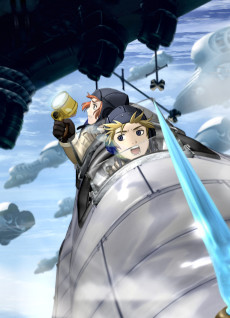
Last Exile
It's the dawn of the Golden Age of Aviation on planet Prester, and retro-futuristic sky vehicles known as vanships dominate the horizon. Claus Valca – a flyboy born with the right stuff – and his fiery navigator Lavie are fearless racers obsessed with becoming the first sky couriers to cross the Grand Stream in a vanship. But when the high-flying duo encounters a mysterious girl named Alvis, they are thrust into the middle of an endless battle between Anatoray and Disith – two countries systematically destroying each other according to the code of chivalric warfare. Lives will be lost and legacies determined as Claus and Lavie attempt to bring peace to their world by solving the riddle of its chaotic core.
(Source: Funimation)
📺Anime Details
📝Editorial Analysis
The thrum of a vanship’s engines cutting through thin, sun-bleached air—Claus gripping the yoke as Lavie leans into the windscreen, hair whipping sideways, both breathless not from exhaustion but from the sheer aliveness of flight just before the Grand Stream’s edge. Below them, the sky isn’t empty—it’s layered: dust-hazed thermals, distant contrails like scars, the skeletal silhouette of a derelict air fortress half-swallowed by cloud. No explosion yet. No battle cry. Just that suspended second where velocity feels like hope, and hope feels fragile, precious, real. That’s Last Exile—not as plot, but as pulse.
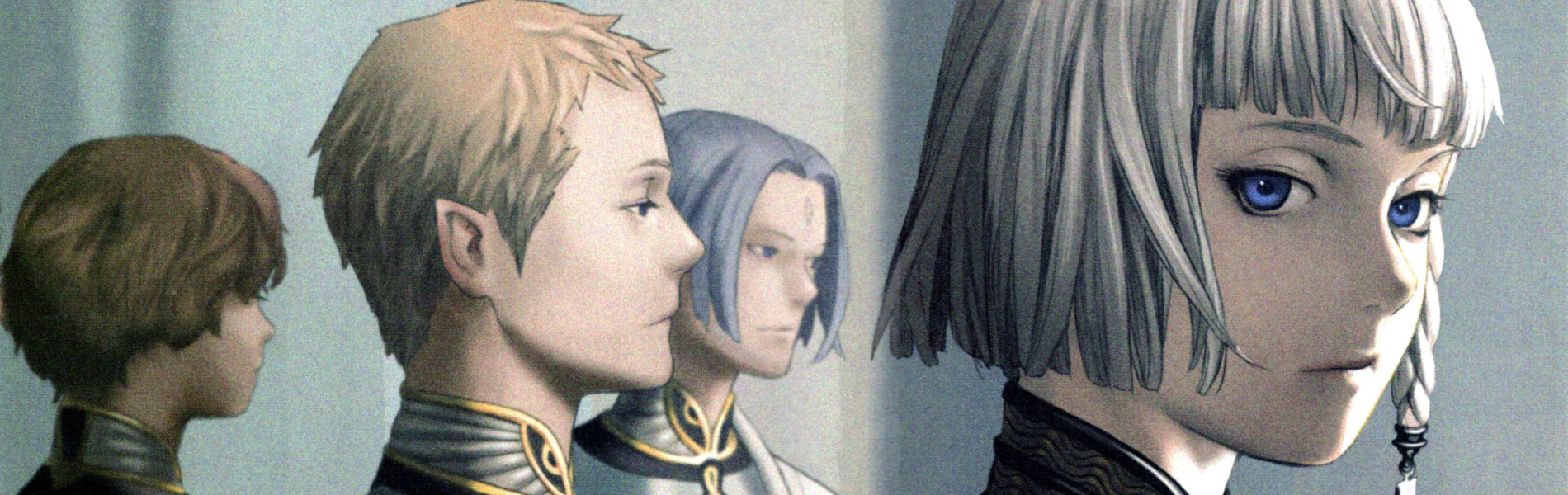
What lingers isn’t the steampunk chrome or the war between Anatoray and Disith, but the weight of responsibility carried in open cockpits. This is aviation as intimacy: two people, one machine, shared breath and split-second decisions, all against a world that’s already broken—just quietly, elegantly, post-apocalyptically. There’s no wasteland sprawl or rubble-strewn streets; the ruin is atmospheric, inherited—a civilization lost not in fire, but in silence, in forgotten schematics and sealed archives. You don’t feel dread here. You feel urgency, yes—but also tenderness: for the craft, for the trust between pilot and navigator, for the fragile, flickering dignity of people trying to deliver mail, rescue children, cross borders—not for glory, but because someone has to. It’s wartime humanism, rendered in brass dials and wind-whipped scarves.
That same emotional architecture hums in Counter-Strike, not because of its terrorist-versus-counter-terrorist framing, but because of how it frames teamwork as survival. The description calls it “an incredibly realistic brand of terrorist warfare” where you “ally with teammates to complete strategic missions”—and the player review nails the soul of it: “Wasted ‘half’ my life in this game, plan to waste other half too.” That devotion isn’t about maps or headshots. It’s about the shared breath before a site push, the unspoken trust when Lavie calls out a thermal updraft and Claus banks without question—and in CS, when your teammate flashes a corner so you can peek clean, that’s the same sacred exchange. It’s tactical intimacy. Reliance. Not heroism, but coordination as care.
Then there’s Warhammer 40,000: Dawn of War – Dark Crusade, whose description evokes “a vast honeycomb of skull-lined tunnels and funeral chambers house the awakening Necron menace”—a buried past reasserting itself with chilling patience. Like Prester’s lost civilization, Kronus holds history not as nostalgia, but as threat and inheritance. The player review declares it “Peak, 10/10. The game knows what it wants to be and nails it in every way.” That certainty mirrors Last Exile’s tonal clarity: no irony, no winking at the audience—just a world where ancient systems hum beneath modern conflict, where every vanship schematic echoes a dead empire’s engineering, and every battle carries the gravity of what came before. Both refuse to treat lore as decoration. It’s structural. It breathes.
And Warhammer 40,000: Dawn of War – Winter Assault, with its Imperial Guard rolling out “heavy armor, new troop units as well as defensive and offensive capabilities,” lands with the same grounded weight as Anatoray’s aging fleet—machines worn smooth by use, not gleaming from showrooms. Its player review shouts “FOR THE EMPEROR!!!!!!!” not as blind zeal, but as communal conviction—the kind Lavie and Claus carry when they choose loyalty over payout, when Alvis chooses truth over safety. It’s not about ideology as dogma, but as anchor. In both, belief isn’t abstract. It’s the reason you reload. The reason you climb back into the cockpit. The reason you hold the line on frozen tundra or above a fractured sky.
This pairing sings for the viewer who watches Lavie trace a finger over a cracked vanship gauge and feels their throat tighten—not because it’s broken, but because it’s still running. For the player who spends hours learning Counter-Strike’s map timings not to win, but to be the one who holds B-site so their friend can rotate safely. For anyone who’s ever stared at a rusted gear in a museum case and wondered not how it worked, but who trusted it enough to fly. These aren’t stories about saving the world. They’re about keeping one machine, one promise, one person aloft—long enough for something else to begin.
🎮11 Games That Match the Vibe

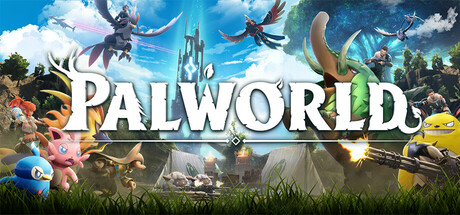
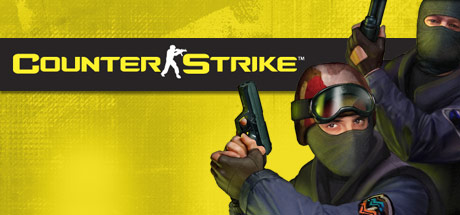


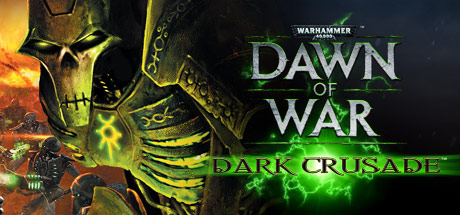
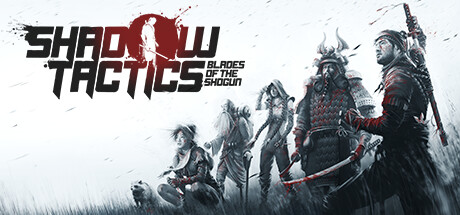

Match Dimensions Explained
❓Frequently Asked Questions
Why does Counter-Strike keep showing up in 'games like Last Exile' lists when it’s just about terrorists and not airships or anime aesthetics?
It’s not about the airships—it’s about the *tactical coordination under pressure*, like when Claus and Lavie execute that desperate, radio-choked docking maneuver in the Goliath hangar bay. Counter-Strike mirrors that same high-stakes, role-dependent teamwork: you’re not just shooting—you’re calling out enemy positions like a co-pilot, rotating to cover flanks like a wingman, and holding objectives with split-second timing—exactly how Last Exile frames its aerial combat as disciplined ballet, not chaos.
Is there a Warhammer 40k Dawn of War anime adaptation like Last Exile?
No official anime adaptation exists—but Dawn of War: Dark Crusade’s Necron awakening beneath Kronus’ desert (with those skull-lined tunnels and silent, ancient dread) feels *uncannily* like Last Exile’s lost civilizations vibe—especially when you hear the Necron Overlord’s hollow, echoing voice lines or watch the Silent King’s tomb open in slow, ritualistic grandeur. Fans have even modded in hand-drawn cutscenes to lean into that mythic, lore-heavy tone.
How does Warhammer 40k: Dawn of War compare to Counter-Strike for someone who loves Last Exile’s blend of strategy and cinematic tension?
Dawn of War gives you Last Exile’s sweeping scale and faction-driven drama—the Imperial Guard’s Winter Assault campaign has that same ‘ragtag crew defending a fragile outpost against overwhelming odds’ energy as the Silvana’s early missions—while Counter-Strike delivers the tight, real-time communication intensity of Claus and Lavie’s cockpit banter mid-battle. If you want *epic worldbuilding + tactical precision*, go Dawn of War; if you want *voice-comms adrenaline + split-second trust*, Counter-Strike hits harder.
What’s the best game like Last Exile if I’m craving that quiet, melancholic sky-faring mood—like watching the clouds roll past the Silvana at dusk?
Counter-Strike: Condition Zero’s ‘Tour of Duty’ campaign actually nails that. Between missions, you get those hushed, rain-slicked safehouse scenes—dim lighting, distant radio static, your character cleaning a rifle while ambient synth hums—echoing Last Exile’s quieter, atmospheric moments. It’s not about explosions; it’s about the weight of duty, the stillness before the storm, and the sense that every mission is a fragile thread holding something precious together—just like the Silvana drifting through golden-hour stratosphere.