
Made in Abyss: Journey's Dawn
A compilation film recapping the first half of the anime series.
The enigmatic Abyss is an unforgiving and deadly place. Despite the dangers, it still captures the imagination of explorers such as Riko who wishes to follow in her mother’s footsteps and trains hard to become a Cave Raider. One day, she receives news that her mother died in the Abyss, yet a mysterious note tells Riko that her mother may still be alive. Vowing to uncover the truth about her mother’s fate, Riko embarks on a journey with a humanoid robot boy named Reg. Together they will discover if they have what it takes to survive where so many others have perished.
(Source: Sentai Filmworks)
📺Anime Details
📝Editorial Analysis
The rope snaps. Not with a clean crack, but a wet, fibrous shriek—like tendon tearing—as Riko dangles over the Abyss’s first true chasm, her fingers raw and slipping, the wind howling up from depths that swallow light whole. Below her, the walls aren’t rock—they’re fused bone, veined with bioluminescent moss that pulses like slow, alien breathing. Her breath hitches—not just from fear, but from the wrongness of scale, of silence, of something ancient watching without eyes. This isn’t danger you outrun. It’s gravity made sentient. It’s wonder that hurts.





That’s the core feeling Made in Abyss: Journey's Dawn cultivates—not dread as adrenaline, but awe-as-vertigo. It makes you feel simultaneously smaller and more exposed: a child’s curiosity pressed against cosmic indifference. The Abyss isn’t evil. It’s indifferent, layered with forgotten tech, mutated life, and rules that defy biology—and yet, it hums with melancholy beauty. You think about legacy—not just Riko’s mother’s absence, but what it means to inherit a mystery that erodes memory, identity, even flesh. The amnesia isn’t plot convenience; it’s structural. The deeper you go, the less you remain. That’s the horror—not monsters leaping from shadows, but the slow, quiet unmaking of self by something vast, silent, and utterly other.
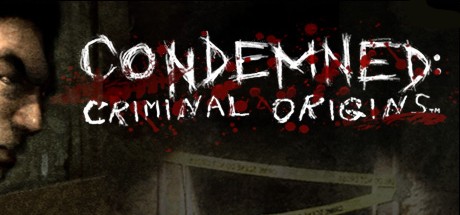
Which is why Condemned: Criminal Origins resonates so sharply. Its description asks: What twists the mind of an ordinary human into a serial killer?—a question that mirrors the Abyss’s central paradox: how does exposure to the sublime corrupt perception itself? Player reviews call it a “gem” worth hunting down, praising its psychological weight—not just gore, but the fracturing of reality under pressure. Like Riko tracing her mother’s notes only to find the handwriting blurring into glyphs she can’t read, Condemned forces you to interpret a world where sanity isn’t stable ground, but thin ice over abyssal water. Both make you question whether the horror lives out there, or has already taken root in here, rewiring your nerves.
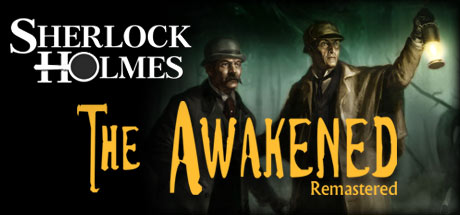
Then there’s Sherlock Holmes: The Awakened (2008)—a game that “brings a whole new dimension” to cosmic investigation. Its description emphasizes the return of Holmes into the occult, not as a debunker, but as a witness to forces that break reason. Player reviews are sparse (“gg…”), but that brevity feels right: sometimes the most profound reactions are too visceral for full sentences. Like Riko staring at the robotic doll Reg, whose movements are graceful, precise—and utterly inhuman in their stillness between gestures, The Awakened forces deduction in a world where logic bends. You don’t solve crimes—you survive epistemology. The Abyss and Holmes’ London both operate on hidden laws: one geological and biological, the other metaphysical and ritualistic—but both demand you accept that some truths change the thinker.
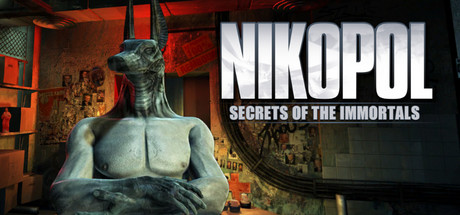
And Nikopol: Secrets of the Immortals, with its “mysterious pyramid ship” hovering over a theocratic Paris, shares that same architectural uncanny. Its description positions it as dystopian sci-fi, yes—but the player review highlights the “cyberpunk atmosphere” and how “animations and cutscenes enhance” its mood. That’s key: it’s not the plot, but the texture—the way light falls on cold metal, the weight of silence before revelation—that aligns with Journey's Dawn. Both use environment as narrative: the Abyss’s fused bone, Nikopol’s oppressive, sunless cityscape—they’re not backdrops. They’re presence. They breathe. They remember things you’ve forgotten—or never knew.
This pairing isn’t for fans of “dark fantasy” or “gritty action.” It’s for the person who rewatched the scene where Riko finds her mother’s journal—not for the answers, but for the smell of aged paper and ozone clinging to the pages. It’s for the player who paused Condemned mid-chase just to stare at a wall fresco bleeding ink, or who sat through Nikopol’s loading screens absorbing the hum of its dying city. It’s for those who love stories where wonder and terror share the same breath—and who understand that the most haunting mysteries aren’t solved. They’re carried, like a curse, like a promise, like a note written in fading ink at the edge of the world.
🎮18 Games That Match the Vibe








Match Dimensions Explained
❓Frequently Asked Questions
Why does Condemned: Criminal Origins keep showing up in Made in Abyss: Journey's Dawn game lists?
Because both lean hard into psychological unraveling and visceral body horror—like when Nanachi’s experiments or Bondrewd’s labs twist biology in disturbing ways, Condemned makes you *feel* that same dread as you investigate crime scenes where human bodies are grotesquely repurposed. The game’s oppressive atmosphere, shaky cam, and close-quarters melee combat mirror the suffocating tension of descending into the Abyss’s lower layers.
Is there a Made in Abyss visual novel or point-and-click adventure adaptation?
Not officially—but Nikopol: Secrets of the Immortals hits that exact niche: a dystopian, first-person point-and-click sci-fi adventure with occult mystery and eerie body horror (think the pyramid ship’s influence on human physiology echoing the Abyss’s curses). Its cyberpunk Paris setting and surreal cutscenes give that same sense of layered, unsettling worldbuilding fans crave.
How does Sherlock Holmes: The Awakened (2008) compare to Max Payne for someone who loved the descent sequences in Made in Abyss?
Sherlock Holmes: The Awakened leans into cosmic dread and occult investigation—like when Riko and Reg descend into the Goblets’ ruins, you’re piecing together forbidden truths amid hallucinatory set-pieces—while Max Payne is all about raw, stylized urban noir and bullet-time action (think the ‘bullet time’ gunfights mirroring the frantic, desperate energy of escaping Abyss predators). Both have body horror, but Awakened chills your spine; Max Payne makes your heart race.
What’s the best game like Made in Abyss: Journey’s Dawn if I want that haunting, melancholic wonder vibe—not just horror?
Nikopol: Secrets of the Immortals nails it: its rain-slicked, authoritarian Paris feels wondrously alien yet deeply lonely, much like the Abyss’s beauty-and-terror duality. The mysterious pyramid ship, haunting animations, and quiet moments of discovery (like finding lost tech or fragmented logs) echo Riko’s journal entries—less gore, more poetic unease and awe.