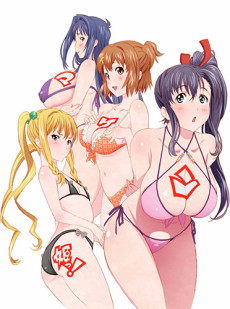
Maken-Ki! Battling Venus 2
📺Anime Details
📝Editorial Analysis
The air in the Maken-Ki! training hall smells like ozone and wet concrete—sharp, electric, slightly metallic—right after a girl’s Maken shatters mid-air, sending jagged light splintering across the floor. Her uniform rips at the shoulder—not from violence, but from the sheer uncontainable pressure of her own power surging out of control. She doesn’t scream. She laughs, breathless, hair sticking to her temple, eyes wide with exhilaration and something quieter: recognition. That moment isn’t about winning. It’s about the body remembering how to hold lightning—and how fragile that balance feels when everyone’s watching.
What makes Maken-Ki! Battling Venus 2 vibrate with such strange, persistent warmth isn’t its harem setup or its episodic school-club rhythm—it’s the tenderness beneath the spectacle. Every fight is staged like a dance where gravity keeps slipping: girls vault off walls only to land barefoot on railings, their uniforms fluttering just long enough to blur modesty into motion, not objectification. The nudity isn’t voyeuristic—it’s functional, almost ritualistic: steam rising off skin after a hot bath, sweat-slicked backs during sparring, the unselfconscious way bodies occupy space when no one’s performing for eyes. This isn’t titillation—it’s presence. A celebration of physicality as language: breath, strain, recoil, recovery. You don’t watch it to escape. You watch it to feel your own pulse sync with theirs—to remember what it’s like to be sixteen and electrically, messily alive in a body that hasn’t settled yet.
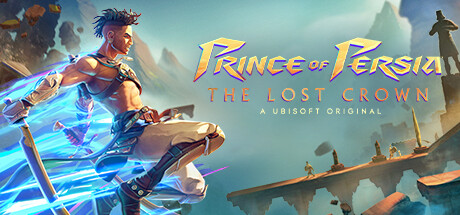
That same melancholic exploration—not sorrow, but quiet awe at the weight and wonder of embodiment—threads through Prince of Persia. Its description calls it “an all-new epic journey” built by Ubisoft Montreal, and player reviews note it’s “the 3rd reboot… completely separate from the sands.” That separation matters. Like Maken-Ki!, it’s not retreading old ground—it’s rediscovering movement itself: the Prince’s acrobatics aren’t just combat; they’re dialogue with architecture, his leaps and slides echoing the way Maken-Ki! characters treat hallways and rooftops as extensions of their nervous systems. Both ask: What does it mean to trust your limbs when the world keeps shifting under you? And both answer—not with certainty, but with grace under instability.
Then there’s Sacred Gold, described as a time “for champions” to journey into “perilous” Ancaria, battling orcs and ogres—yet player reviews bluntly call it “full of jank, bugs… not very stable.” That instability mirrors Maken-Ki!’s tonal wobble: one scene leans into slapstick absurdity (a misplaced Maken blast launching someone into a cherry blossom tree), the next pivots into raw vulnerability (a girl trembling after overexertion, her voice cracking as she asks, “Did I break something?”). Neither work hides its seams. They wear their imperfections like badges—not flaws, but proof of effort, of bodies and code alike straining toward something bigger than polish. The melancholy isn’t in failure—it’s in the honesty of the strain.
Even Monster Hunter: World, with its vast ecosystems and deliberate, weighty combat, shares this DNA. Its action spectacle isn’t flashy—it’s textural: the scrape of claw on scale, the heave of lifting a fallen elder dragon’s tail, the exhaustion in your own shoulders after a 45-minute hunt. Like Maken-Ki!, it treats physical limits as sacred terrain. You don’t “win” against monsters—you negotiate with them, learning their breath, their rhythm, their fatigue. That same reverence for embodied knowledge lives in every Maken-Ki! spar: the way a character adjusts her stance mid-kick, or winces at a bruise that blooms like ink under skin—not as damage, but as data, as proof she’s listening to her own body.
This pairing won’t click for someone seeking seamless fantasy escapism. It resonates with the viewer who still remembers the burn in their thighs after sprinting up stairs too fast, or the quiet pride of mastering a backflip after six failed attempts. It’s for players who pause mid-game to watch rain slide down a virtual windowpane—not because it’s pretty, but because it feels real. For fans who love how Maken-Ki! lets girls laugh while bleeding, who cherish games where combat leaves you breathless in your chair, not just on screen. It’s for anyone who knows the deepest thrill isn’t victory—it’s the hum of your own aliveness, vibrating just beneath the surface of every jump, every punch, every imperfect, glorious, human moment.
🎮16 Games That Match the Vibe


Match Dimensions Explained
❓Frequently Asked Questions
Why does Maken-Ki! Battling Venus 2 match Prince of Persia so closely despite being a harem anime game?
It’s all about that shared blend of Romance & Shoujo with high-stakes Action Spectacle—think Maken-Ki!’s beach volleyball fight scenes mirroring Prince of Persia’s acrobatic dagger duels and time-rewind moments, both layered over melancholic exploration of lost legacies (like the Prince’s crumbling kingdom or Maken-Ki’s fractured school hierarchy). The 85-score match reflects how both use emotional stakes *within* flashy combat—not just ‘fighting,’ but fighting for identity, belonging, and love.
Is there an anime adaptation of Maken-Ki! Battling Venus 2?
No—unlike the original Maken-Ki! anime (which covered the manga’s early arcs), *Battling Venus 2* is a standalone visual novel/game with no official anime adaptation. Fans hoping for animated versions of its specific content—like the new Venus Club rivalries or Aki’s upgraded ‘Spiritual Energy’ mechanics—will have to stick with the game’s vivid CGs and branching routes, much like how Prince of Persia’s reboot stays faithful to its own lore without leaning on prior cartoons or films.
How does Sacred Gold compare to Monster Hunter: World for Maken-Ki! fans who love chaotic group battles?
Sacred Gold throws you into massive, janky mob fights—imagine battling 20+ orcs at once in Ancaria’s ruins, which echoes Maken-Ki!’s crowded dojo brawls—but it’s unstable and buggy on modern PCs (per player reviews). Monster Hunter: World delivers smoother, more tactical spectacle: think Kirino’s ‘Twin Blade Rush’ combo translated into carving a Nergigante’s tail mid-climb, with precise timing and environmental awareness that Maken-Ki! players appreciate in boss fights like the Venus Tournament finals.
What’s the best game like Maken-Ki! Battling Venus 2 if I want that mix of heartfelt drama and over-the-top action?
Prince of Persia is your top pick—it nails the exact same dimensions: Romance & Shoujo *and* Action Spectacle *and* Melancholic Exploration. You’ll feel the same emotional weight as when Maken-Ki!’s characters confront past trauma (e.g., Miharu’s family legacy) while pulling off cinematic parkour flips and sword clashes—just like the Prince’s rooftop chases through sun-drenched, crumbling palaces where every leap carries narrative weight.