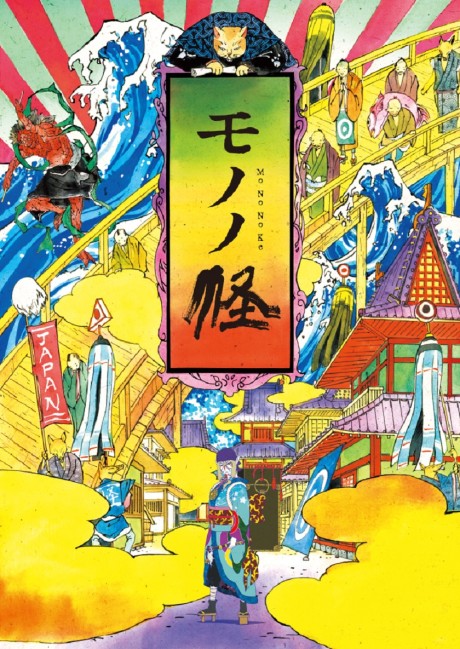
Mononoke
Mononoke is a spin-off of the Bakeneko story arc of Ayakashi: Japanese Classic Horror. It follows the Medicine Seller as he deals with various spirits or "Mononoke" in feudal Japan. Just like in the Bakeneko story, he combats with a series of tools and his vast knowledge of the supernatural on his side, but can only slay the Mononoke when he uncovers its form (Katachi), the truth behind its appearance (Makoto) and the reason for its unusual behavior (Kotowari).
(Source: Wikipedia)
📺Anime Details
📝Editorial Analysis
The Medicine Seller’s blade doesn’t sing—it hisses, a thin, wet scrape of steel drawn across the lacquered surface of a hollowed-out wooden mask. His hand doesn’t tremble. The air thickens—not with fear, but with the unbearable weight of unspoken truth: a widow’s grief has calcified into a crawling mass of hair and teeth beneath her floorboards; a scholar’s obsession has warped his spine into a spiraling knot of ink-stained bone; a child’s silence has curdled into something that breathes through the cracks in paper screens. There is no jump scare—only the slow, suffocating realization that the horror isn’t out there. It’s in the shape of the wound, in the lie we told ourselves to survive, in the reason we stopped naming things aloud.
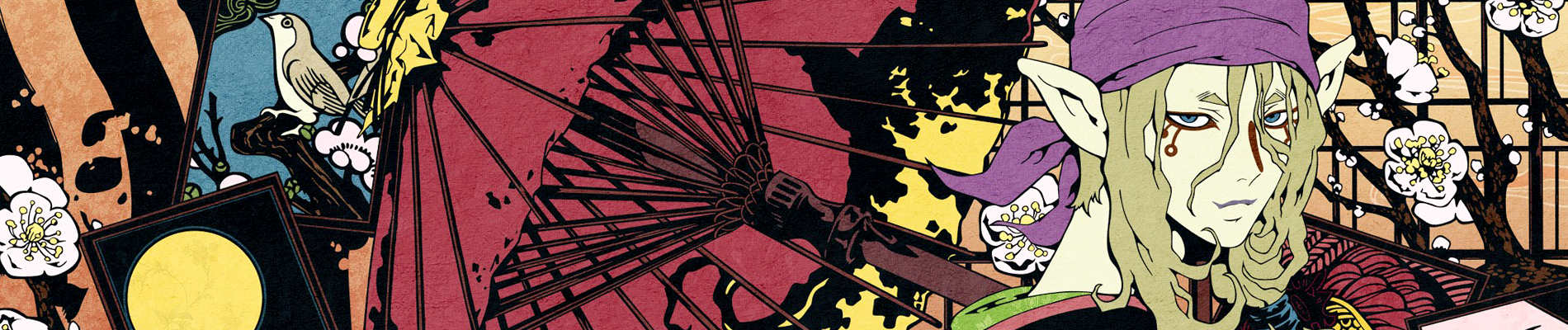
That’s the feeling Mononoke lives inside: not dread of the unknown, but dread of the named. Its atmosphere isn’t built on gore or shock, but on the unbearable intimacy of diagnosis—the moment the Medicine Seller kneels, tilts his head, and says, “This is its Katachi. This is its Makoto. This is its Kotowari.” You don’t flinch from monsters—you flinch from recognition. The horror is philosophical, historical, bodily: a rusted iron nail driven into a shrine gate isn’t just metal—it’s a vow broken, a lineage severed, a body forced to hold contradiction until it ruptures outward as something other. It makes you think about how grief calcifies, how shame ossifies, how trauma doesn’t vanish—it takes form, and waits for someone precise enough, cold enough, merciful enough to name it before cutting it free.
That same emotional DNA pulses in Vampire: The Masquerade - Bloodlines, where every vampiric curse is a metaphor made flesh—addiction as bloodlust, bureaucracy as the Camarilla’s suffocating hierarchy, identity as a fractured reflection in a shattered mirror. The player review’s insistence on “BUY IT ON GOG” isn’t just nostalgia—it’s reverence for a game that, like Mononoke, treats the supernatural as symptom, not spectacle. Its “Body Horror & Occult” dimension isn’t about grotesque mutations alone—it’s about the violation of self when your own fangs betray you mid-sentence, when your reflection refuses to return your gaze, when your humanity bleeds out slower than your blood.
Then there’s Condemned: Criminal Origins, whose core question—“What twists the mind of an ordinary human into a serial killer?”—is the exact echo of Mononoke’s investigative rigor. No demon appears without cause; no killer snaps without history. The player review calls it “a gem” you must “find a way” to play—because its power lies in the same place: in the oppressive silence of decaying buildings, in the way evidence doesn’t point to guilt, but to fracture, to suppressed memory, to the moment reality bent just enough for something else to crawl in. Its “Mystery & Detective” dimension isn’t about collecting clues—it’s about reconstructing the wound before the wound reconstructs you.
And Max Payne, too—where a man framed for murder doesn’t rage blindly, but dissects his own collapse: every bullet-time dive, every noir monologue, every corpse left twitching in rain-slicked alleys is a physical manifestation of Kotowari. The player review recalls passing the controller after death—not as failure, but as ritual, a shared acknowledgment that survival here isn’t victory, but endurance of truth. Its “Adult & Dark Seinen” weight matches Mononoke’s refusal to offer catharsis: justice is messy, answers are corrosive, and the only exorcism is walking forward, still bleeding, still seeing.
These pairings aren’t for fans of “spooky stories” or “cool monsters.” They’re for people who’ve ever held their breath while reading a letter they knew would end a relationship—that quiet tension before the sentence lands. For those who understand that the most terrifying thing isn’t what hides in the dark, but what you’ve buried in yourself and called peace. For the reader who underlines passages in Murakami and lingers on the anatomy diagrams in old medical texts—not out of morbidity, but because form reveals truth, and truth, once named, can finally be cut away. They’re for anyone who’s ever whispered a confession into a silent room… and waited, heart pounding, not for forgiveness—but for the shape of the silence to finally change.
🎮19 Games That Match the Vibe



Match Dimensions Explained
❓Frequently Asked Questions
Why does Mononoke get compared to Condemned: Criminal Origins?
Because both plunge you into a gritty, first-person descent into psychological unraveling and occult-tinged urban decay—Condemned puts you in the shoes of an FBI agent hunting serial killers whose crimes involve ritualistic body horror and distorted reality, much like Mononoke’s descent into fractured perception and cursed transformation. The oppressive atmosphere, investigative clues hidden in grimy environments (like the abandoned asylum or subway tunnels), and that visceral, close-quarters melee combat with pipes and bats make it feel like a spiritual cousin—just swap yokai for deranged cultists.
Is there a Mononoke anime or manga adaptation?
No—Mononoke isn’t based on an existing anime or manga, unlike *Princess Mononoke* (which people sometimes confuse it with). It’s an original dark fantasy IP, so adaptations don’t exist yet—but if you love its vibe, games like *Vampire: The Masquerade – Bloodlines* deliver that same adult, morally gray worldbuilding, with characters like Smiling Jack or the Malkavian clan echoing Mononoke’s themes of identity erosion and supernatural corruption.
How does Max Payne compare to Vampire: The Masquerade – Bloodlines for Mononoke fans?
Both nail that noir-tinged, tragic antihero energy—but *Max Payne* leans hard into cinematic bullet-time action and detective-noir storytelling (think the snowy, rain-slicked streets of Hell’s Kitchen and Max’s voiceover monologues about loss), while *Bloodlines* goes deeper into occult worldbuilding, faction politics, and body horror mechanics like blood addiction or degeneration scenes. If Mononoke’s appeal is its melancholic tone + visceral transformation, *Bloodlines* hits closer on the lore and dread; *Max Payne* nails the mood and pacing.
What’s the best Mononoke-like game if I want something bleak, atmospheric, and deeply weird—not just action-heavy?
Go straight to *Heretic: Shadow of the Serpent Riders*. Its warped fantasy world—filled with floating skulls, eldritch runes, and grotesque Serpent Rider minions—mirrors Mononoke’s surreal, mythic dread far more than flashy shooters. You play as a Sidhe elf wielding arcane spells like 'Mace of Moloch' in crumbling temples and caverns where reality itself frays, and the remaster keeps that eerie, otherworldly vibe intact—no guns, no cutscenes, just pure, immersive, off-kilter dark fantasy.