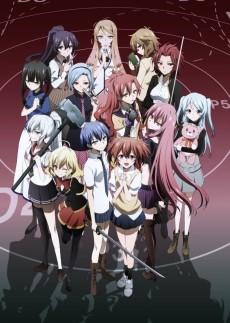
Riddle Story of Devil
The story is set at Myoujou Academy, a private girls' boarding school. The 10th year's Kurogumi class has 12 assassins with their sights on one target, Haru Ichinose. Tokaku Azuma is a recent transfer student who is also targeting Ichinose, but she gradually develops feelings for Ichinose.
(Source: Anime News Network)
📺Anime Details
📝Editorial Analysis
The hallway at Myoujou Academy is silent—not empty, but charged, like the breath before a blade leaves its sheath. Tokaku Azuma walks past Haru Ichinose in Kurogumi’s third-floor corridor, their shoulders nearly brushing, and for one heartbeat, neither looks away. Not with suspicion, not with calculation—just recognition, raw and unguarded, before Tokaku blinks and turns her head. That flicker—so small, so fragile—is where Riddle Story of Devil lives: not in the bloodshed or the poison vials, but in the unbearable weight of feeling too much while pretending to feel nothing at all.

What makes this anime ache isn’t its death game structure—it’s how tightly it coils intimacy and danger around the same axis. Every glance carries consequence. Every shared classroom moment is laced with unspoken risk: a dropped pencil could be a feint; a laugh too loud might betray intent. It’s tense, yes—but more than that, it’s tenderly claustrophobic. You don’t just watch Tokaku fall for Haru—you feel the walls of the boarding school close in as her resolve softens, as loyalty fractures under the quiet gravity of affection. This isn’t survival as spectacle. It’s survival as vulnerability: choosing to stay soft in a world built to reward hardness. The yuri thread isn’t ornament—it’s the emotional core, the thing that makes every withheld touch hurt, every confession deferred burn.
That same paradox—the push-pull between control and surrender, strategy and sincerity—echoes in The Sims™ 4, especially in its Romance & Shoujo dimension. The game doesn’t force narrative, but invites you to orchestrate longing: arranging furniture to encourage lingering glances, scheduling dates that hinge on moodlets and chance, watching two Sims slowly tilt toward each other across dozens of in-game days. A player notes it’s “no fun without DLC”—but what they’re really describing is the labor of care: the effort required to build emotional possibility in a system that resists it by default. Like Tokaku learning Haru’s favorite tea, then hesitating before pouring it—every small act in TS4 feels equally deliberate, equally risky.
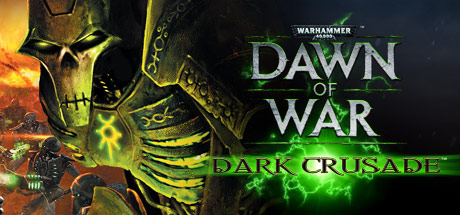
Then there’s Warhammer 40,000: Dawn of War - Anniversary Edition, where Tactical Warfare and Adult & Dark Seinen collide in grim, gorgeous precision. Its description calls it “blood-soaked,” and the player review hints at legacy—“what works” after years of patching, adapting, enduring. That resonance isn’t about scale or lore—it’s about ritualized violence with emotional residue. In Riddle Story of Devil, assassination isn’t flashy; it’s methodical, quiet, often unseen—like deploying a scout unit across contested terrain. Both ask you to weigh cost against conviction, to hold your breath before committing to a move that can’t be undone. The “glory” in Dawn of War isn’t triumph—it’s endurance. Same with Kurogumi: surviving isn’t winning. It’s remembering who you were before the mission began.
And Counter-Strike: Condition Zero, buried in early-2000s nostalgia, lands with unexpected fidelity. Its player review calls it “the ultimate 2000s time capsule that proved Counter-Strike could be a brilliant single-player game.” That phrase—brilliant single-player game—is the key. Because Riddle Story of Devil is also, at its heart, a single-player experience disguised as ensemble drama. Tokaku’s arc is internal, solitary, even amid twelve assassins. Her choices aren’t debated in council—they’re made in silence, in stolen seconds, in the space between heartbeats. CS:CZ’s Tour of Duty campaign mirrors that: tight corridors, limited ammo, no respawn—just you, your instincts, and the slow dawning that every trigger pull reshapes who you are. It’s not about domination. It’s about self-redefinition under pressure.
This pairing isn’t for fans of “dark romance” as aesthetic—it’s for people who remember holding their breath during a first kiss and during a boss fight, who understand that love and lethal stakes both demand absolute presence. It’s for the viewer who rewinds Tokaku’s trembling hand reaching toward Haru’s hair—not to see the gesture again, but to sit longer in the fear behind it. For the player who spends twenty minutes adjusting a Sim’s outfit before a date, not for perfection, but because getting it right matters. For anyone who’s ever loved something so deeply it felt like standing unarmed in a warzone—and called that feeling home.
🎮14 Games That Match the Vibe








Match Dimensions Explained
❓Frequently Asked Questions
Why is The Sims 4 listed as similar to Riddle Story of Devil when it’s not an anime or story-driven game?
Great question—it’s the *Romance & Shoujo* dimension that creates the overlap: TS4 lets you craft intricate romantic subplots, rivalries, and dramatic confessions (think Yurika’s quiet tension with Haru or Anna’s manipulative charm), all while customizing aesthetics like school uniforms or gothic dorm rooms. Plus, players use base-game + free mods to recreate Riddle Story’s tone—like setting up a 'Shirayuki Academy' lot with scripted jealousy events and secret pact mechanics.
Is there an anime or manga adaptation of Prince of Persia that explains its Riddle Story of Devil similarity?
Nope—Prince of Persia has zero anime/manga adaptations, but the *Adult & Dark Seinen* + *Romance & Shoujo* crossover comes from its morally gray romance arcs: the new Prince’s fraught bond with Zola mirrors Haru’s dynamic with his classmates—layered with betrayal, coded devotion, and ritualistic stakes (like the Dagger’s curse echoing the ‘poison’ theme). It’s tonal kinship, not shared canon.
How does Thrillville: Off the Rails compare to Riddle Story of Devil in terms of dark school vibes?
Totally different surface—but dig deeper: Thrillville’s ‘Academy Park’ scenario (unlockable via coaster-building challenges) features rival student factions running themed rides—think ‘Poison Apple Coaster’ or ‘Black Rose Drop Tower’—that mirror Riddle Story’s lethal elegance and performative rivalry. Players even trigger cutscenes where characters sabotage each other’s attractions, echoing Yurika’s precision and Anna’s theatrical cruelty.
What’s the best game like Riddle Story of Devil if I want slow-burn tension and elegant danger without combat?
Go straight to Thrillville®: Off the Rails™—it nails that vibe. You’re not fighting; you’re engineering psychological pressure through ride design (e.g., building a ‘Silent Bell Loop’ coaster that forces riders into forced eye contact, mirroring classroom stare-downs), managing gossip between staff like a shoujo drama, and unlocking ‘Shadow Ticket’ events where rivals sabotage your park’s reputation—no guns, just razor-sharp social stakes.