
The Familiar of Zero
Louise is a magician at the Tristein Academy, dubbed with the nickname "Zero Louise" due to her inability to effectively use her magic properly, resulting in zero successes. An upcoming test at her academy requires her to summon a familiar, a servant and partner to support her as a magician. Despite desiring a familiar that would be superior to her constantly mocking classmates, Louise ends up summoning Hiraga Saito, your average Japanese boy. Even with Louise and Saito both unwilling to accept each other, they have no choice. Louise cannot attempt another summoning and Saito cannot return to Japan, and so their life together begins. Based on the novel by Noboru Yamaguchi.
📺Anime Details
📝Editorial Analysis
The smell of burnt toast and ozone hangs in the air—Louise’s wand flares, sputters, then detonates a puff of acrid smoke that stings Saito’s eyes as he coughs on his knees, uniform singed, hair askew, utterly bewildered. Her cheeks flush crimson—not from magic, but humiliation—as classmates snicker behind gloved hands. He didn’t choose this. She didn’t choose him. And yet, in that spluttering, slapstick collapse of expectation, something fragile and real sparks: not romance yet, not trust—but shared absurdity, raw and unfiltered.
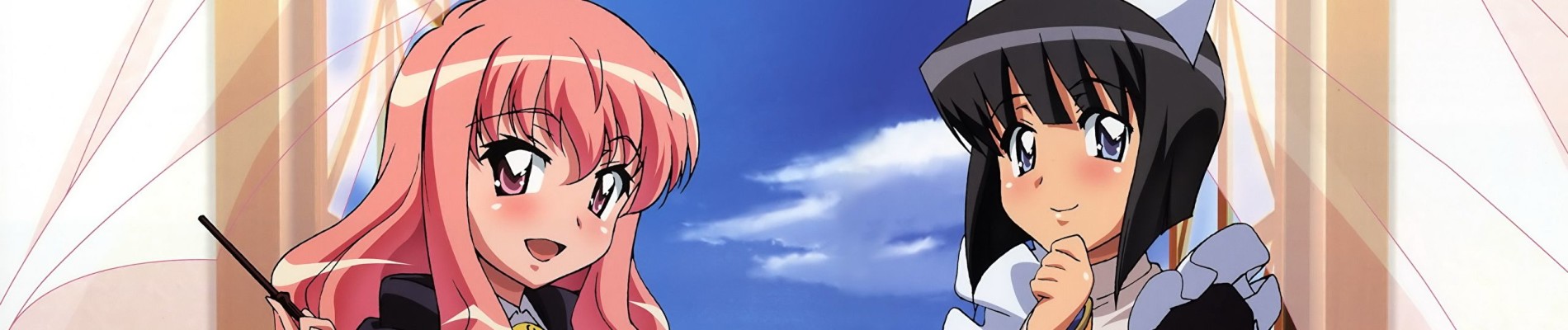
That’s the heartbeat of The Familiar of Zero: a world where magic is supposed to be elegant, noble, precise—but instead misfires like a damp firecracker, where dignity shatters mid-sentence under a well-aimed slap, and where every grand fantasy trope gets tripped up by its own shoelaces. It doesn’t mock fantasy—it lives inside its stumbles. You don’t feel awe watching Louise fail; you feel recognition. That nervous laugh when your spell fizzles. That cringe-squirm when your crush misreads your gesture. That quiet, stubborn warmth when someone stays—even after you’ve turned their shirt into confetti. It’s awkward, yes—but also tender, persistent, human. Not polished. Not heroic. Just two people, stranded in mismatched roles, trying not to set the library on fire again.
Which is why Team Fortress Classic lands with such uncanny resonance. Its description calls it “a unique style of online team” combat—no grand lore, no tragic backstories, just nine wildly disproportionate classes hurling spanners into each other’s gears. The player review says it best: “simply the best nostalgic game, i have dreams about this game.” That’s the same emotional frequency—dreamlike disorientation, where identity is costume and competence is situational chaos. Like Louise shouting “You are my familiar!” while Saito scrambles backward over a toppled stool, TF2 gives you a Heavy who can’t aim straight and a Spy who vanishes mid-sneer—both worlds run on intentional imbalance, where victory feels earned precisely because failure is so vivid, so physical, so funny.
Then there’s DeathSpank: Thongs of Virtue, whose description promises “one of the funniest action-RPGs to date!” and whose reviewer calls it “a romp of misadventure through a kingdom to bring about the second coming of justice.” Note that phrase: misadventure. Not quest. Not destiny. Misadventure. Just like Louise’s summoning ritual—meant to impress, meant to prove herself—ends not with a dragon or golem, but with a confused boy holding a bento box. Both lean into the glorious wrongness of their premises: a hero named DeathSpank hunting underwear of virtue; a noble mage binding a guy who thinks “familiar” means “roommate.” The humor isn’t cynical—it’s affectionate, built on characters who mean well even as they bulldoze logic, etiquette, and structural integrity.
And Devil May Cry® 3 Special Edition, with its description revealing Dante’s past “now revealed” and battles against “never before seen demons,” carries that same tonal whiplash: operatic stakes undercut by a wink, swordplay so sharp it slices irony in half. The player review calls it “Awful port fantastic game”—a perfect echo of The Familiar of Zero’s own duality: flawed execution, irresistible heart. Saito’s clumsy sword swings aren’t choreographed—they’re earned through repetition, embarrassment, and sheer refusal to quit. Like Dante flipping off a demon mid-combo, it’s confidence forged in absurdity, not despite it.
This pairing isn’t for fans of flawless power fantasies or immaculate worldbuilding. It’s for the person who laughs with Louise when her spell backfires—not at her, but at the sheer, beautiful futility of trying to be perfect in a world that runs on glitches. It’s for the player who still remembers the exact sound of the TF2 Medic’s defibrillator sputter, or who paused DeathSpank mid-jump just to reread a sign that says “Ye Olde Tax Office (Closed For Moral Reasons).” They love imperfection with intention, romance that starts with a slap, heroism that smells faintly of burnt toast. They don’t want escape—they want recognition, served with a side of silliness, and garnished with stubborn, beating hope*.
🎮15 Games That Match the Vibe






Match Dimensions Explained
❓Frequently Asked Questions
Why does DeathSpank: Thongs of Virtue keep popping up in Familiar of Zero game recommendations?
Because both lean hard into magical academy satire and over-the-top parody—think Louise’s failed summoning spells mirrored in DeathSpank’s delusional 'heroic' quest, complete with absurd loot (like the Thongs of Virtue) and self-aware narration. The game’s art style and comedic timing, praised by players as 'still quite fun,' hit the same whimsical-but-chaotic energy as Halkeginia’s magic mishaps.
Is there a Familiar of Zero visual novel or RPG adaptation I can actually play?
No official Familiar of Zero game exists—but DeathSpank: Thongs of Virtue is the closest *spiritual* match: it’s a full action-RPG with quest-driven storytelling, loot collection, and relentless comedy, just like Louise’s chaotic magic school arc turned into a playable romp. Players even call it 'a second coming of justice'—which feels weirdly on-brand for a world where a zero-level mage accidentally summons a demon lord.
How does Devil May Cry 3 Special Edition compare to Prince of Persia for Familiar of Zero fans?
If you love the flashy, personality-driven magic duels in Familiar of Zero—like Louise vs. Kirche’s fire-vs-fire showdown—Dante’s stylish combat with multiple fighting styles and demon-slaying flair hits harder than Prince of Persia’s more grounded acrobatics. That said, Prince of Persia nails the 'epic journey through new lands' vibe (like Saito’s travels), but DMC3’s humor, over-the-top cutscenes, and 'awful port, fantastic game' charm match Zero’s tonal whiplash better.
What’s the best game like Familiar of Zero if I want something silly, fast-paced, and full of chaotic team energy?
Team Fortress Classic—it’s pure chaotic team-based spectacle, like a magical duel gone sideways at Tristain Academy, but with nine distinct classes (Medic healing while Spy backstabs) and that beloved nostalgic energy players describe as 'dream-worthy since age 9.' The Comedy & Parody dimension aligns perfectly with Zero’s satire of fantasy tropes, and the constant mayhem feels like watching a whole class of mages lose control of their spells at once.