
The Gorilla God’s Go-To Girl
📺Anime Details
📝Editorial Analysis
The first time she trips over her own enchanted slippers—right as the Gorilla God’s golden aura flares, scattering cherry blossoms and startled pigeons—the slapstick isn’t just physical. It’s sincere. Her hair flies, her skirt billows, her eyes widen not in panic but in that breathless, oh-I-did-it-again delight—and the Gorilla God doesn’t sigh or scold. He catches her mid-stumble with one massive, fur-lined hand, then gently places her back on her feet… only for her to immediately step on his tail. He winces. She giggles. A squirrel wearing tiny spectacles drops a scroll from a nearby branch. The world doesn’t pause for gravitas—it bounces, warm and slightly absurd, like sunlight hitting dew on monkey-fur.
That’s the atmosphere: The Gorilla God’s Go-To Girl doesn’t trade in stakes—it trades in resonance. Not mythic weight, but mythic warmth: gods who braid each other’s beards, divine bureaucracy handled via ink-stained parchment and tea breaks, romance that blooms not in candlelit silence but in shared exasperation over cursed teacups that multiply when you sigh too hard. It’s shoujo not because of hearts and blushes—but because every glance, every misstep, every accidental shapeshift into a very confused badger carries emotional texture. You don’t feel small beside the divine; you feel held, even when you’re being flicked off a deity’s shoulder like lint. It’s medieval fantasy stripped of grimness, where power isn’t hoarded or feared—it’s borrowed, lent, mislaid, and occasionally used to turn your rival into a mildly disgruntled hedgehog for exactly seven minutes.
Which makes Prince of Persia an uncanny mirror—not the sand-whispering solemnity of older entries, but this reboot: the one built by Ubisoft Montreal, “with a new prince, new lands and a brand new story completely separate from the sands…” That separation matters. Like The Gorilla God’s Go-To Girl, it refuses inherited gravity. Its comedy isn’t undercutting romance—it is the romance’s language. When the Prince leaps, flips, and stumbles into a fountain mid-proposal, it’s not failure—it’s intimacy made kinetic. The player review nails it: this is a world that reboots itself emotionally, choosing charm over canon, levity over legacy. Both works treat divinity and destiny as things you negotiate over breakfast, not kneel before at dawn.
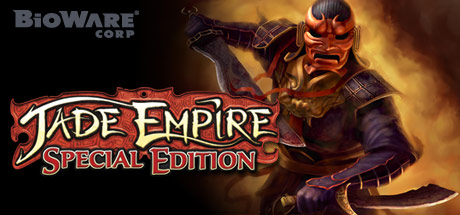
Then there’s Jade Empire™: Special Edition, where you “step into the role of an aspiring martial-arts master and follow the path of the open palm or the closed fist.” That duality—open palm, closed fist—is the emotional grammar of The Gorilla God’s Go-To Girl: power as choice, not domination; strength as tenderness in motion. The anime’s female protagonist doesn’t wield her shapeshifting like a weapon—she uses it to soothe a thunder-spirit’s migraine (by becoming a cloud-shaped pillow) or to sneak past palace guards disguised as a very unconvincing potted fern. Just like Jade Empire’s moral architecture, her power bends toward empathy—or mischief—but never cruelty. And that player review, with its fussy, human detail—“Copy and paste ‘steam.dll’ from your Steam or Steam Libra…”—feels like the anime’s spirit made manifest: reverence for craft, yes, but also deep affection for the glitchy, real, slightly messy labor of making something beloved work.
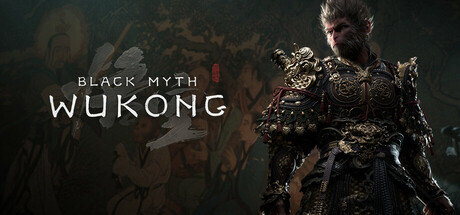
Black Myth: Wukong, meanwhile, shares the mythology & folklore dimension—but not its darkness. Its 78 score anchors it in the same soil: gods who wear fur and fury, celestial hierarchies that buckle under ego and tea etiquette, transformation as both gift and gag. Yet where The Gorilla God’s Go-To Girl lets the Gorilla God nap mid-battle after forgetting why he was angry, Black Myth: Wukong leans into the weight of rebellion, the ache of forgotten vows. They’re siblings, not twins—one sings lullabies to storm dragons, the other stares down the hollow echo of heaven’s throne. Their resonance lies in shared roots, not shared tone: both understand that folklore isn’t static scripture—it’s living, breathing, slapstick-adjacent storytelling, where a deity’s dignity lasts precisely until someone offers him dumplings.
This pairing isn’t for lore-hunters or combat obsessives. It’s for the viewer who cries twice during a scene where a god tries—and fails—to knit a scarf, then beams when the protagonist fixes it with a spark of her own magic. It’s for the player who reloads not to win, but to hear that one flirtatious line again, or to watch the Prince trip just so while chasing a runaway peach. They’re for people who believe romance lives in the space between a raised eyebrow and a shared, slightly ridiculous secret—and who know that the most divine thing about any story isn’t its scale, but how tenderly it holds your laughter.
🎮15 Games That Match the Vibe



Match Dimensions Explained
❓Frequently Asked Questions
Why is Black Myth: Wukong listed as similar to The Gorilla God’s Go-To Girl when they’re both mythology-heavy but feel so different?
Great question — it’s not about tone matching, but shared DNA in mythic worldbuilding and divine power fantasy. Both lean hard into transformative abilities (Wukong’s cloud somersault and shape-shifting vs. the Gorilla God’s reality-bending charm), and that ‘divine bureaucracy meets personal agency’ vibe shows up in Wukong’s celestial court scenes and Jade Empire’s Spirit Realms. Reviewers even noted how Wukong’s ‘Dark Fantasy’ dimension mirrors the Gorilla God’s surreal, rule-bent cosmology — just with more ink-wash aesthetics and less banana-based negotiation.
Is there a mobile or anime adaptation of The Gorilla God’s Go-To Girl that’s similar to Prince of Persia’s romantic-comedy reboot?
No official mobile or anime adaptation exists yet — but if you’re craving that same playful, genre-blending energy, Prince of Persia (2024) is your closest live-action-adjacent match. Its ‘Comedy & Parody’ + ‘Romance & Shoujo’ dimensions mirror the Gorilla God’s tonal whiplash — like when the Prince flirts mid-parkour off a crumbling ziggurat, or negotiates with a sarcastic time-spirit who runs a tea shop. It’s literally built by Ubisoft Montreal, the same studio that nails charismatic, fourth-wall-leaning protagonists.
How does Jade Empire compare to The Gorilla God’s Go-To Girl in terms of romance options and moral choice impact?
Jade Empire’s ‘Romance & Shoujo’ dimension hits *hard* — especially if you go Open Palm and pursue characters like Dawn Star (who evolves from stoic disciple to soul-deep confidante) or Silk Fox (a morally grey spy whose loyalty hinges on *how* you handle her betrayal quest). Like the Gorilla God’s Go-To Girl, your choices reshape not just dialogue but entire faction alliances — e.g., sparing the Lotus Assassins unlocks a late-game temple scene where your romance partner helps you rewrite cosmic law using calligraphy and confession. Players on Reddit even joked it felt like ‘dating a deity while filing paperwork for heaven.’
What’s the best game like The Gorilla God’s Go-To Girl if I’m in the mood for something haunting, intimate, and steeped in ancestral myth — not action-heavy?
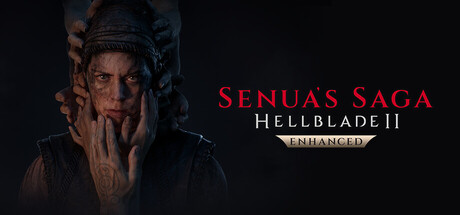
Hellblade II: Senua’s Saga is your answer — it trades slapstick charm for raw, sensory-rich mythic immersion. Think less ‘gorilla in a tuxedo negotiating with thunder gods’ and more ‘Senua whispering Norse runes into fog-draped fjords while voices argue in her head about fate and sacrifice.’ Its ‘Mythology & Folklore’ + ‘Dark Fantasy’ dimensions align tightly with the Gorilla God’s deeper lore layers — especially how both treat myth not as backdrop, but as living, breathing, sometimes terrifying architecture. Critics called it ‘a prayer whispered in motion capture,’ which honestly fits the vibe you’re after.