
Tonari no Seki-kun: The Master of Killing Time
The original manga revolves around a girl named Yokoi who sits next to a boy only known as Seki-kun. During class, Seki-kun continues to not pay attention and instead creates amazing little distractions, such as a detailed golf course with the course's hole being a dent in his desk, or an entire dramatic war being played out by paper shogi pieces. Yokoi often finds herself getting reluctantly interested in his games, even though they always seem to end up getting HER in trouble with the teacher!
(Source: Anime News Network)
📺Anime Details
📝Editorial Analysis
The pencil eraser rolls off Seki-kun’s desk, bounces once on the floor, and stops just shy of Yokoi’s sneaker—exactly where his paper-shogi “cannon” was aimed. She doesn’t flinch. She holds her breath. Because she knows—just as surely as she knows the teacher’s voice is rising in the background—that if she blinks, she’ll miss the tiny, deliberate flick of his pinky that sends a folded-paper “shell” arcing over the aisle, landing with a whisper against the chalk tray. And then the teacher turns. And Yokoi, who said nothing, who touched nothing, who only watched, gets scolded for “distracting the class.” Again.
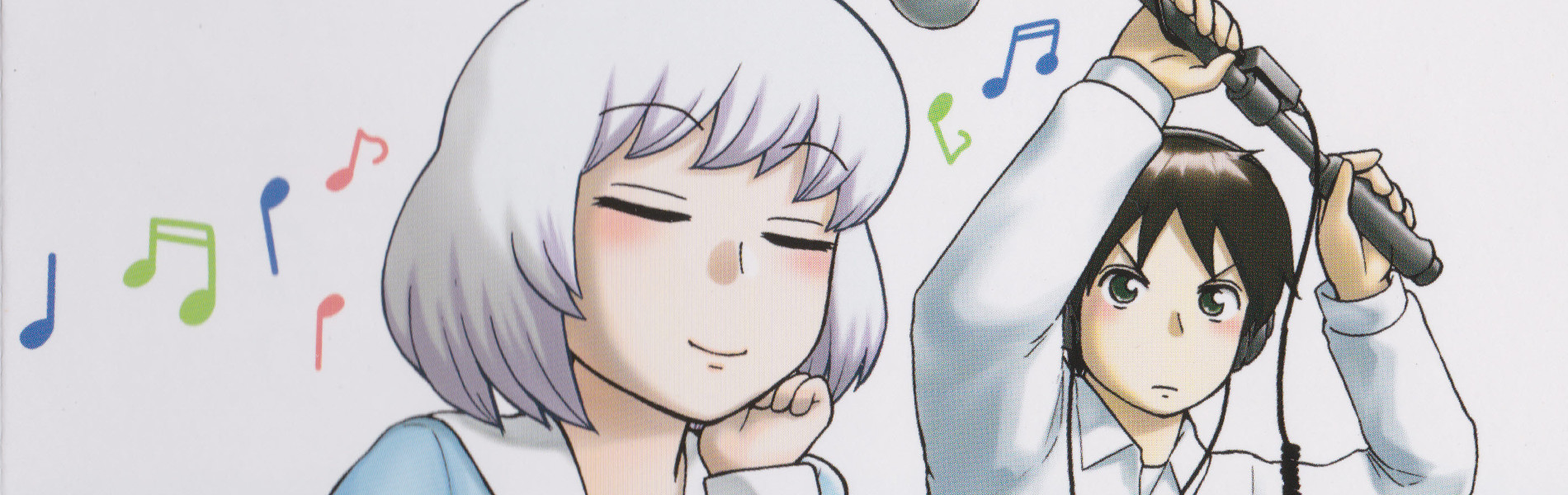
That’s the heartbeat of Tonari no Seki-kun: The Master of Killing Time: not chaos, but precision within constraint. It’s the quiet, almost sacred tension between Yokoi’s rigid attention to rules and Seki-kun’s silent, obsessive world-building inside the margins of those same rules. His golf course isn’t slapstick—it’s architectural. His shogi war isn’t random—it has terrain, supply lines drawn in pencil dust, casualty counts tallied in the margin of his math workbook. This isn’t rebellion. It’s devotion to miniature consequence. You feel the weight of every paper fold, the hush before the eraser drops, the delicious risk of being seen—not as disruptive, but as witnessed in your private, absurd, utterly sincere ritual.
What makes it ache is how deeply lonely it feels—even while shared. Yokoi never joins Seki-kun’s games. She observes. She calculates. She gets caught. Her fascination isn’t playful; it’s hypnotic, like watching smoke rise from a single matchstick held too long. There’s no dialogue about meaning, no confession of boredom or longing—just the dry rustle of notebook paper, the squeak of a chair leg dragged two inches to adjust line-of-sight, the way sunlight catches the edge of a bent paperclip used as a siege tower hinge. It’s melancholic exploration: small acts of creation blooming in the cracks of enforced stillness, fragile and fleeting, beautiful because they’re unauthorized and unacknowledged.
That feeling—the quiet, rule-bent ingenuity, the emotional resonance of play-as-resistance—echoes in Prince of Persia, where player reviews note its “Melancholic Exploration” dimension alongside Comedy & Parody. Its description calls it an “epic journey” built by Ubisoft Montreal—but what lingers isn’t the scale, it’s the weight of motion: the prince’s leaps measured in milliseconds, his failures graceful and inevitable, his world lush but thin, like ink washed over rice paper. Like Seki-kun’s desk-top battlefields, it’s grandeur rendered in delicate, physics-aware gestures—precise, ephemeral, haunted by consequence.
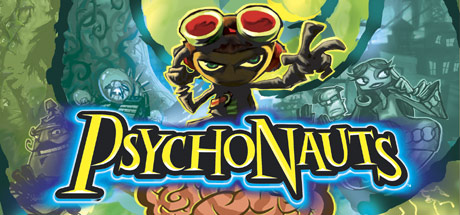
Psychonauts, too, lives in that same liminal space: “A Psychic Odyssey Through the Minds of Misfits, Monsters, and Madmen.” Its “Melancholic Exploration” isn’t metaphorical—it’s literal. You walk through a child’s fractured psyche, where logic bends, gravity shifts, and trauma wears cartoonish masks. Just as Yokoi peers into Seki-kun’s paper worlds and glimpses something tender and strange beneath the silliness, Psychonauts asks you to lean in, to treat absurdity as emotional cartography. One player review stumbles into raw sincerity—“his utters are beautifully rendered”—not as nonsense, but as proof of careful listening, of honoring the ridiculous as vessel for real feeling. That’s Yokoi’s gaze, unblinking, when Seki-kun’s paper tank finally topples.
And then there’s Garry's Mod—“a physics sandbox. There aren't any predefined aims or goals. We give you the tools and leave you to play.” No narrative. No win state. Just possibility, bounded only by friction, mass, and imagination. Its “Comedy & Parody” and “Melancholic Exploration” dimensions align not with jokes, but with the loneliness of invention: building a working elevator out of soda cans and rope, then watching it collapse in silence. Like Yokoi watching Seki-kun’s meticulously balanced paper crane flutter down, unbidden, onto her open textbook—no punchline, no reward, just shared gravity, shared stillness, shared what if?
Who loves this? Not just fans of school comedies or physics engines. It’s the person who replays the exact same jump in Prince of Persia until the arc feels true. The one who spends twenty minutes arranging chairs in Garry’s Mod just to watch them tumble in slow, satisfying succession. The one who pauses Psychonauts not at the boss fight—but when Raz sits quietly beside a sleeping kid, holding a toy plane, both of them breathing in time. They love the sacred smallness of it all—the way meaning gathers not in declarations, but in the eraser rolling just so, in the pause before the paper shell flies, in the hush where attention becomes devotion.
🎮10 Games That Match the Vibe







Match Dimensions Explained
❓Frequently Asked Questions
Why does Prince of Persia keep coming up in 'Games Like Tonari no Seki-kun' lists?
Because both lean hard into deadpan physical comedy *within* melancholic, atmospheric exploration—like Seki-kun’s silent desk antics, the Prince uses exaggerated acrobatics and environmental slapstick (e.g., slipping on oil, barely catching ledges) to undercut tension. Its 81-scored reboot even mirrors Seki-kun’s tone: a lonely, stylish protagonist turning isolation into absurd, rhythmic play.
Is there a Bully: Scholarship Edition anime or manga adaptation like Tonari no Seki-kun?
No—Bully has never been adapted into anime or manga, unlike Tonari no Seki-kun’s full TV series and films. But its DNA matches Seki-kun’s spirit: Jimmy Hopkins’ pranks on preppies, dodgeball sabotage, and nerdy side quests feel like live-action versions of Seki-kun’s desk-based guerrilla warfare against boredom and authority.
How is Psychonauts different from Garry's Mod when both are listed as similar to Tonari no Seki-kun?
Psychonauts gives you structured, character-driven psychic playgrounds—like Raz’s literal mind-labyrinth where you ‘milk’ a paranoid janitor’s anxiety into a surreal milk-carton boss fight—while Garry’s Mod hands you zero script, just ragdolls, props, and physics to improvise your own Seki-kun-style chaos (e.g., strapping a mannequin to a jetpack and launching it into a whiteboard). One’s curated parody; the other’s sandbox anarchy.
What’s the best game like Tonari no Seki-kun if I want that quiet, slightly sad but hilarious classroom vibe?
Go straight to Bully: Scholarship Edition—it nails that bittersweet adolescent limbo. Walking through Bullworth Academy’s empty hallways at dusk, pulling off a perfectly timed prank on a jock while the melancholic synth score hums? That’s Seki-kun’s ‘silent desk opera’ translated into open-world teenage purgatory, complete with awkward dialogue and tender, goofy heart.