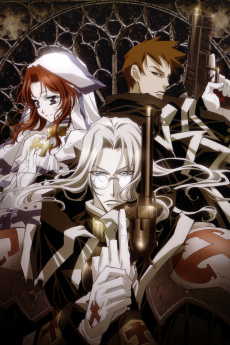
Trinity Blood
The background is in the distant future after the destruction brought about by Armageddon. The war between the vampires and the humans continue to persist. In order to protect the humans from the vampires, the Vatican has to rely on other allies to counter the situation. The protagonist, Abel Nightroad, is a traveling priest from the Vatican and a crusnik, a vampire that drinks the blood of vampires. He is a member of the "Ax", a special operations group led by Cardinal Catherina Sforza. He encounters a young girl called Esther, who decides to go with him to Rome and train at the Vatican. Soon after he meets her, the order of Rozencreuz, led by Abel's twin, Cain, tries to continue the war so they can rule the world. It's up to Abel and the AX to try and stop them.
📺Anime Details
📝Editorial Analysis
Rain slicks the cobblestones of a ruined cathedral square—not from clouds, but from a ruptured aqueduct high in the fractured spire. Abel Nightroad stands motionless beneath it, collar turned up against the cold, blood still wet on his knuckles. A vampire lies broken at his feet, neck twisted, throat torn open—not by fangs, but by his teeth. His eyes glow faintly crimson, not with hunger, but with something older: exhaustion, duty, a quiet grief that never quite settles. Around him, stained-glass saints stare down, their faces half-melted by centuries-old radiation storms. A biplane—propeller still idling—hovers low over the bell tower, casting a long, trembling shadow across the mosaic floor. This isn’t horror for shock. It’s horror as atmosphere: the weight of time pressing down like lead in the lungs, the ache of faith worn thin but never discarded, the terrible intimacy of violence between kin who share the same cursed blood.
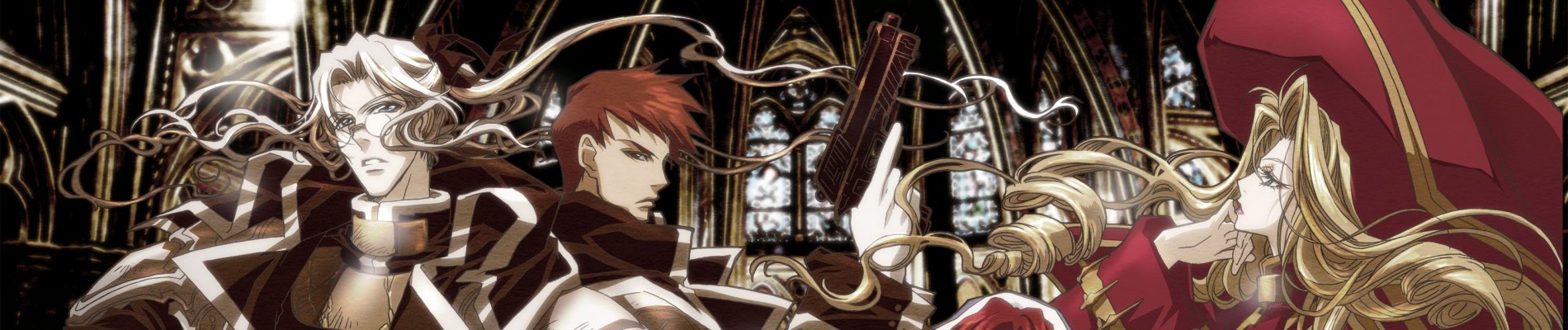
What makes Trinity Blood singular isn’t its vampires or guns or Vatican bureaucracy—it’s how every element serves a single, aching melancholy. It’s the feeling of standing in a library whose books are written in dead languages, watching a civilization rebuild its altars atop radioactive graves. The anachronism isn’t stylistic—it’s emotional: prayer beads clinking next to plasma rifle triggers, nuns reciting liturgy while calibrating AI-guided railguns, crusniks weeping as they feed—not because they’re monstrous, but because they remember what it was to be human before the fall. This isn’t dystopia as spectacle. It’s dystopia as inheritance—the slow, heavy realization that survival demands compromise so deep it hollows out your own reflection.
That emotional DNA pulses strongest in Assassin's Creed™: Director's Cut Edition, where player reviews admit the models feel dated—but no issues with me. That line resonates like a struck bell: just as Trinity Blood’s 2005 animation isn’t sleek, its power lives in texture—the grain of Abel’s cassock, the tremor in his hand before he draws his silver cross-sword, the way light catches dust motes in the Vatican’s underground archives. Both trade polish for presence. And like Trinity Blood, Assassin's Creed™ frames its action within sacred geometry and inherited dogma—every rooftop leap echoes a liturgical procession; every assassination is a sacrament performed in shadows. Its tactical warfare isn’t about dominance—it’s about precision, restraint, and the moral fatigue of being the blade the system refuses to name.
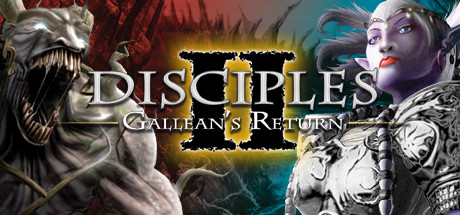
Then there’s Disciples II: Gallean's Return, praised by players for its awesome atmosphere and gameplay!—not flashy combat, but layered consequence. Its compilation structure mirrors Trinity Blood’s world-building: expansions aren’t add-ons—they’re archaeological strata. You don’t just fight vampires; you navigate feudal vampire courts, negotiate with AI-popes, parse theological edicts that double as military doctrine. Like Cardinal Catherina’s “Ax” unit, your army in Disciples II operates in grey zones—holy orders that burn heretics and shelter them, undead generals who quote scripture mid-battle. The dark fantasy here isn’t gothic ornament—it’s the quiet dread of choosing which truth to uphold when all truths have been weaponized.
Even S.T.A.L.K.E.R.: Shadow of Chernobyl, with its lower score and jarring technical flaws (Would have never thought that I'd enjoy a shooter so much), shares that core vibration: the Zone isn’t just dangerous—it’s sacredly unstable, humming with invisible forces that rewrite biology and memory. Like Trinity Blood’s post-Armageddon Earth, the Zone forces you to read ruins like scripture—to treat radiation burns as stigmata, anomalies as fallen angels, and your own mutated heartbeat as both threat and testimony. Its survival & crafting isn’t resource management—it’s ritual: purifying water like holy wine, patching armor with salvaged church brass, whispering prayers into malfunctioning comms gear.
This pairing speaks to someone who doesn’t flinch at gore—but feels it in their molars. Who watches Abel kneel to bless a dying vampire and thinks, Yes, that’s the real horror: compassion that won’t let you look away. They’re the ones who replay Disciples II not for victory, but to hear the mournful choir swell during siege cutscenes; who pause Assassin's Creed™ just to watch pigeons scatter from a sunlit minaret; who walk slowly through the Zone’s fog not to find loot, but to catch the echo of a child’s voice on a broken radio—faint, unverifiable, holy. They love stories where faith isn’t certainty—it’s the trembling hand holding the gun, the rosary wrapped around the grip, the breath held before the first drop of blood falls.
🎮17 Games That Match the Vibe




Match Dimensions Explained
❓Frequently Asked Questions
Why is Assassin's Creed: Director's Cut Edition listed as a game like Trinity Blood?
Because both lean hard into Dark Fantasy with morally gray protagonists navigating politically fractured, ancient-world-inspired settings—Altair’s stealthy assassinations in Jerusalem’s shadowy alleys echo Abel Nightroad’s brooding, high-stakes missions in war-torn Eastern Europe. The Tactical Warfare dimension also matches Trinity Blood’s emphasis on precise, consequence-driven combat over mindless action.
Is there a Trinity Blood video game adaptation?
No official Trinity Blood game exists—but Disciples II: Gallean's Return hits that same gothic, lore-dense Dark Fantasy vibe fans love: think vampire lords like Radu and the fallen angel Mordred clashing in turn-based tactical battles across cursed lands, complete with tragic backstories and faction warfare just like the anime’s Church vs. Methuselah conflicts.
How does Two Worlds II HD compare to Disciples II: Gallean's Return for Trinity Blood fans?
Two Worlds II HD leans into Survival & Crafting and open-world freedom—great if you loved Trinity Blood’s exploration of ruined cities and scavenged tech—but Disciples II nails the grim, scripted political intrigue and tactical depth of its battles (like the Siege of Carpathia), making it a tighter fit for fans who prioritize atmosphere and strategic weight over sandbox play.
What’s the best Trinity Blood-like game if I want brooding vampires, religious conspiracy, and slow-burn dread?
Disciples II: Gallean's Return—it’s got vampiric factions (the Undead Legions), cathedral-scale battles echoing the Vatican’s machinations, and that thick, melancholic tone where every victory feels costly. Player reviews even call out its ‘awesome atmosphere,’ matching Trinity Blood’s blend of gothic romance and apocalyptic tension better than the more shooter-focused S.T.A.L.K.E.R. or the historically grounded Assassin’s Creed.