
Uzaki-chan Wants to Hang Out!
Sakurai Shinichi’s one wish is for a little peace and quiet. But Uzaki Hana–his boisterous, well-endowed underclassman–has other plans. All she wants is to hang out and poke fun at him. With the help of her chipper charm and peppy persistence, this might just be the start of a beautiful relationship!
(Source: Seven Seas Entertainment)
📺Anime Details
📝Editorial Analysis
The thwip of Uzaki Hana’s finger jabbing Shinichi’s cheek—again—while he’s trying to read under a cherry blossom tree. His flinch, the way his glasses fog for half a second, the absurd precision of her poke: not hard enough to bruise, just enough to shatter concentration like dropped porcelain. She giggles—not a laugh, but a bubbly burst, immediate and unapologetic—and flops onto the grass beside him, swinging her legs, her skirt riding up just enough to make him glance away, then glance back, then sigh into his textbook. That’s it. Not romance as grand gesture, not comedy as punchline—but intimacy as interruption, warmth disguised as chaos.

What makes Uzaki-chan Wants to Hang Out! vibrate at this particular frequency isn’t its ecchi tags or college setting—it’s the relentless, sunlit pressure of being seen, liked, and gently, persistently unleashed upon. It’s not about longing from afar; it’s about someone showing up—boisterous, unfiltered, physically present—and refusing to let quiet be the default. There’s no melancholy in the shadows here, no existential dread—just the low-grade, delicious friction of two rhythms colliding: Shinichi’s desire for stillness, Uzaki’s irrepressible kinetic joy. You don’t watch it to escape life—you watch it because it feels like life when life is unexpectedly, tenderly loud. It’s warm, playful, unhurried, and deeply human in its small-scale insistence on connection.
That emotional signature—the blend of gentle absurdity, physical immediacy, and affectionate disruption—echoes in surprising ways across certain games. Take Prince of Persia: its description promises “an all-new epic journey” built on “melancholic exploration” and “comedy & parody.” But look closer—the player review notes it’s “the 3rd reboot… completely separate from the sands.” That fresh start, that deliberate shedding of legacy weight? It mirrors how Uzaki-chan Wants to Hang Out! treats romance—not as destiny or trauma, but as a light, iterative experiment: each hangout is a new iteration, each poke a tiny reboot of Shinichi’s composure. Both refuse inherited gravity. They choose breezy reinvention over solemn continuity.
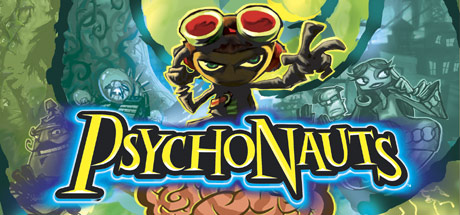
Then there’s Psychonauts, described as “a Psychic Odyssey Through the Minds of Misfits, Monsters, and Madmen,” with “comedy & parody” and “melancholic exploration” as core dimensions. The player review—oddly phrased, almost nonsensical (“milking of certain highly creamy men”)—somehow lands on the show’s truth: Uzaki-chan lives in the same tonal universe where sincerity wears slapstick makeup. Like Raz navigating warped psychic landscapes shaped by childhood insecurity or social anxiety, Shinichi navigates Uzaki’s relentless cheer as if it were a surreal, emotionally charged level design—her tomboy energy, her physical confidence, her refusal to perform demureness—all feel like personality made architecture. The humor isn’t mocking; it’s the scaffolding holding fragile, real feeling aloft.
And Bully: Scholarship Edition, whose description centers on “mischievous 15-year-old Jimmy Hopkins” enduring “the hilarity and awkwardness of adolescence”—beating jocks, pranking preppies, saving nerds. Its player review complains about crashes on PC but praises its Steam Deck performance—a detail that accidentally underscores the anime’s ethos: it thrives in imperfect, tactile, slightly glitchy realness. Shinichi isn’t a hero—he’s a guy whose shoelace unties every time Uzaki leans in too close. Their dynamic has the same schoolyard physics: improvised, rule-bent, socially messy, yet charged with unspoken care. Like Jimmy navigating Bullworth Academy’s hierarchies, Shinichi negotiates Uzaki’s affection not through grand declarations, but through small surrenders: sharing taiyaki, letting her drag him to karaoke, tolerating her nickname for him—“Shinichin”—until it stops sounding silly and starts sounding like home.
This pairing sings for the person who smiles when someone knocks twice on their door just to say hi—even though they were this close to finishing that chapter. For the player who replays the cafeteria prank in Bully not for points, but for the way the lunch lady’s wig flies off just so. For the one who pauses Prince of Persia mid-parkour not to admire the vista, but to watch dust motes catch light in a sunbeam—because that’s the moment that feels true. They don’t crave catharsis—they crave continuity with charm, the quiet thrill of being gently, repeatedly, poked back into the world.
🎮10 Games That Match the Vibe








Match Dimensions Explained
❓Frequently Asked Questions
Why does Bully: Scholarship Edition match 'Uzaki-chan Wants to Hang Out!' despite being set in a boarding school?
Because both lean hard into the awkward, hilarious, and surprisingly heartfelt moments of teenage social navigation—like Jimmy Hopkins pranking preppies or saving nerds from bullies, mirroring Uzaki’s relentless (but affectionate) teasing of Hana. The game’s tone balances slapstick comedy with melancholic exploration of identity and belonging, just like Uzaki-chan’s quieter scenes where Hana reflects on loneliness or growing up.
Is there an anime or game adaptation of Uzaki-chan that captures its lighthearted hangout vibe?
No official game adaptation exists—but Bully: Scholarship Edition comes closest in spirit: it’s all about low-stakes, character-driven social chaos (dodgeball, cafeteria pranks, bike races) with genuine warmth beneath the jokes. Players even report replaying side quests just to hang out with recurring classmates—very much like rewatching Uzaki’s ‘let’s go eat crepes!’ episodes.
How does Psychonauts compare to Bully for capturing Uzaki-chan’s mix of silliness and emotional depth?
Psychonauts dives deeper into internal melancholy—like Raz exploring a bullied kid’s mind where bullies manifest as literal clown monsters—while Bully keeps the pathos grounded in schoolyard realism (e.g., Jimmy defending a shy kid named Russell). Both nail the ‘funny but tender’ balance, but Bully’s everyday teen dynamics (detention, crushes, cafeteria politics) feel more directly adjacent to Uzaki’s slice-of-life rhythm.
What’s the best game like Uzaki-chan for when you want cheerful, low-pressure hangout energy?
Bully: Scholarship Edition is your top pick—it’s built around wandering Bullworth Academy, striking up conversations, joining impromptu games of dodgeball or skateboarding, and even just sitting on benches watching NPCs banter. Unlike Just Cause 2’s explosive chaos or Prince of Persia’s mythic weight, Bully delivers that warm, unhurried ‘let’s just vibe’ feeling—exactly like Uzaki dragging Hana to the shrine festival or a convenience store run.