
Evangelion: 3.0 You Can (Not) Redo
14 years after third impact, Ikari Shinji awakens to a world he does not remember. He hasn't aged. Much of Earth is laid in ruins, Nerv has been dismantled, and people who he once protected have turned against him. Befriending the enigmatic Nagisa Kaworu, Shinji continues the fight against the angels and realizes the fighting is far from over, even when it could be against his former allies. The characters' struggles continue amidst the battles against the angels and each other, spiraling down to what could inevitably be the end of the world.
(Source: Anime News Network)
Note: Exists in several versions, as denoted by the version number:
• 3.0: Nov 17, 2012 - Original theatrical release
• 3.33: Apr 24, 2013 - Blu-ray/DVD release with minor visual changes.
• 3.333: Jan 8, 2021 - Theatrical IMAX screenings mastered in 2K with numerous small adjustments to lighting and color, as well as a new preview at the end of the film.
• Aug 25, 2021 - 4K Blu-ray release of 3.333
📺Anime Details
📝Editorial Analysis
The air tastes like rust and static. Shinji stumbles out of the Evangelion’s entry plug—fourteen years gone, his body untouched, his breath ragged in a world where the sky bleeds violet ash and the ruins of Tokyo-3 jut from cracked earth like broken ribs. No fanfare. No reunion. Just Kaworu’s quiet voice cutting through the silence: “You’re late.” Not angry. Not relieved. Just… factual. As if time itself had folded wrong, and Shinji was the only one who didn’t get the memo.
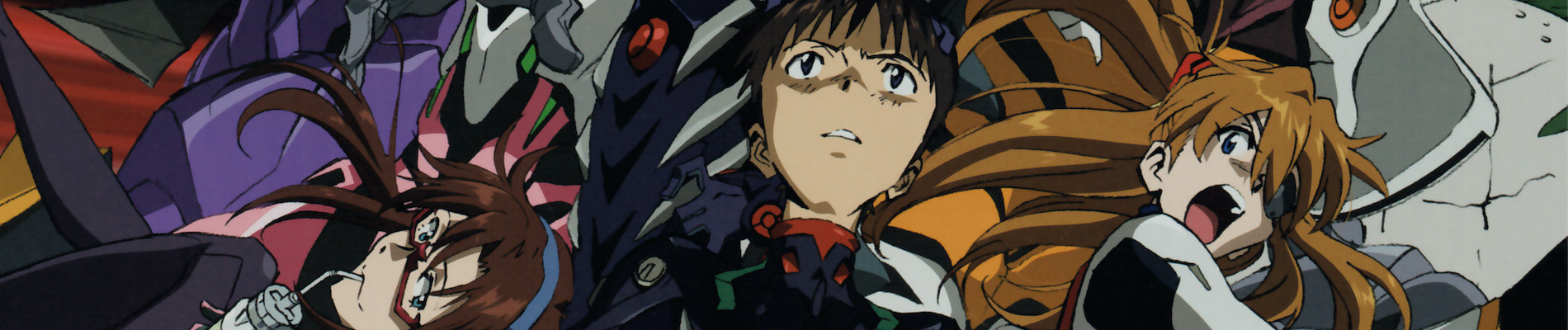
That’s the core ache of Evangelion: 3.0 You Can (Not) Redo—not despair, not rage, but dislocation. It’s the vertigo of waking inside your own life as a stranger. The ruined city isn’t just set dressing; it’s memory made physical, a landscape where every collapsed overpass, every silent NERV logo half-buried in rubble, whispers: You failed. And no one told you how. There’s no catharsis in the mecha battles—they’re frantic, asymmetrical, emotionally hollow. Shinji doesn’t pilot to save; he pilots because the machine is the only thing that still recognizes him. The tragedy isn’t that he’s betrayed—it’s that he’s unmoored, drifting in a timeline that erased his grief, his growth, his very right to mourn. This isn’t post-apocalypse as spectacle. It’s post-apocalypse as amnesia: beautiful, chilling, and deeply lonely.
Which is why BioShock Infinite lands with such brutal precision. Its description names Booker DeWitt as “indebted to the wrong people,” hunted by consequence—and its player review admits, “I know that some people are still bitter about the Bioshock Infinite we could have gotten.” That phrase—we could have gotten—is pure 3.0 DNA. Both works orbit the unbearable weight of what wasn’t chosen, of paths collapsed into a single, suffocating present. Booker doesn’t just fight Columbia—he fights the ghost of a baptism he refused, a self he disowned. Like Shinji staring at Misato’s cold stare across a battlefield, Booker sees Elizabeth not as salvation, but as evidence of a debt he can’t repay. Neither gets a redo. They get repetition, dressed up as progress.
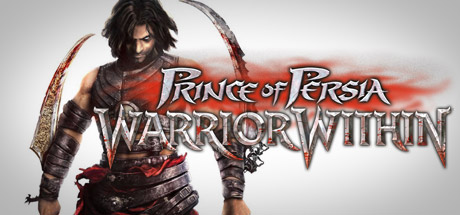
Then there’s Prince of Persia: Warrior Within, where the Prince is “hunted by Dahaka, an immortal incarnation of Fate.” The player review calls the Dahaka chase “still as goated as it was before”—and that’s key. Dahaka isn’t a boss to defeat. It’s inevitability given claws and speed. Every sprint across crumbling bridges, every desperate parry, mirrors Shinji’s flight from Unit-01’s berserk charge—not because he’s weak, but because the system demands he run. Both are men whose bodies remember trauma their minds have suppressed. Time isn’t a tool here; it’s a predator. And like Kaworu’s calm certainty amid chaos, Dahaka never shouts. It just arrives, again and again, because time doesn’t forgive. It accumulates.
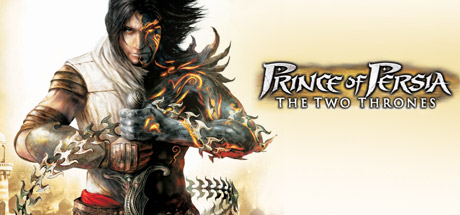
Even Prince of Persia: The Two Thrones, where the Prince returns “to Babylon with his love, Kaileena… only to find his homeland ravaged by war,” echoes 3.0’s gut-punch structure. The description doesn’t say he caused it. It says he finds it—like Shinji finding Rei alive, or Asuka piloting a black Eva against him. The player review calls it “one of my best childhood games”, but 3.0 weaponizes nostalgia: it shows you the faces you loved, then makes them unreachable. Kaileena’s death isn’t just plot—it’s the shattering of a promised peace, just as Kaworu’s final act isn’t sacrifice, but confirmation: some doors don’t open twice.
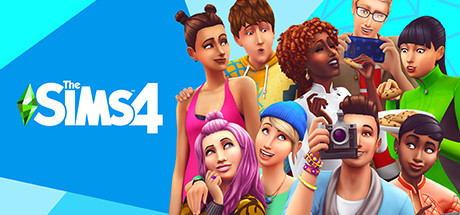
The Sims™ 4 stands apart—not in tone, but in function. Its description invites you to “play with life and discover the possibilities,” while its review bitterly notes “TS4 has become awful… you can barely do a [thing] without DLC.” That friction—the gap between idealized control and systemic exhaustion—is 3.0’s quiet horror. Shinji wants to rebuild. To apologize. To hold hands. But the world won’t load the save file. The game refuses the mod. The romance tag isn’t fluff—it’s irony. He’s trapped in a simulation where love is a locked DLC pack he can’t afford.
This pairing isn’t for fans of clean arcs or triumphant mecha clashes. It’s for the person who replays Warrior Within after ten years because the Dahaka’s footsteps still echo in their chest. For the one who pauses BioShock Infinite not at the big twist, but when Booker stares at his reflection and doesn’t recognize the eyes looking back. For the viewer who watches Shinji reach for Kaworu’s hand—not for romance, but because touch is the only proof he’s real right now. They’re all speaking the same language: fragile, aching, unresolved, tired, terrified, alive.
🎮11 Games That Match the Vibe


Match Dimensions Explained
❓Frequently Asked Questions
Why does Prince of Persia: Warrior Within feel so much like Evangelion 3.0's tone?
Because both lean hard into guilt-ridden protagonists hunted by inescapable forces — the Prince is stalked by Dahaka (a literal embodiment of fate/time), just like Shinji’s trapped by the Instrumentality system and his own trauma. The grim, rain-slicked ruins, morally grey choices, and that suffocating sense of inevitability? All vibes straight out of Adult & Dark Seinen — same dimension as Evangelion 3.0.
Is there a video game adaptation of Evangelion: 3.0 You Can (Not) Redo?
No — there’s no official game adaptation of Evangelion 3.0. The closest you’ll get are games that *match its emotional and thematic DNA*, like Prince of Persia: The Two Thrones, where the Prince battles his own corrupted doppelgänger (the Dark Prince) while trying to protect Kaileena — echoing Shinji’s struggle against his fractured self and failed connections.
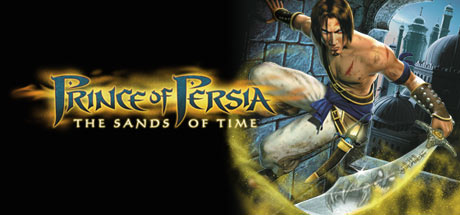
BioShock Infinite vs. Prince of Persia: The Sands of Time — which one nails Evangelion 3.0’s time/memory twist better?
Sands of Time wins on mechanics — rewinding time mid-combat to undo mistakes mirrors Shinji’s desperate 'redo' fantasy, down to the visual rewind effect and consequences piling up with each use. BioShock Infinite leans heavier on layered metaphysics and branching realities (Booker/Comstock), which feels more like Evangelion’s philosophical head-scratcher than its raw, visceral 'undo' impulse.
What’s the best game like Evangelion 3.0 if I want that heavy, brooding, emotionally exhausted vibe?
Prince of Persia: Warrior Within — hands down. The Prince is physically and psychologically worn down, haunted by Dahaka’s relentless chases through crumbling, oppressive environments, and forced into brutal, weighty combat. It’s not flashy heroics; it’s survival, regret, and exhaustion — exactly the Adult & Dark Seinen energy that makes Evangelion 3.0 hit so hard.