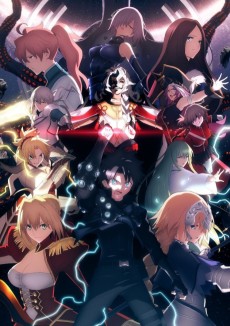
Fate/Grand Order Final Singularity - Grand Temple of Time: Solomon
After battling their way through all seven Singularities, the Chaldea Security Organization has finally arrived at the endpoint of the Grand Order: The Final Singularity, Grand Temple of Time: Solomon.
Now is the time to defeat the root of all evil, Solomon, the King of Mages. Now is the time to reclaim the future.
With the final operation looming large, Romani Archaman considers the choices he will soon have to make, Mash Kyrielight dwells on life’s limitations, and Fujimaru prepares to receive a new Mystic Code.
All their many encounters have led to this moment as Fujimaru and Mash at last embark on their final operation...
[Source: Aniplex USA]
📺Anime Details
📝Editorial Analysis
The air in the Grand Temple of Time doesn’t just breathe—it holds its breath. You feel it in the silence between Romani Archaman’s quiet exhale and the slow, deliberate clink of Mash Kyrielight’s shield resting against stone—not as armor, but as a weight she’s chosen to carry. No battle music swells yet. No spell flares. Just light fractured through impossible stained-glass constellations, each pane showing a different era collapsing into itself: Babylonian ziggurats dissolving into Edo-era ink washes, then into the jagged geometry of a future that never was. This isn’t climax—it’s suspension. The moment before the last choice, where every second stretches like taffy pulled across centuries, and you realize time here isn’t a river—it’s a wound, and Solomon is both surgeon and scar.
What makes Fate/Grand Order Final Singularity - Grand Temple of Time: Solomon ache so deeply isn’t its scale—it’s its gravity. Not the spectacle of gods or demons clashing, but the unbearable lightness of what’s already been lost: Romani’s fading presence, Mash’s quiet reckoning with mortality, Fujimaru’s voice cutting off mid-thought—pr—leaving only the echo of a name half-said. It’s mythology made intimate, not grandiose. You don’t watch kings and mages—you watch people trying to mean something after history has already written their epitaphs. That feeling—of standing at the edge of an ending you helped build, knowing your choices have already calcified into fate—is heavy, tender, and inescapably human.
That emotional gravity resonates sharply with Prince of Persia: Warrior Within. Its description names the Dahaka—an “immortal incarnation of Fate”—and the player review calls the chase “goated” even after a decade. That’s the same pulse: being hunted not by a monster, but by consequence made flesh. The Prince doesn’t fight to win—he fights to delay, to carve seconds out of inevitability, just as Fujimaru and Romani move through the Temple knowing every corridor is a countdown they can’t reset. The time here isn’t power—it’s pressure. And the memory isn’t nostalgia; it’s the ghost of every path not taken, whispering from every shadowed archway.
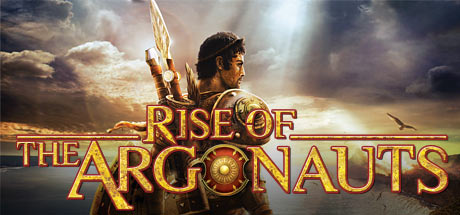
Then there’s Rise of the Argonauts, where Jason vows “to do anything to restore her life” after his fiancé is killed on their wedding day. The player review says it “does [ancient history] right”—but what it feels like is the same desperate archaeology of meaning that drives Chaldea: sifting through myth, blood, and broken timelines not for glory, but for one person’s return. Jason’s quest isn’t about empire—it’s about a single vow etched in grief. Like Romani choosing to stay behind, like Mash stepping forward knowing her shield may shatter this time, it’s devotion worn thin by repetition, yet unbroken. The mythology isn’t backdrop—it’s the language of love that refuses translation.
And Jade Empire™: Special Edition, with its “path of the open palm or the closed fist,” mirrors the Temple’s moral architecture. Not good vs. evil—but how much of yourself you’re willing to unmake to save what matters. The player review mentions needing Reddit instructions to launch—a small, real-world friction that oddly echoes the anime’s texture: beauty built on fragile systems, elegance held together by sheer will. Both ask you to embody philosophy in motion: every parry, every dialogue choice, every breath drawn before a final incantation carries the weight of a lifetime’s conviction.
This isn’t for the viewer who wants clean victories or the player who craves flawless mechanics. It’s for the one who replays Prince of Persia: The Two Thrones™ not for the swordplay—but because locking the FPS at 60fps makes Kaileena’s smile linger just long enough to feel real. It’s for the one who reads “pr—” and feels their throat close—not because the story’s unfinished, but because they already know the rest. They’ve lived it. In the silence between heartbeats. In the space where time stops holding its breath—and lets you finally hear your own.
🎮8 Games That Match the Vibe
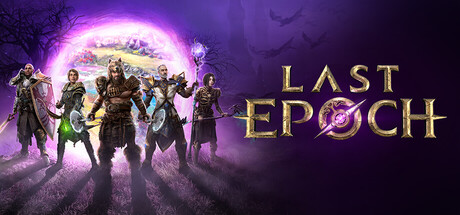
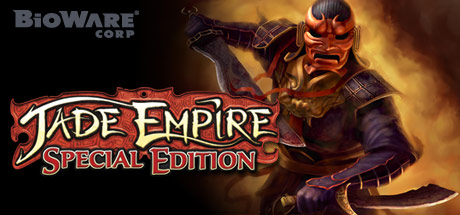
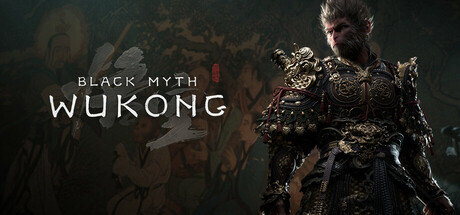
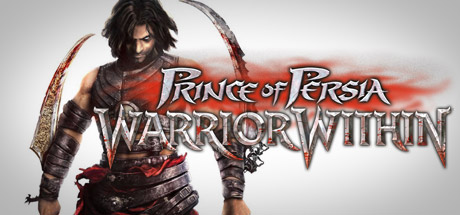
Match Dimensions Explained
❓Frequently Asked Questions
Why is Prince of Persia: Warrior Within recommended for Fate/Grand Order's Final Singularity despite being so different?
Because both lean hard into time-bent tragedy and relentless pursuit—Warrior Within’s Dahaka chase sequences mirror Solomon’s oppressive, inescapable time-loop dread, especially during the crumbling Temples of Time segments. The game’s gritty, consequence-heavy combat and brooding tone (like the Prince’s internal struggle with the Dark Prince) echo the emotional weight and cosmic stakes of FGO’s Grand Temple of Time finale.
Is there a Fate/Grand Order anime or movie adaptation of the Grand Temple of Time arc?
No official anime or movie adaptation exists yet—only the mobile game’s original story and related stage plays. But fans often compare Prince of Persia: The Two Thrones’ Babylon siege and time-split duality (Light/Dark Prince vs. Solomon’s dual nature as human and Demon God) to how that arc *feels* cinematically—especially Kaileena’s sacrifice echoing Semiramis’ role in the Final Singularity.
How does Rise of the Argonauts compare to Fate/Grand Order’s Grand Temple of Time in terms of mythological depth?
Rise of the Argonauts dives deep into authentic Greek myth structure—Jason’s quest for the Golden Fleece, encounters with Medea and the Harpies, and moral choices shaped by divine favor—much like FGO’s Solomon arc weaves real Kabbalistic lore, biblical figures (like Nimrod), and Mesopotamian cosmology into its time-temple framework. Both treat mythology not as set dressing but as narrative architecture.
What’s the best game like Fate/Grand Order’s Grand Temple of Time if I want that melancholic, time-ruined grandeur vibe?
Prince of Persia: The Two Thrones nails it—the ruined, sand-choked Babylon, the Prince’s fractured psyche echoing Solomon’s tragic omniscience, and the haunting ‘time bleed’ effects when past/present collide. Its blend of solemn atmosphere, architectural scale (like the collapsing palace), and emotional gravity—plus that iconic 60fps lock for smooth melancholy pacing—hits the same notes as the Grand Temple’s final descent.