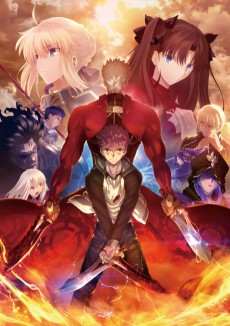
Fate/stay night: Unlimited Blade Works 2nd Season
The Holy Grail War continues, with each Master and Servant duo making their move for the omnipotent wish granter. Caster’s plans have been set in motion, beginning with taking Saber captive while Rin and Archer go their separate ways to continue their fights on their own. Without Saber’s aid, Shirou’s principles are put to the ultimate test. With many battles to come with expected and unexpected enemies, Shirou’s resolve begins to take form. Is his desire to protect people and become a hero, genuine? Or are they simply borrowed feelings? And will it be enough to carry him to the end?
(Source: Aniplex of America)
📺Anime Details
📝Editorial Analysis
The rain in Fuyuki City doesn’t fall—it stings. It’s the kind of cold, metallic downpour that soaks through Shirou’s jacket as he staggers across the shattered roof of the church, blood mixing with rainwater on his knuckles, his breath ragged not from exhaustion but from the weight of a choice he can’t unmake: to keep fighting, even when every principle he’s built himself on is cracking under the pressure of real consequence. That moment—no grand speech, no heroic pose, just trembling hands and rain-slicked concrete—is where Fate/stay night: Unlimited Blade Works 2nd Season lives.

This isn’t fantasy as escape. It’s fantasy as pressure chamber. The urban skyline hums with suppressed magic, streetlights flicker like dying stars, and every sword clash carries the echo of a lifetime’s regret—not just Archer’s, but Shirou’s own dawning realization that heroism isn’t purity; it’s fracture, repetition, the slow erosion of self in service of something larger and far less certain. You don’t feel triumphant watching Shirou push forward—you feel tense, resonant, like your own moral compass is being recalibrated mid-battle. It’s philosophy made visceral: time isn’t manipulated with sand or gears here, but with repetition of pain, with choices that loop back—not through mechanics, but through memory, guilt, and the unbearable clarity of seeing your future self as both warning and wound.
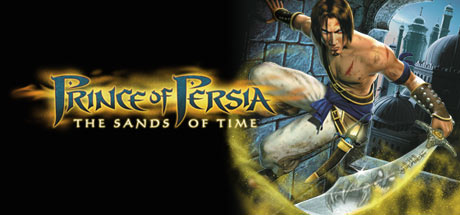
That emotional DNA—the ache of time-as-consequence, the mythic weight pressing down on ordinary shoulders—finds its closest kin not in flashy RPGs, but in the Prince of Persia trilogy. Prince of Persia: The Sands of Time doesn’t just use time manipulation; it makes you live inside its remorse. The rewind isn’t convenience—it’s penance. Every misstep on a crumbling ledge, every mistimed dagger throw, forces you to confront the cost of haste, of pride, of youth’s blind certainty—exactly how Shirou’s early idealism shatters against Caster’s cruelty and Archer’s scorn. A player writes: “Woah, what a game. The tactical platforming that is satisfying due to the locked directions… yet still challenging.” That tension—precision demanded by consequence, movement constrained by meaning—is pure UBW: every swing of Excalibur or trace of Caladbolg lands with the same deliberate, almost painful, intentionality.
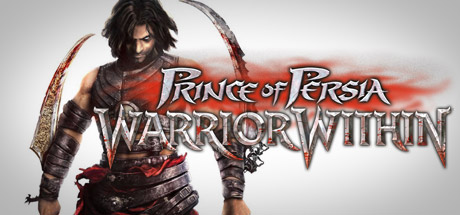
Then there’s Prince of Persia: Warrior Within, where Dahaka isn’t just a boss—it’s time made vengeful, a physical manifestation of inevitability hunting the Prince across crumbling architecture and bleeding timelines. The chase sequences aren’t about speed; they’re about dread, about running from a truth you’ve already authored. Just like Shirou running toward his own future self—not to embrace it, but to argue with it, to reject the path Archer walked. A reviewer says: “I have replayed this game after a decade cause this is my childhood completing it was a journey, dahaka chase is still as goated as it was before…” That sense of personal pilgrimage, of returning to a story not for nostalgia, but because the emotional stakes never dulled—that’s UBW’s second season in a nutshell. It’s not spectacle for spectacle’s sake; it’s spectacle charged with memory.
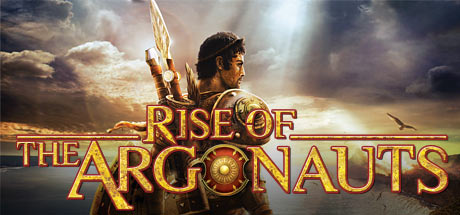
Even Rise of the Argonauts, with its grounded mythic tragedy—Jason vowing to restore his murdered fiancé—echoes UBW’s core wound: love weaponized as motive, grief calcified into mission. The anime doesn’t romanticize Saber’s captivity; it shows how losing her destabilizes Shirou’s entire ethical scaffolding. Likewise, the game’s description centers on consequence: “When she was killed on their wedding day, he vowed to do anything to restore her life.” Not glory. Not power. Restoration. A player notes: “If you love games based on ancient history this one does it right…” What “it” is—the fidelity to emotional cause-and-effect, the way myth serves not as backdrop but as psychological architecture—is what UBW achieves with its modern urban legends and broken heroes.
This pairing isn’t for the casual fan who wants clean victories or easy catharsis. It’s for the person who replays a boss fight not to win faster, but to understand the rhythm of their own hesitation. For the reader who underlines passages about time and identity in dog-eared philosophy texts. For the one who watches Shirou bleed on that rain-soaked roof and thinks, Yes—I know that exact kind of tired. Not the tired of effort, but the aching, honest, unavoidable tired of becoming.
🎮8 Games That Match the Vibe
Match Dimensions Explained
❓Frequently Asked Questions
Why is Prince of Persia: Warrior Within recommended for Fate/stay night UBW fans?
Because both lean hard into brooding, time-haunted protagonists wrestling with fate and consequence—just like Shirou’s internal conflict over his ideals, the Prince is hunted by Dahaka, a literal embodiment of his past mistakes. The relentless chase sequences, visceral sword combat, and that oppressive, rain-slicked underworld aesthetic mirror UBW’s intense, emotionally charged duels (like Archer vs. Shirou in the church).
Is there a visual novel or anime-style game adaptation of Unlimited Blade Works?
No—not as a direct adaptation. While games like Loki and Rise of the Argonauts tap into mythic storytelling, they’re action-RPGs with combat systems, not narrative-driven VNs. UBW’s layered character psychology and dialogue-heavy emotional turning points (e.g., Rin’s rooftop confession) simply don’t translate to those mechanics—you’d need something like Steins;Gate or Fate/Grand Order for that vibe.
How does Prince of Persia: The Two Thrones compare to Rise of the Argonauts for UBW fans?
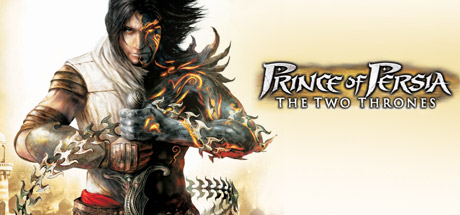
Two Thrones nails UBW’s duality theme—literally, with the Prince’s split personality and Kaileena’s tragic arc echoing Shirou/Archer’s ideological clash—while Rise of the Argonauts leans into mythic worldbuilding (Jason’s grief-driven quest) but lacks that intimate, morally fractured character tension. If you loved UBW’s psychological weight and razor-sharp swordplay, Two Thrones’ seamless combat + inner-conflict mechanics hit closer than Argonauts’ more straightforward hero’s journey.
What’s the best game like UBW if I want that ‘rainy, melancholic, sword-clashing-at-midnight’ mood?
Prince of Persia: Warrior Within—hands down. That constant Dahaka pursuit through crumbling, rain-drenched ruins? It’s basically UBW’s finale energy: high stakes, moral exhaustion, and every sword parry feeling desperate and personal. Even the player review calls the Dahaka chase 'goated'—same adrenaline rush as Shirou pushing past his limits against True Assassin or Gilgamesh.