
Gabriel DropOut
An angel at the top of an angel school has descended to the human world! However, she has already acclimated to the life of the human world so much that she ends up leading a self-indulgent life, skipping school all the time and being absorbed in online games. Gabriel soon forgets about her original goal to make human beings happy and has turned into a lazy and hopeless angel, or a “sloppy angel” in short. Amazingly, she swears to continue to fully enjoy the pleasure of various entertainments of the human world.
(Source: Crunchyroll)
📺Anime Details
📝Editorial Analysis
Gabriel sprawled on her apartment floor, controller in one hand, half-eaten bag of chips balanced precariously on her stomach, eyes locked on a pixelated boss battle—her halo tilted sideways, glowing faintly like a forgotten nightlight. Outside her window, Tokyo hums; inside, time has softened into syrup. She’s supposed to be guiding humanity toward joy—but right now, joy is a 72-hour online raid, a perfectly timed dodge-roll, and the warm, weightless drift of skipping responsibility like a stone across still water.

That’s the feeling Gabriel DropOut lives inside: not chaos, but laziness as sanctuary. Not rebellion—not even irony—but the quiet, stubborn luxury of choosing comfort over calling, of letting divine purpose dissolve into the glow of a screen and the crinkle of snack bags. It’s urban fantasy stripped of stakes: no apocalypses, no fallen angels weeping in alleys—just the soft, surreal thud of wings folding into hoodie fabric. The supernatural isn’t awe-inspiring here—it’s background static. An angel forgets her mission not because she’s corrupted, but because Tetris loaded faster than her celestial briefing did. That’s the emotional DNA: Healing & Slow Life, yes—but more precisely, the radical gentleness of permission: permission to pause, to pixelate your purpose, to let transcendence wait while you finish this match.
Which is why Prince of Persia resonates so deeply—not the sandstorms or swordplay, but the Melancholic Exploration baked into its very movement. Its description calls it “an all-new epic journey,” yet player reviews note it’s “completely separate” from past lore—like Gabriel severing herself from angelic curriculum with zero fanfare. There’s a shared rhythm: slow, deliberate traversal through ornate, sun-drenched spaces where gravity feels optional and time feels elastic. You don’t conquer the world—you linger in its textures, tracing marble grooves with your fingertips just as Gabriel traces the edge of her gamepad, lost in the hush between button presses. Both offer healing not through triumph, but through flow: the prince’s acrobatic glide mirroring Gabriel’s effortless slide from couch to floor to keyboard—each motion unhurried, each pause intentionally unearned.
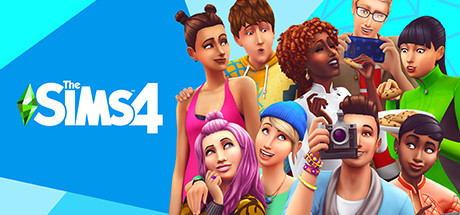
Then there’s The Sims™ 4, whose description invites you to “Play with life and discover the possibilities”—a phrase that could be Gabriel’s personal manifesto. She doesn’t save humans; she simulates them, observes them, occasionally trolls them in chat lobbies, then returns to her own cozy, low-stakes simulation: cooking bad ramen, napping mid-sentence, building absurdly tall houses in her head. The player review complains the game is “no fun without DLC”—and yet, Gabriel thrives in the base version of existence: no expansions, no upgrades, just the vanilla joy of existing badly and loving it. Her life isn’t optimized. It’s unlocked, messy, gloriously unpolished—like a Sim with broken AI who somehow finds bliss in staring at a wall for twelve in-game hours. That’s the shared heartbeat: comedy born not from punchlines, but from the sheer, tender absurdity of choosing smallness.
And Garry's Mod—“a physics sandbox… no predefined aims or goals”—is pure Gabriel energy distilled. No objectives. No win state. Just the giddy, destabilizing freedom of grabbing a prop, launching it into orbit, watching it spin lazily against a skybox, and deciding that’s enough. Its player review mentions S&Box’s “Ai filled release” as a disappointment—implying what’s beloved about GMod is its human-led entropy, its refusal to be streamlined. Like Gabriel ignoring her halo’s gentle pulsing reminder, GMod ignores narrative scaffolding. Both are acts of gentle sabotage against urgency—proof that meaning isn’t found in completion, but in the wobble of a teacup suspended mid-air, or an angel giggling as she accidentally flings her own wings into the ceiling fan.
This pairing isn’t for the achievement-hunters or lore-deep divers. It’s for the ones who’ve ever paused a cutscene to reheat coffee, who’ve left a quest log open for three days just to watch NPCs walk their loops, who feel lighter when they skip the boss fight and go tend virtual flowers instead. It’s for people who know joy isn’t always loud—and sometimes, the holiest thing you can do is lie down, press start, and let the world blur softly at the edges.
🎮14 Games That Match the Vibe









Match Dimensions Explained
❓Frequently Asked Questions
Why does Prince of Persia keep showing up in 'Games Like Gabriel DropOut' lists?
Because both lean hard into that sweet spot of melancholic exploration wrapped in sharp, self-aware comedy—like when the Prince sighs through another crumbling palace while dodging time-bending traps, mirroring Gabriel’s deadpan exhaustion during her own absurd divine bureaucracy scenes. The Healing & Slow Life dimension also clicks with Gabriel DropOut’s low-stakes, character-driven pacing, not action intensity.
Is there an anime or manga adaptation of Gabriel DropOut that's actually good?
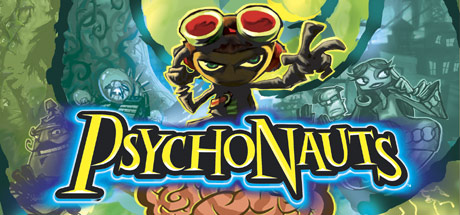
No official anime or manga adaptation exists beyond the original webcomic and TV anime (which *is* the source)—but fans often compare its tone to Psychonauts’ surreal, emotionally layered mindscapes, like Raz navigating Coach Oleander’s repressed trauma while cracking jokes mid-air. That same blend of heartfelt weirdness + parody is why Psychonauts lands in the match list despite zero licensing ties.
How is The Sims 4 actually similar to Gabriel DropOut when they seem so different?
Both thrive on mundane-yet-hilarious simulation: watching Gabriel try (and fail) to study while her angelic powers glitch out feels just like trying to get a Sim to cook dinner while their moodlets spiral from 'Flirty' to 'Embarrassed' to 'Frustrated' in 90 seconds. It’s all about Healing & Slow Life + Comedy & Parody—their shared dimensions—and TS4’s player review even calls out how much it leans on charm over combat or plot.
What’s the best 'Gabriel DropOut-like' game if I just want to chill and laugh without pressure?
Go straight to The Sims 4—it’s the most accessible pick for zero-stakes, vibe-first play. Build a tiny shrine to Gabriel in your Sim’s backyard, let them ‘pray’ while ignoring chores, and watch the comedy unfold organically (just like Gabriel’s failed exorcisms or Raph’s overly dramatic naps). Its 75 score and top-two matching dimensions (Healing & Slow Life + Comedy & Parody) make it the chillest fit—no timers, no fail states, just soft chaos.