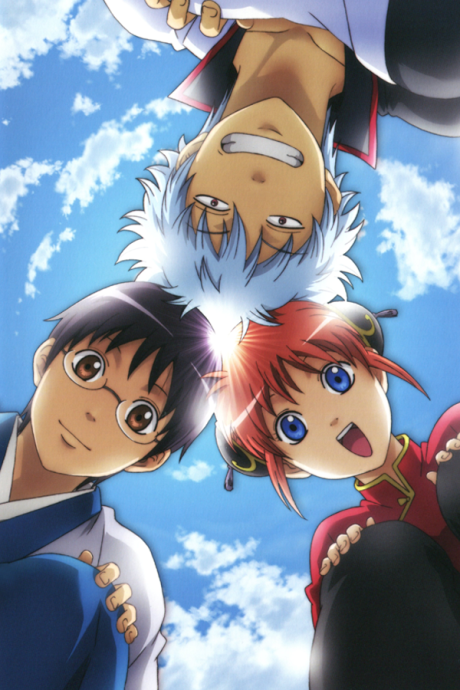
Gintama.: Silver Soul Arc - Second Half War
The second season of the Silver Soul arc.
📺Anime Details
📝Editorial Analysis
The smell of burnt rice and old sake lingers in the air—not from a kitchen, but from the smoldering ruins of Kabukicho after the Gintama.: Silver Soul Arc - Second Half War’s final siege. A single wooden geta lies shattered beside a bloodstained katana, its blade chipped, its scabbard gone. No triumphant music swells. Just wind, distant sirens, and the low, exhausted cough of someone who’s just stopped running long enough to realize their hand is still clenched around a weapon they no longer remember drawing.
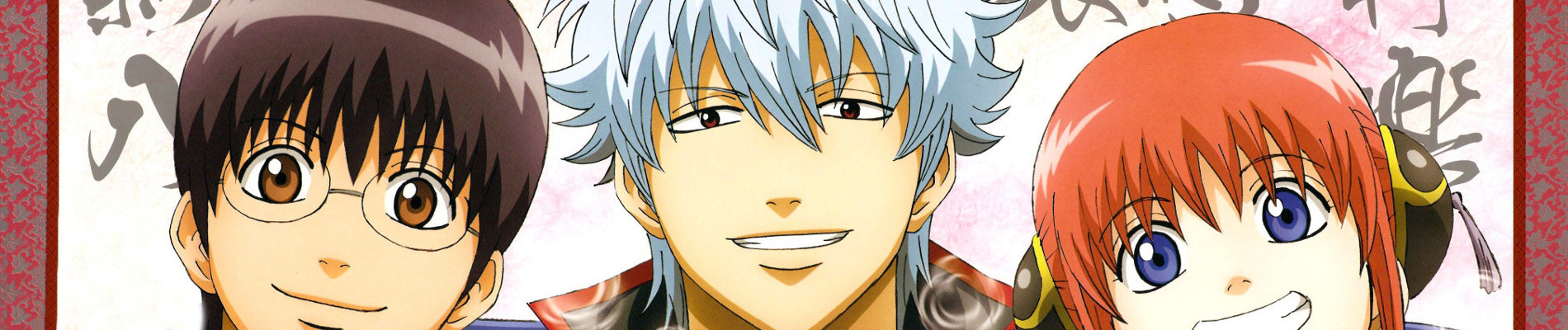
This isn’t war as spectacle—it’s war as weight. The Silver Soul Arc - Second Half War doesn’t glorify conflict; it lets you feel the grit under your nails when you drag yourself up after being kicked down for the seventh time, the hollow ache behind your ribs when you laugh too hard at a terrible joke right after burying a friend, the way time skips not with fanfare but with the quiet, disorienting lurch of waking up three years later and finding your best friend’s hair grown out, his voice deeper, his eyes quieter—still smiling, but now holding something you can’t name. It’s grief wearing a clown nose, loyalty sharpened on betrayal, hope that smells like soy sauce and scorched earth. You don’t watch it—you survive it alongside them.
That emotional DNA pulses strongest in games where strategy isn’t about domination, but about preservation: where every bullet fired, every life spared or lost, echoes with consequence long after the mission ends. Desperados 2: Cooper's Revenge matches not because it’s Western-themed, but because its tactical warfare forces you into agonizing pauses—lining up a distraction, waiting for a guard’s shadow to shift, holding your breath as you inch past a man who could be your friend if the map were different. The player review admits it was “made during a time when everything…”—and that unfinished sentence is the feeling: the sense of history pressing in, of systems built on fraying alliances and half-remembered promises. Like Gintoki choosing not to kill an enemy because he recognizes the same exhaustion in their eyes, Desperados 2 makes you hesitate, not for gameplay, but because the world feels lived-in, morally porous, and fragile.
So does Helldorado, explicitly framed in its description as “a standalone expansion to the second game in the Desperados series”—a continuation that refuses clean endings. Its premise—“Peace in this town has been shattered by a shocking kidnapping”—mirrors the Silver Soul Arc’s core rupture: not just invasion, but the violent unspooling of normalcy. The player review calls it “Desperados 2, but…”, trailing off—just like Gintama’s humor often trails off mid-punchline when the camera holds on a character’s face a beat too long. That ellipsis is the shared language: stories that know resolution is temporary, that honor lives in the attempt, not the outcome.
And then there’s The Witcher 3: Wild Hunt, where Geralt rides across a continent “war-torn, monster-infested” while tracking Ciri—not as a quest marker, but as a father chasing a daughter through smoke and silence. The player review notes DLC announced 11 years later, underscoring how deeply the world sticks to your skin—how grief, love, and duty keep echoing long after credits roll. That’s the Silver Soul Arc’s heartbeat: not “what happens next?” but “who are we now, after all this?” The Witcher 2 review calls it “more thoughtfully designed than the next entry”—a nod to texture over polish, to choices that land with heft, not flash. Same with Gintama: when Hijikata spits blood and still stands, or when Shinpachi wipes his glasses and says, “Let’s go home,” it’s not catharsis—it’s continuance. Raw. Unvarnished. Earned.
This pairing is for the person who cries during a cooking montage, who saves their game before a dialogue choice not to win—but to witness, who keeps rewatching the scene where the sun breaks through smoke just as someone says, “We’re still here,” and feels it in their molars. For the one who knows that the most devastating line in any story isn’t shouted—it’s whispered, over lukewarm tea, while someone refills your cup without being asked.
🎮9 Games That Match the Vibe

Match Dimensions Explained
❓Frequently Asked Questions
Why does Desperados 2: Cooper's Revenge match Gintama's Silver Soul Arc Second Half War so well?
Because both hinge on chaotic, high-stakes ensemble tactics—think Kagura’s grenade barrages or Hijikata’s swordplay synced with Gengai’s gadgets—mirroring Desperados 2’s squad-based stealth-combat where you coordinate Cooper, Doc, and others across layered Western terrain. The game’s tense, mission-driven pacing (like the Santa Fe train ambush) echoes the arc’s escalating siege warfare and last-stand energy.
Is there a Gintama anime or game adaptation of the Silver Soul Arc's Second Half War?
No official Gintama game adapts *only* the Silver Soul Arc’s Second Half War—it’s covered in the anime’s final season (episodes 310–367), but no licensed game recreates that specific war sequence. Instead, games like Helldorado—a standalone expansion to Desperados 2—deliver the same gritty, morally gray frontier warfare vibe, complete with multi-character coordination and desperate town-defense missions.
How does The Witcher 3 compare to Desperados 2 for capturing the tone of Gintama's Silver Soul War?
Desperados 2 nails the tactical, grounded chaos—like the Shinsengumi’s coordinated rooftop takedowns during the war—while The Witcher 3 leans into emotional weight and moral ambiguity, closer to how Gintama frames the war’s cost through characters like Sakamoto’s quiet resolve or Hijikata’s trauma. Both match Gintama’s blend of action and heart, but Desperados 2 mirrors the *mechanics*; Witcher 3 mirrors the *gravity*.
What’s the best game like Gintama’s Silver Soul Arc Second Half War if I want that mix of dark stakes and absurd camaraderie?
Helldorado is your best bet—it’s literally built on Desperados 2’s engine but doubles down on ragtag team chemistry (think your outlaw posse bantering mid-gunfight, just like the Shinsengumi’s bickering before battle) and morally messy frontier justice. Plus, its 1883 Santa Fe setting gives you that same 'war-torn but weirdly funny' vibe—like when Gintoki cracks jokes mid-explosion while holding off an army.