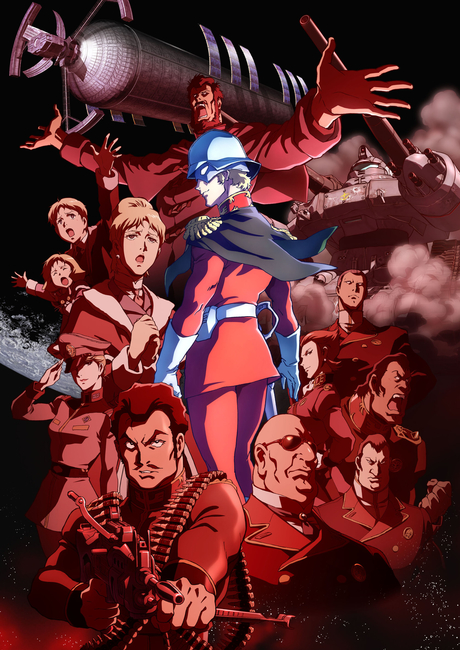
Mobile Suit Gundam: The Origin
The first episode, Aoi Hitomi no Casval, tells the story of Casval Rem Deikun and Artesia Som Deikun (Char and Sayla, before Char became known as the Red Comet) before the One-Year War in UC.0068.
The story for the second episode, Kanashimi no Artesia, moves three years ahead to U.C. 0071. The story will follow the tearful separation of the siblings Casval and Artesia (before they became known as Char and Sayla). It will also feature more of the development of the mobile suits, particularly on the Zeon side.
The third episode, Akatsuki no Houki, follows the youth who would become known as Char Aznable and his future comrade Garma Zabi after they join the Zeons' military academy.
(Source: Anime News Network)
📺Anime Details
📝Editorial Analysis
The screen holds on a single tear—Artesia’s—suspended mid-air as the shuttle door seals shut, cutting her off from Casval forever. Not with a bang, not with gunfire, but with the slow, hydraulic hiss of metal sealing fate. Her hand presses against the transparent barrier; his doesn’t rise to meet it. There’s no music—just the low thrum of engines and the muffled, distant echo of a siren from the Zeon colony’s security sweep. That silence isn’t empty. It’s charged, thick with unspoken vows, inherited shame, and the first quiet snap of a childhood broken by politics too vast to name.
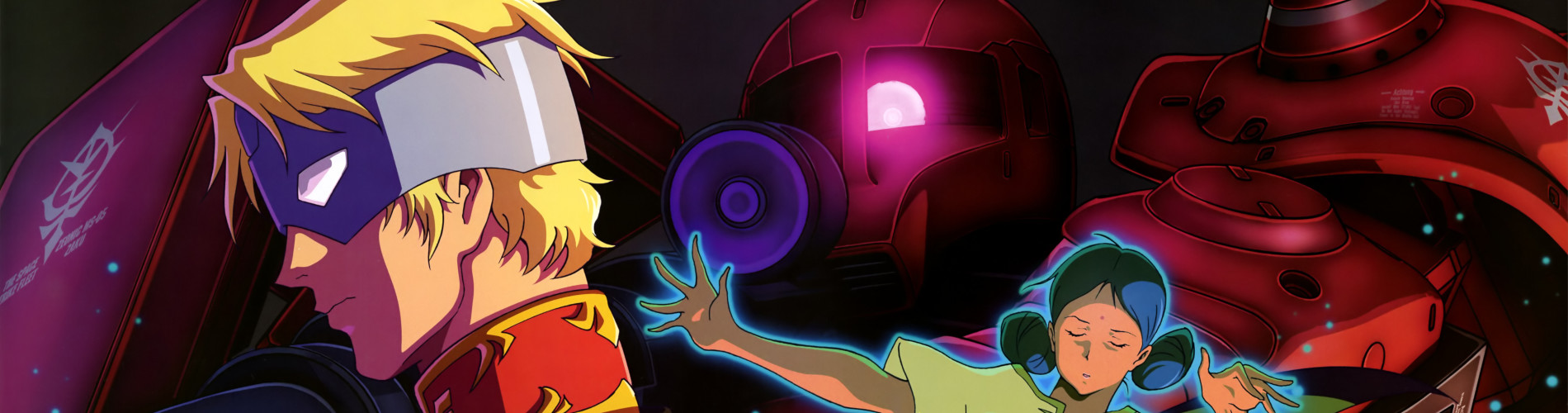
This is what Mobile Suit Gundam: The Origin does better than almost anything in mecha: it makes war feel domestic. Not in scale—but in texture. The weight of a father’s legacy folded into a child’s coat. The way a mobile suit schematic isn’t just engineering—it’s a weaponized inheritance. The dread in a sibling’s glance when they realize their shared bloodline is now a liability. You don’t feel like you’re watching a battle—you feel like you’re standing in the hallway outside the room where the decision was made, hearing the muffled argument behind the door. It’s intimate tragedy, wrapped in chrome and conspiracy. You think about how ideology calcifies before it’s even named—and how revenge begins not with a roar, but with a held breath.
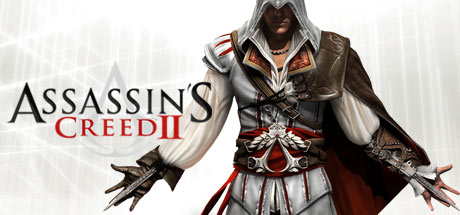
That same emotional architecture echoes in Assassin's Creed™: Director's Cut Edition, where political thriller meets tactical warfare—not through spectacle, but through surveillance, infiltration, and the suffocating weight of unseen systems. Its description calls it a game that “redefines the action genre” not via spectacle, but through next-gen immersion—a phrase that lands hard when you remember Casval studying Zabi family portraiture in a dim archive, memorizing lineage like scripture. A player review admits the models are dated, yet adds, “no issues with me”—because what matters isn’t polish, but presence: the feeling of being watched, of moving through corridors where every shadow hides motive. Like Casval slipping through Side 3’s upper-tier lobbies, you’re not dodging lasers—you’re parsing glances, reading silences, calculating who knows what—and why they haven’t spoken yet.
Then there’s Act of War: Direct Action, whose description screams “ripped from today’s headlines… geopolitical military conflict”, and whose player review bluntly notes the campaign dialogue is “dumb and a bit cringe”—but immediately follows it with “it’s like C&C 3”. That dissonance is key. Because The Origin doesn’t flinch from clunky exposition either—its war isn’t sold through poetry, but through intercepted radio chatter, grainy briefing reels, and officers arguing over fuel ratios while children vanish from school rosters. Both works treat bureaucracy as battlefield terrain. In Act of War, you manage supply lines under diplomatic blackout; in The Origin, Casval secures a prototype motor for a mobile suit by bribing a clerk whose son vanished in a “training accident.” Neither story asks you to believe in heroes—it asks you to track the leakage: where policy bleeds into personal ruin, where a memo becomes a death warrant.
These aren’t pairings of spectacle—they’re alignments of pressure. Of quiet, escalating dread. Of characters who don’t choose sides so much as discover they were already assigned one, stamped onto their birth certificates, their gene sequences, their last names.
You’d love this if you’ve ever paused a scene—not to admire the animation, but because your chest tightened at the sound of a character swallowing hard before lying to their own sister. If you replayed a mission not for the win, but to hear that one line of radio static again—the one that implied someone knew but said nothing. If you keep a notebook where you jot down names like “Deikun,” “Zabi,” “Soleil,” not as lore, but as wounds. This is for the viewer who watches Artesia’s hands tremble while calibrating a sensor array—not because she’s scared of failure, but because she’s terrified of succeeding too well, and becoming the very thing she fled. For the player who pauses mid-mission in Act of War, zooms in on a civilian convoy in the distance, and wonders—not can I hit it?, but who approved the route? That’s the shared pulse: not adrenaline, but recognition. The awful, beautiful clarity of seeing the machine—and realizing your heartbeat is part of its rhythm.
🎮11 Games That Match the Vibe



Match Dimensions Explained
❓Frequently Asked Questions
Why does Assassin's Creed: Director's Cut Edition feel like a good match for Mobile Suit Gundam: The Origin?
Because both lean hard into political thriller tension and tactical warfare—think Char Aznable’s masked manipulations mirrored in Altaïr’s shadowy Brotherhood ops across war-torn Jerusalem. The stealth-based infiltration, faction-driven betrayals, and morally grey command decisions (like choosing who lives or dies during assassinations) echo the same weight as Amuro’s early choices aboard the White Base.
Is there a Gundam: The Origin game adaptation I can actually play?
No—there’s never been an official standalone video game adaptation of *Mobile Suit Gundam: The Origin*. What *does* exist are tonally aligned matches like *Assassin’s Creed: Director’s Cut Edition*, which nails the brooding political intrigue and elite warrior ethos (e.g., Kycilia Zabi’s scheming ↔ Al Mualim’s hidden agenda), plus *Act of War: Direct Action*, where real-time squad tactics and Cold War–style geopolitical stakes mirror the Zeon Federation’s rise and fall.
How does Act of War: Direct Action compare to Assassin’s Creed: Director’s Cut Edition for Gundam: The Origin fans?
If *The Origin* is your benchmark, *Act of War* delivers gritty, large-scale military realism—think Gihren Zabi ordering Operation British from a command bunker, mirrored in *Act of War*’s RTS-style unit deployment and scripted C&C-esque cutscenes with over-the-top dialogue. *Assassin’s Creed*, by contrast, focuses on intimate, high-stakes personal agency—like Sayla Mass navigating deception in a single city—via tight stealth and vertical parkour combat.
What’s the best game like Gundam: The Origin if I want that intense, morally complex wartime vibe?
Go straight to *Assassin’s Creed: Director’s Cut Edition*—it’s got the layered political betrayal (Altaïr’s disillusionment parallels Amuro’s loss of innocence), grounded melee combat that feels consequential (no button-mashing—each counter and parry matters, like piloting the RX-78-2 in close-quarters colony fights), and a world where every faction has believable motives, just like the Principality of Zeon vs. the Earth Federation.