
Mushoku Tensei: Jobless Reincarnation Season 3
📺Anime Details
📝Editorial Analysis
The rain in the ruined city of Milis doesn’t fall—it settles, thick and cold, clinging to Rudeus’ coat like grief he can’t shake off. He stands over a broken statue of a goddess whose face has eroded into something unrecognizable, his hand hovering over a locket—not the one from his past life, but the one Eris gave him, now cracked down the center. There’s no music. Just wind, distant thunder, and the quiet, ragged breath he takes before stepping forward—not toward battle, not toward magic, but toward a choice he knows will fracture something inside him forever.
This isn’t fantasy as escape. It’s fantasy as weight. Mushoku Tensei: Jobless Reincarnation Season 3 doesn’t thrill with spectacle—it presses on you. The magic is real, yes, but it’s also exhausting; swordplay isn’t choreographed heroism, it’s trembling arms and delayed reactions; even the ecchi moments land with the awkward, tender gravity of people trying—and often failing—to connect across trauma, time, and tangled loyalties. What makes it ache so deeply is how relentlessly human it feels beneath the isekai scaffolding: every decision carries consequence, every reunion echoes with silence left unsaid, every act of love is threaded with fear of loss. You don’t watch it to win. You watch it to witness—to feel the slow, irrevocable turning of time, memory, and responsibility.
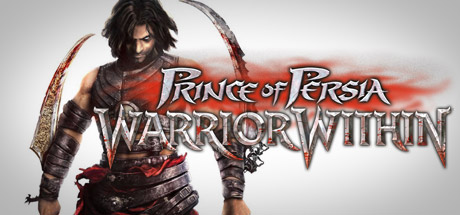
That same resonance lives in Prince of Persia: Warrior Within™, where Dahaka’s pursuit isn’t just a mechanic—it’s time made flesh, hunting you not for failure, but for what you’ve survived. The player review calls it “a journey,” and that’s exactly what Season 3 mirrors: not a quest with a clean endpoint, but a descent into consequences, where every corridor you flee down is lined with versions of yourself you can’t outrun. Like Rudeus confronting his own cowardice in the ruins of Milis, the Prince doesn’t defeat Dahaka—he integrates him. Both stories treat time not as a tool, but as a wound that keeps bleeding into the present.
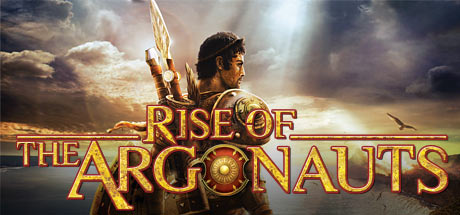
Then there’s Rise of the Argonauts, where Jason’s vow—"to do anything to restore her life"—isn’t heroic idealism. It’s raw, brittle desperation dressed in mythic scale. The player review notes it “does ancient history right”—but what it really does right is honor the quiet devastation behind grand oaths. Season 3’s tragedy isn’t in battles lost, but in promises kept too late, in love offered when trust has already calcified into duty. Both works understand that mythology isn’t about gods—it’s about the unbearable weight of human devotion stretched across impossible distances.
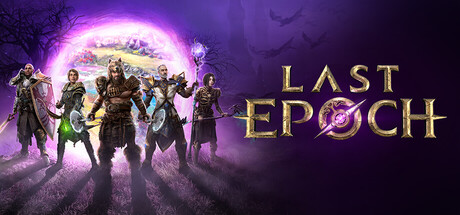
And Last Epoch, though less narratively explicit in its description, shares the same dimensional fingerprint: Time & Memory, Action Spectacle. Not spectacle for show—but spectacle shaped by memory. In Season 3, Rudeus’ magic doesn’t flash with clean VFX; it flickers, misfires, or surges unpredictably—like muscle memory betraying him mid-crisis. That’s Last Epoch’s DNA: skill trees evolve with your playstyle, your failures etching themselves into your build. Every spell cast, every stat point allocated, becomes a record—not of power gained, but of choices remembered. It’s not about becoming invincible. It’s about becoming known, to yourself and to the world you’ve remade, imperfectly.
You’ll love this pairing if you’ve ever paused a game not to strategize—but to stare at a character’s idle animation, wondering what they’re thinking after the cutscene ends. If you replay Prince of Persia: The Two Thrones™ not for the parkour, but for the way the Prince’s voice cracks when he says Kaileena’s name—not in longing, but in exhaustion. If you rewatch Rudeus’ silent walk through the rebuilt village of Roa, noticing how his shoulders don’t relax, even when the camera lingers on sunlight catching dust motes above his head. This is for people who don’t seek catharsis—they seek recognition. Who find comfort not in happy endings, but in the quiet, stubborn persistence of love that refuses to simplify itself, even when it breaks your heart three times, in three different languages, across two lifetimes.
🎮10 Games That Match the Vibe
Match Dimensions Explained
❓Frequently Asked Questions
Why does Rise of the Argonauts keep coming up in Mushoku Tensei Season 3 game recommendations?
Because both lean hard into tragic, myth-tinged rebirth arcs—Jason’s vow to resurrect his murdered fiancée mirrors Rudeus’ guilt-driven quest for redemption after failing those he loved. The game’s Iolcus kingdom feels like a grittier, ancient-world version of the Magic Continent, with branching dialogue choices and combat that rewards timing over spamming—just like Rudeus learning magic through trial, error, and quiet reflection.
Is there a Mushoku Tensei video game adaptation coming out soon?
No official Mushoku Tensei game exists—not as a direct adaptation of Season 3 or any season. The closest matches are *Rise of the Argonauts* (77) and *Prince of Persia: Warrior Within* (76), both praised for their dark fantasy tone and time-woven consequences—like when Rudeus confronts past failures head-on in Season 3’s flashbacks and emotional turning points.
How does Prince of Persia: Warrior Within compare to Last Epoch for Mushoku Tensei fans?
Warrior Within nails the brooding, guilt-ridden protagonist vibe—Dahaka’s relentless chases mirror Rudeus’ internal torment after the Lanoa incident—while Last Epoch leans into deep, build-driven progression like mastering earth magic or swordplay over years. Both hit ‘Action Spectacle’, but Warrior Within’s grim atmosphere and time-loop tension (remember the hourglass sand mechanics?) hits closer to Season 3’s heavier emotional stakes than Last Epoch’s more RPG-system-focused pacing.
What’s the best game like Mushoku Tensei Season 3 if I want that melancholic, reflective vibe with action?
Go straight to *Prince of Persia: Warrior Within* (76)—its entire mood is soaked in regret and consequence: the Prince’s dual personality, Dahaka hunting him across crumbling temples, and those haunting memory echoes during combat all channel Season 3’s quieter, introspective moments—like Rudeus sitting alone on the cliffside after confronting his father, or practicing spells not for power, but peace.