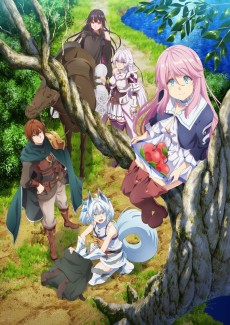
Redo of Healer
📺Anime Details
📝Editorial Analysis
The first time Keyaru’s hand closes around the hilt of his dagger—not to stab, but to rewind—the air doesn’t just thicken. It curdles. You feel it in your molars: that low, metallic hum as time fractures backward, not gracefully, but like glass shattering inside your skull. His breath hitches—not from fear, but from the cold, precise satisfaction of undoing a humiliation before it finishes settling into his bones. This isn’t wish fulfillment. It’s reclamation, carved out of violation, polished with sadism, and sealed with time manipulation so clinical it feels surgical.
What makes Redo of Healer’s atmosphere singular isn’t its ecchi or fantasy trappings—it’s the weight of memory as trauma made tangible. Every rewind isn’t a reset button; it’s a scalpel peeling back layers of shame, each loop tightening the knot between vengeance and violation. You don’t watch it comfortably. You watch it alertly, pulse thrumming at your throat, because the world doesn’t soften for Keyaru—it hardens around him, jagged and unforgiving. There’s no catharsis in triumph, only a grim, escalating calculus: how much pain must be absorbed, mirrored, inverted, before the ledger balances? That feeling—inescapable, relentless, retaliatory—isn’t genre dressing. It’s the show’s nervous system.
That same pressure lives in Prince of Persia: Warrior Within. The description nails it: “Hunted by Dahaka, an immortal incarnation of F…”—that ellipsis hangs like smoke, thick with unspoken consequence. The player review confirms the visceral echo: “dahaka chase is still as goated as it was before”. Not “scary,” not “intense”—goated: revered because it’s oppressive, relentless, inescapable. Like Keyaru’s rewinds, Dahaka isn’t defeated—he’s outmaneuvered, delayed, bargained with. Time here isn’t a tool for wonder; it’s a collapsing corridor, narrowing with every step. Both works make you feel hunted by consequence itself, not just by villains.
Then there’s The Witcher: Enhanced Edition Director's Cut, where Geralt moves through a world where “forces vying for control of the world” force choices that “live with the consequences.” The player review hints at why it resonates: “Play this to realize why team Yenn and not team Tress is a thing.” That’s not about romance—it’s about moral gravity. Geralt’s world refuses easy binaries; every contract bleeds into politics, every mercy invites retaliation. Like Keyaru, he operates in shadows where “good” is transactional and survival demands cruelty—but Geralt’s restraint contrasts Keyaru’s escalation, making both feel real in their respective hells. The emotional DNA isn’t alignment—it’s moral exhaustion, the weariness of navigating systems designed to break you.
And Baldur's Gate 3, though its description is cut off, carries the same dim: Dark Fantasy, Emotional Narrative. Its score matches the Witcher trilogy—not because it mirrors them, but because it shares their texture: choice that hurts, relationships forged in fire that leave scars, power that corrupts not suddenly, but incrementally, like Keyaru’s own descent. You don’t just pick dialogue options—you weigh how much of yourself you’re willing to forfeit to survive, to punish, to remember correctly. That’s the shared nerve: the dread of memory as both weapon and wound.
This pairing isn’t for fans of “dark stories.” It’s for people who’ve ever clenched their jaw mid-conversation, replaying an insult in their head—not to cry, but to reconstruct the moment until they hold the knife. It’s for players who pause mid-fight in Warrior Within, not to heal, but to breathe, because the Dahaka’s footsteps aren’t just sound—they’re the echo of something you failed to stop. It’s for readers who finish a Witcher quest and sit silently, staring at the screen, because the “right” choice left a hollow ache no XP can fill. They love the tension in the silence after revenge—the way Keyaru’s calm isn’t peace, but the stillness of a blade drawn too many times. They recognize that relentless, that inescapable, that retaliatory hum—not as fantasy, but as the quiet, furious soundtrack of surviving a world that never asked permission to break you.
🎮12 Games That Match the Vibe




Match Dimensions Explained
❓Frequently Asked Questions
Why is Prince of Persia: Warrior Within listed as similar to Redo of Healer?
Because both lean hard into dark fantasy with morally ambiguous power dynamics and visceral, consequence-laden action—like when the Prince fights through blood-soaked ruins while hunted by Dahaka, a relentless force of fate that mirrors Healer’s themes of retribution and control. The game’s oppressive atmosphere, time-bent combat, and focus on trauma-as-motivation (e.g., the Prince’s guilt over his father’s death) resonate with Redo of Healer’s tone far more than its lighter predecessor.
Is there an anime or visual novel adaptation of Redo of Healer?
No official anime or visual novel adaptation exists—but fans often reach for The Witcher 3: Wild Hunt when craving that same blend of mature, choice-driven storytelling and morally gray intimacy, especially in scenes like Geralt’s complex relationships with Yennefer or Ciri, where power, consent, and consequence intertwine just as tightly as in Redo of Healer’s narrative framework.
How does Baldur's Gate 3 compare to The Witcher 3 for someone who likes Redo of Healer’s vibe?
Both deliver deep emotional narratives and dark fantasy worlds, but BG3 leans harder into player agency and systemic interactivity—like using *Modify Memory* to rewrite NPC motivations or triggering romance arcs with layered consent mechanics—whereas The Witcher 3’s scripted intensity (e.g., the Bloody Baron’s questline) offers tighter, cinematic moral weight. If you love Redo of Healer’s psychological tension and power reversals, BG3’s reactive world gives you more tools to engineer them yourself.
What’s the best game like Redo of Healer if I want something with heavy emotional stakes and dark fantasy vibes?
The Witcher 2: Assassins of Kings Enhanced Edition—it’s got that raw, grounded brutality and emotionally charged political intrigue, like when Geralt navigates the aftermath of the Loc Muinne massacre or confronts Triss’s betrayal, all wrapped in a world where every choice bleeds into consequences. Its 75-score Dark Fantasy + Emotional Narrative alignment matches Redo of Healer’s tonal core better than most RPGs—and players consistently praise how thoughtfully designed its moral dilemmas feel, even over a decade later.