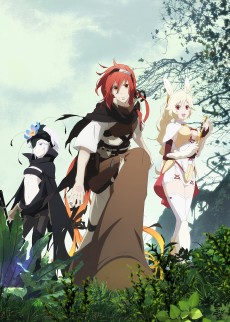
Rokka -Braves of the Six Flowers-
When the Majin awoke from the depths of darkness, the deity of fate chose six heroes and bequeathed them with the power to save the world. Adlet, a boy who proclaims himself the strongest on Earth, was selected among the Rokka no Yuusha (Heroes of the Six Flowers), and he goes to the rendezvous point — but seven have gathered there. The heroes suspect that someone among the seven is the enemy, and the initial suspicion falls on Adlet.
(Source: Anime News Network)
📺Anime Details
📝Editorial Analysis
The air in the ruined temple is thick—not with dust, but with silence that itches. Seven figures stand in a circle, blades half-drawn, eyes flicking sideways, breaths held just a fraction too long. Adlet’s voice cracks when he says, “I’m not the Majin,” and no one answers—not because they believe him, but because every pause feels like a confession waiting to exhale. That moment isn’t about magic or monsters. It’s about the unbearable weight of being watched by everyone you’re supposed to trust.
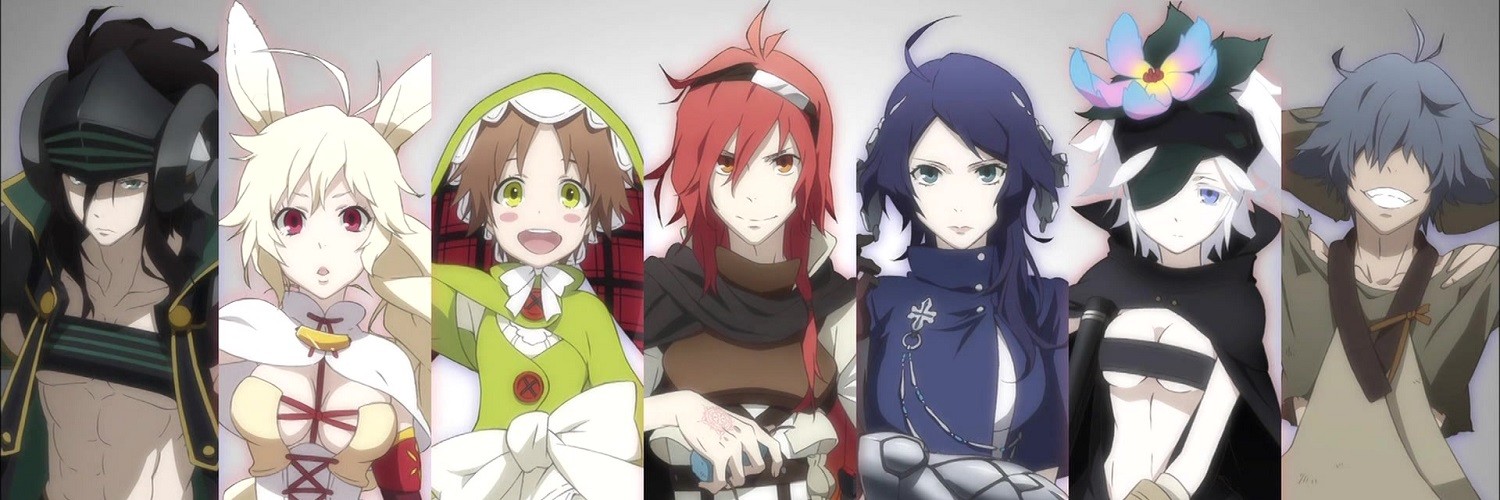
That’s the core feeling of Rokka -Braves of the Six Flowers-: claustrophobic intimacy disguised as grand fantasy. It doesn’t thrill with spectacle—it presses in. You don’t feel awe at the deity of fate; you feel the chill of its indifference. The “survival” tag isn’t about hunger or cold—it’s about surviving each other’s suspicion, parsing micro-expressions like evidence, rehearsing alibis in your head while pretending to share rations. There’s no safe narration, no omniscient reassurance—just shifting loyalties, unreliable testimony, and the gnawing dread that the truth won’t save you, only delay the knife. It makes you question who gets to be believed, and why certainty so often masquerades as courage.
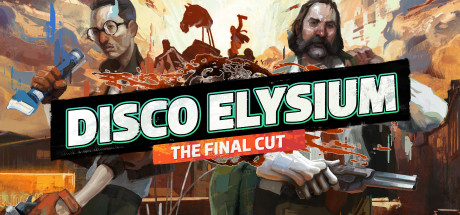
That emotional DNA pulses strongest in Disco Elysium - The Final Cut, where the detective isn’t solving a murder—he’s solving himself, while the city watches, judges, and weaponizes every misstep. The description calls it a “groundbreaking role playing game” with “a unique skill system” and “a whole city to carve your path across”—but what mirrors Rokka isn’t the mechanics, it’s the texture of doubt: the way every dialogue choice risks exposing weakness, how ideology becomes a trapdoor beneath your feet. A player review nails it: “Capital has the ability to subsume all critiques into itself. Even those who would critique capital end up reinforcing it instead.” That’s Adlet’s dilemma in miniature—fighting to prove he’s not the enemy, only to find his defiance used as further proof. Both works make paranoia feel philosophical, not just plot-driven.
Then there’s Persona 5 Royal, whose description highlights “dungeon crawling, party customization, strategic combat, and Persona fusion”—but what resonates is the layered performance of its cast. Like the Rokka heroes, the Phantom Thieves wear masks not for power, but for protection: from judgment, from exposure, from the sheer exhaustion of being constantly read. The player review praises its “seamless transition between daily life and high-stakes conflict”—exactly the rhythm of Rokka, where sharing tea with a monster girl feels as tense as drawing steel, because every gesture could be coded, every kindness a feint. Both hinge on relational calculus: who knows what, who’s hiding what, and what happens when the mask slips during breakfast.
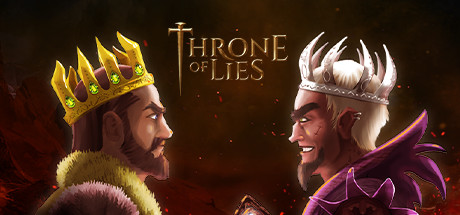
Even The Ship: Murder Party, described bluntly as a “murder mystery multiplayer,” taps the same nerve—not through story, but through structure. In that game, players are literally assigned roles: murderer, innocent, detective—and none know for sure who’s who until blood (or betrayal) spills. The player review admits it’s “genuinely really funny,” but the humor comes from the same place as Rokka’s early tension: the absurd, grinding discomfort of smiling while calculating angles of attack. When someone laughs too loudly in the temple courtyard, or lingers too long near another’s pack—that’s not camp. It’s the shared, unspoken grammar of mutual surveillance.
This isn’t for fans of clean heroics or triumphant reveals. It’s for the viewer who leans forward when two characters don’t speak—when their fingers twitch near hilts, or when a pause stretches just past comfort. It’s for the player who replays a conversation in Disco Elysium not to optimize stats, but to hear how differently shame sounds in their own voice. For the one who saves before every social link in Persona 5 Royal, not out of fear of failure—but because trust feels like falling without a net. These pairings belong to people who understand that the most dangerous magic isn’t in the spells or the swords—it’s in the space between words, where suspicion blooms like a flower no one planted, and no one dares name.
🎮20 Games That Match the Vibe
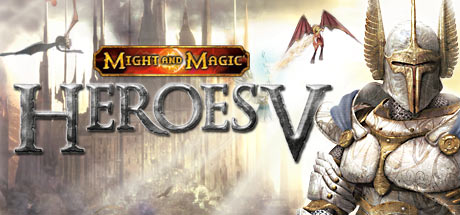

Match Dimensions Explained
❓Frequently Asked Questions
Why does Rokka feel so similar to Persona 5 Royal’s Phantom Thieves arc?
Because both hinge on tight-knit, morally ambiguous squads solving supernatural mysteries while juggling daily life—like Ann’s café job or the Six Flowers’ shrine duties—and feature stylish, dialogue-driven investigations where choices reshape trust (e.g., Morgana’s loyalty vs. Chamo’s shifting allegiances). Persona 5 Royal nails that same blend of JRPG narrative weight and Mystery & Detective tension, scoring 72 and earning praise for its 'seamless transition between daily life and dungeon crawling.'
Is there an anime or manga adaptation of Rokka -Braves of the Six Flowers-?
Yes—the 2015 anime adaptation aired for one season (13 episodes) and adapts the light novel’s first major arc, including the tense ‘Trial of the Six Flowers’ in the Sacred Grove and the betrayal reveal involving Chamo and Nephthys. It’s not a full adaptation (no Season 2), but fans often compare its tonal whiplash—whimsy to grim political intrigue—to Disco Elysium’s own jarring shifts between absurdity and systemic critique.
How does Heroes of Might & Magic V compare to Rokka in terms of party dynamics and worldbuilding?
Both center on six distinct, lore-heavy heroes navigating fractured alliances—HoMM V’s Sylvan faction has Elora, Kastore, and Zehir mirroring Rokka’s ensemble with their clashing ideals and battlefield roles—but HoMM V leans into tactical grid combat and resource management (like crafting siege engines at your castle) rather than dialogue trees. Reviewers call it 'the best HoMM game ever made' for deep fantasy worldbuilding that echoes Rokka’s layered political tensions across the Six Kingdoms.
What’s the best game like Rokka if I want that eerie, slow-burn detective vibe with psychological weight?
Disco Elysium — The Final Cut is your match: it drops you into a rain-soaked city where every conversation (like interrogating the dockworker Cuno about the murder) peels back layers of ideology, trauma, and unreliable memory—just like Rokka’s unraveling of the 'Braves' prophecy. With its 83 Metacritic score and 'Mystery & Detective / Political Thriller' focus, it even shares Rokka’s bleak irony—see how the player review quotes Capital’s self-consuming logic, much like the Six Flowers’ own doomed covenant.