
Squid Girl
Foolish land-born air breathers! Behold the terror from the depths, the tentacled conqueror of humanity: Squid Girl! With your pollution and stuff you really deserve it, so prepare for menacing, inky doom!
Squid Girl has come from the depths of the sea to conquer humanity for its pollution of the ocean. Within moments of arriving on the surface world, our easily distracted, little invertebrate is promptly bullied into working for the Aizawa sisters as a waitress, supplying their restaurant with squid ink. If poor Squid Girl can't handle two pushy Japanese girls, how will she ever subjugate the human race?
(Source: Media Blasters)
📺Anime Details
📝Editorial Analysis
The ink hits the ceiling—splat—a perfect, wobbling black Rorschach as Squid Girl flails backward off a stool, legs splayed, eyes spiraling, tentacles whipping like startled eels. She’s just tried to “intimidate” the Aizawa sisters by declaring herself “the terror from the depths,” but her voice cracks on “terror,” and the squid-ink she meant to deploy as a weapon of ecological vengeance has instead become a ceiling stain, a tiny, absurd monument to good intentions gone gloriously sideways. No one yells. No one panics. Maki sighs, wipes her brow with a dishrag, and says, “Just… go mop it up. And don’t use the good towels.” That moment—soft, unhurried, forgiving—is the whole show in a single splatter.

What makes Squid Girl vibrate isn’t its monster-girl premise or coastal setting—it’s the weightlessness of consequence. Mistakes aren’t plot points; they’re punctuation. Slapstick doesn’t escalate—it settles, like sediment in a sunlit tide pool. You don’t watch to see if Squid Girl succeeds at conquest—you watch to see how the Aizawas fold her chaos into their rhythm: folding laundry, flipping pancakes, laughing mid-scold. There’s no looming threat, no hidden trauma waiting to surface—just the quiet, persistent warmth of people choosing each other, day after sticky, ink-smeared day. It makes you feel safe, not because the world is safe, but because kindness here is reflexive, unearned, and utterly ordinary. It’s healing without therapy, slow life without sermonizing—just seaweed salad, salt air, and the low hum of a family restaurant’s freezer.
That emotional resonance echoes sharply in Prince of Persia, where the franchise’s return trades sandstorms for sun-dappled ruins and mythic gravitas for melancholic exploration laced with gentle comedy. The description calls it an “epic journey”—but the player review hints at something quieter: “a new prince, new lands and a brand new story completely separate from the sands…” That separation matters. Like Squid Girl abandoning her conquest mid-sentence to chase a runaway rice ball, this Prince of Persia leans into playful disorientation, treating grand destiny like a slightly-too-big coat you wear while learning to tie the belt. Its healing comes not from victory, but from the rhythm of climbing, pausing, watching light shift across stone—same as Squid Girl pausing mid-rant to watch a crab scuttle sideways across the dock.
Then there’s The Sims™ 4, whose description invites you to “Play with life and discover the possibilities”—not master it, not optimize it, but play. That’s Squid Girl’s entire ontology: existence as improvisation. The player review bitterly notes the game’s DLC dependency and bugs—but even that frustration mirrors the anime’s texture: things break, systems glitch, yet life keeps unfolding in the cracks. When Squid Girl tries to operate the cash register and accidentally triggers the fire alarm again, it’s not failure—it’s data. Same as a Sim spontaneously bursting into jazz hands mid-dishwashing. Both are built on the same tender, stubborn belief: meaning emerges between the lines, not in the script.
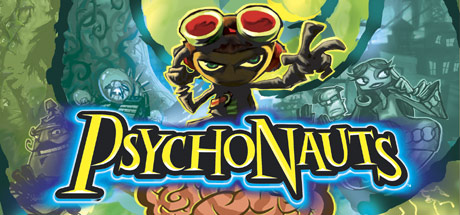
And Psychonauts, with its “Psychic Odyssey Through the Minds of Misfits, Monsters, and Madmen,” lands with uncanny kinship—not in tentacles or ocean themes, but in comedy & parody fused with melancholic exploration. The description frames psychic journeys as voyages through fractured inner worlds; Squid Girl’s “conquest” is just as internal—a childlike, half-formed ideology dissolving under the gentle pressure of real human friction. The player review’s bizarre, off-kilter phrasing (“milking of certain highly creamy men”) feels tonally adjacent to Squid Girl’s own linguistic stumbles—both revel in nonsense as emotional honesty, where absurdity isn’t masking pain, but holding space for it without naming it.
This pairing isn’t for fans of lore dumps or high-stakes arcs. It’s for the person who rewatched the scene where Squid Girl tries—and fails—to fold a napkin into a swan three times, then watches Maki do it once, silently hands it back, and gets a thumbs-up. It’s for the player who booted up The Sims™ 4, skipped all the DLC, and spent three hours teaching a Sim to water plants while humming off-key. It’s for the one who paused Prince of Persia not at the boss fight, but to watch wind ripple through desert grass. They crave tenderness disguised as silliness, depth that refuses to be solemn, and stories where the greatest act of courage is choosing to stay—ink-stained, awkward, and wholly, unremarkably here.
🎮16 Games That Match the Vibe













Match Dimensions Explained
❓Frequently Asked Questions
Why does Prince of Persia keep coming up in Squid Girl game recommendations?
Because both lean hard into absurdist comedy *and* melancholic exploration—like when the Prince navigates crumbling, dreamlike ruins while cracking self-deprecating one-liners, mirroring Squid Girl’s fish-out-of-water gags layered over quiet moments of loneliness or cultural displacement. The healing/slow-life vibe also matches Squid Girl’s cozy, slice-of-life pacing between chaotic squid-ink mishaps.
Is there a Squid Girl video game adaptation?
No—there’s never been an official Squid Girl game. That’s why fans turn to titles like *Psychonauts*, where you literally dive into warped, emotionally resonant minds (like Raz’s dad’s guilt-ridden circus level) with surreal humor and heartfelt awkwardness—very much in the same tonal lane as Squid Girl’s blend of slapstick and soft sadness.
How is The Sims 4 like Squid Girl compared to Just Cause 2?
TS4 nails the 'healing & slow life' + 'comedy & parody' combo—think building a tiny seaside café for your Sim squid-girl OC while she accidentally floods the lot with ink-based 'water features', just like Squid Girl’s domestic chaos. Just Cause 2 swaps that for over-the-top, physics-driven parody (e.g., grappling onto a shark-shaped blimp mid-explosion), trading intimacy for anarchic B-movie joy—same comedic DNA, totally different energy.
What’s the best Squid Girl-like game if I want something soothing but still silly?
Go with *The Sims 4*—especially without heavy DLC—where you can quietly run a beachside snack stand, watch your Sim fumble squid-themed cooking animations, and enjoy low-stakes, looping absurdity (like a character getting stuck in a jellyfish costume for three in-game days). It hits that exact Squid Girl sweet spot: gentle pacing, zero pressure, and humor that’s warm, weird, and deeply unhurried.