
Takopi's Original Sin
A Happy alien, Takopi, lands on Earth with one mission: to spread happiness! When he meets Shizuka, a lonely fourth grader, he vows to bring back her smile using his magical Happy Gadgets. But as he uncovers the pain in her life, Takopi learns that true happiness may require more than gadgets.
(Source: Crunchyroll)
📺Anime Details
📝Editorial Analysis
The silence after Shizuka’s laugh fades—not the warm, lingering kind, but the hollow, brittle quiet that follows a forced smile. Takopi’s Happy Gadget whirs softly in his three-fingered hand, its cheerful chime now dissonant against the muffled sound of her mother’s voice shouting from another room. He doesn’t understand why the gadget didn’t stick. Why joy, once summoned, evaporates like steam off cold glass. That moment—small, unremarkable in plot terms, yet devastating in weight—is where Takopi's Original Sin lives: not in alien spectacle or time paradoxes, but in the unbearable slowness of childhood pain observed up close, with no narrative safety net.

This isn’t sci-fi as escapism. It’s sci-fi as lens: Takopi’s alienness isn’t comic relief—it’s radical innocence, a consciousness so untutored in human sorrow that every act of kindness becomes an ethical crisis. The atmosphere is aching, not ominous; tender, not tragic; confused, not cynical. You don’t feel dread—you feel the slow, suffocating pressure of empathy without tools. The time manipulation isn’t about rewinding battles or solving puzzles—it’s about witnessing how trauma loops in a child’s daily life: the same hallway, the same lunchroom, the same silence before the bully speaks. The estranged family isn’t distant backstory—it’s the fridge note left unread, the bedtime story never started, the hug withheld not out of malice, but exhaustion so deep it calcifies into absence. It makes you think—not about “what if?” but “what does it cost to hold space for someone else’s grief when you barely know your own?”
That emotional DNA pulses strongest in BioShock Infinite—not because of Columbia’s skyline or Songbird’s wings, but because of Booker and Elizabeth’s fractured bond echoing Shizuka and Takopi’s. The game’s core tension isn’t between ideologies, but between intention and consequence: Booker wants to save, but his past erodes every rescue. Just like Takopi’s gadgets promise happiness but can’t dissolve shame, Booker’s violence “fixes” nothing—it only layers new guilt onto old wounds. A player review nails it: “I know that some people are still bitter about the Bioshock Infinite we could have gotten.” That wistfulness mirrors Takopi’s quiet realization—that the “happy ending” he imagined was never possible, because real healing isn’t linear, isn’t gadget-powered, and certainly isn’t delivered by an outsider with good intentions. Both works sit with the helplessness of loving someone whose pain you can’t name, let alone solve.
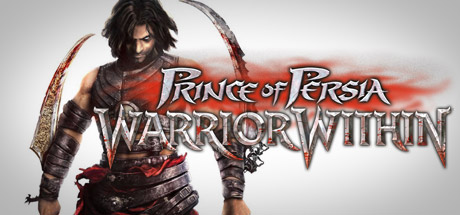
Then there’s Prince of Persia: Warrior Within, where the Prince flees Dahaka—the embodiment of consequence, of time’s unblinking judgment. His rage, his exhaustion, his desperate, clumsy attempts to outrun what he’s done… it resonates with Takopi’s escalating panic as he realizes his presence changes Shizuka’s reality—not for the better, but by making her pain visible, then inescapable. The player review calls the Dahaka chase “goated”—but what lingers isn’t the thrill, it’s the relentlessness, the way trauma pursues you even when you’re running full-tilt through crumbling palaces. Takopi doesn’t fight Dahaka—he becomes a version of it: an inescapable witness, a walking reminder of what shouldn’t be ignored. Both confront the horror of time not as tool, but as accuser.
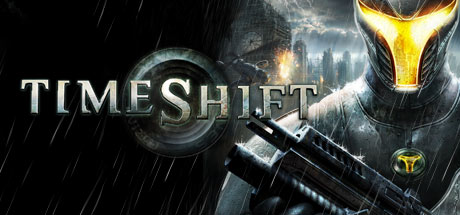
And TimeShift™, though brief, shares that same raw, destabilizing intimacy with causality. Dr. Krone’s “reckless act” fractures reality—not into grand alternate worlds, but into disturbing ones, where logic bends and safety dissolves. That’s Shizuka’s world: not dystopian, but domestic, where a parent’s absence warps physics just enough to make stairs feel steeper, silence louder, laughter thinner. The player review admits it takes “a little work to get it into a playable state”—a perfect metaphor for Takopi's Original Sin: it demands patience, emotional calibration, willingness to sit with discomfort until the system—whether game or heart—finally boots up right.
This pairing isn’t for fans of “dark stories” or “deep lore.” It’s for the person who replays Warrior Within not for combat, but to feel the Prince’s breath catch when he sees his younger self. For the one who pauses BioShock Infinite mid-dialogue, not to analyze lore, but to stare at Elizabeth’s hands—how they tremble, how they steady—as if studying them might teach tenderness. For the viewer who watches Shizuka tie her shoes three times, slowly, carefully, and feels their throat tighten—not because it’s sad, but because it’s true. These are stories for those who recognize that the most alien thing in the universe isn’t a visitor from another planet. It’s the quiet, ordinary courage of a child trying, again, to breathe.
🎮13 Games That Match the Vibe


Match Dimensions Explained
❓Frequently Asked Questions
Why does Takopi's Original Sin remind me so much of Prince of Persia: The Sands of Time?
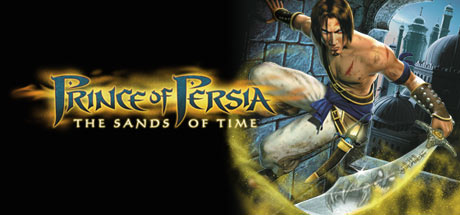
It’s that exact blend of time-manipulation as both narrative engine and moment-to-moment gameplay—like rewinding a fatal fall or freezing an enemy mid-swing, just like the Prince’s Dagger of Time. Both lean hard into ‘Adult & Dark Seinen’ tone too: morally grey choices, tragic backstories (Kaileena’s fate vs. Takopi’s cosmic guilt), and that same melancholic grandeur in crumbling ancient architecture.
Is there an anime or manga adaptation of Takopi's Original Sin?
No official anime or manga exists—Takopi’s Original Sin is a standalone game with no licensed adaptations yet. But if you’re craving that same vibe, BioShock Infinite nails the layered, reality-bending storytelling you’d expect from a high-stakes anime arc: think Booker/Comstock’s fractured identity mirroring Takopi’s duality, plus Elizabeth’s tears opening rifts like a metaphysical version of Takopi’s time fractures.
How does TimeShift™ compare to Prince of Persia: Warrior Within in terms of time mechanics?
TimeShift leans into raw, tactical time control—stop, slow, rewind on demand like a weaponized stopwatch—while Warrior Within ties time powers to survival horror tension, especially during Dahaka chases where rewinding isn’t just useful, it’s your only way to escape being erased. Both score 82 and 81 respectively, share ‘Time & Memory’ and ‘Adult & Dark Seinen’, but TimeShift feels like a sci-fi lab experiment; Warrior Within feels like running through a nightmare you can’t fully outrun.
What’s the best game like Takopi’s Original Sin if I want something dark, atmospheric, and heavy on memory-driven regret?
BioShock Infinite is your strongest match—its entire third act hinges on the unbearable weight of remembered sins across timelines, just like Takopi’s cyclical guilt. Booker’s drowned baptism scene and the lighthouse reveal hit with the same gut-punch emotional precision as Takopi’s pivotal flashbacks, all wrapped in that ‘Adult & Dark Seinen’ aesthetic reviewers called ‘valid as a matter of opinion’ but undeniably haunting.