
There was a Cute Girl in the Hero’s Party, so I Tried Confessing to Her
📺Anime Details
📝Editorial Analysis
The first time he stammers out his confession—not in a sun-dappled garden or atop a dragon’s back, but in the middle of a demon-infested forest clearing, mid-battle, while a mermaid maid yells “Hold still, sir!” and shoves a healing potion into his hand—it hits you: this isn’t romance as spectacle. It’s romance as stumble. As breath catching not from awe, but from sheer, unvarnished awkwardness—the kind where your knees lock, your voice cracks, and the hero’s party freezes mid-swing because oh god, he just said it out loud, right here, right now, with a goblin still gnawing on his bootlace.
That’s the heartbeat of There was a Cute Girl in the Hero’s Party, so I Tried Confessing to Her: not grand destiny, but small, human insistence. It’s the warmth of shared silence after chaos, the way a chuunibyou’s overblown magic chant dissolves into a shy smile when someone notices her, not her act. It’s reincarnation stripped of power fantasy—no cheat skills, no god-tier stats—just a guy who remembers love feels like fumbling, like choosing honesty over coolness, even when the world runs on medieval logic and demon taxonomy. You don’t feel exalted watching it—you feel recognized. Like your own clumsy, tender moments are valid terrain for adventure.
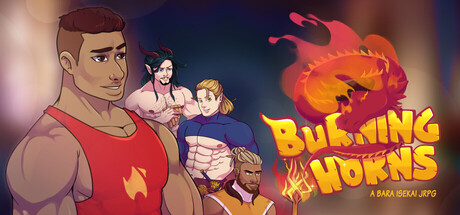
Burning Horns lands at 72—not because it shares demons or isekai mechanics, but because its dark fantasy isn’t about dread; it’s about contrast. Its comedy & parody aren’t mocking tropes—they’re softening edges, letting emotional narrative breathe between the horns and hellfire. Just like the anime, Burning Horns treats absurdity (a bara-tinged, self-aware JRPG) as fertile ground for sincerity. The player review doesn’t mention combat systems or loot—it highlights emotional narrative. That’s the bridge: both works use genre scaffolding not to escape reality, but to hold space for vulnerability disguised as farce. When the prince in Prince of Persia (71) pauses mid-leap to mend a broken vase in a quiet courtyard—or when the game’s new lore centers on restoring rather than conquering—it mirrors the anime’s rhythm: action as punctuation, not plot. The player review notes it’s “completely separate” from past iterations—not a retread, but a recentering. Same energy: the hero’s party isn’t defined by slaying, but by who they pause for.
Then there’s Chains, at 70—a match that seems impossible until you read the review: “Reminds me of connect 4 in nutshell.” Not flashy. Not epic. Just linking. Three bubbles. A simple, satisfying click. That’s the anime’s emotional grammar: love isn’t a boss fight. It’s the quiet accumulation of small alignments—glances held a beat too long, a shared laugh over burnt stew, the way a mermaid’s tail flicks just when he walks past. Chains’ “healing & slow life” dimension isn’t spa music—it’s the relief of agency without pressure, of progress measured in tiny, tactile wins. The anime does the same: no grand declarations needed. Just him choosing her, again and again, in mundane moments—like handing her the last slice of honey cake while a demon wails in the distance.
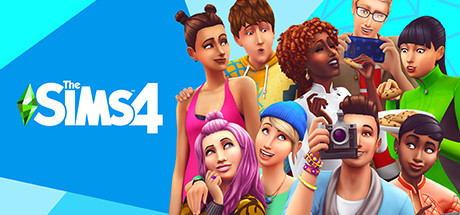
Even The Sims™ 4, flawed and dlc-fractured (63), resonates—not through its broken packs, but through its core promise: “Play with life and discover the possibilities.” The anime’s medieval world isn’t a backdrop; it’s a sandbox for intimacy. Watching a maid adjust her apron before offering tea, or a chuunibyou lowering her dramatic pose to ask if he slept well—that’s Sims-level granularity made magical. The player review complains the base game is “no fun without dlc,” but the anime is the dlc-free version: rich, warm, and deeply playable as-is, built on attention to gesture, tone, and the weight of a held hand in a crowded tavern.
This pairing isn’t for the lore-hound or the speedrunner. It’s for the person who replays the same ten seconds of a scene—not to analyze frame rate, but to watch how light catches a character’s eyelash when they blush. For the one who saves their game before a dialogue choice, not to optimize, but to savor the possibility of tenderness. For anyone who’s ever loved something so quietly, so stubbornly, that the most heroic thing they did all day was say “I like you”—and meant it, right there, in the middle of the mess.
🎮11 Games That Match the Vibe



Match Dimensions Explained
❓Frequently Asked Questions
Why is Burning Horns listed as similar to 'There was a Cute Girl in the Hero’s Party, so I Tried Confessing to Her'?
Because both lean hard into parodying isekai tropes while delivering genuine emotional beats—like when the protagonist in Burning Horns awkwardly confesses mid-battle only for his confession to get drowned out by a dragon’s roar (a scene fans call 'The Roar of Rejection'). It nails that same tonal whiplash: goofy, heartfelt, and unexpectedly poignant, just like the manga’s cafeteria confessions and party-member side-eye moments.
Is there an anime or game adaptation of 'There was a Cute Girl in the Hero’s Party, so I Tried Confessing to Her'?
No official anime or dedicated game adaptation exists yet—but Prince of Persia (2024) captures the *vibe* you’re after: a fresh, self-aware hero navigating romance amid absurd fantasy stakes. Think of how the new Prince stumbles through palace diplomacy with the same flustered charm as the manga’s protagonist trying (and failing) to hold hands during a boss fight cutscene.
How does Chains compare to 'There was a Cute Girl in the Hero’s Party...' in terms of pacing and mood?
Chains isn’t a narrative RPG—it’s a chill, physics-based match-3 game where clearing color chains feels like unwinding after a stressful party-scene meltdown. But its 'Healing & Slow Life' dimension mirrors the manga’s quieter moments: like when the heroine quietly shares tea with the MC post-battle, or when Chains’ gentle bubble-pop sounds and unhurried stages let you breathe like those cozy, low-stakes interludes between confessions.
What’s the best game like 'There was a Cute Girl...' if I want something cozy, romantic, and low-pressure?
Bandle Tale: A League of Legends Story—it’s got that warm, slice-of-life rhythm (think: helping Yuumi bake cookies while dodging Jinx’s pranks), plus gentle romance options and zero combat stress. The way it balances humor (like Teemo’s terrible poetry recitals) with sincere character growth feels like stepping into the manga’s most peaceful campfire scenes—no saving the world required, just good vibes and soft glances.