
Train to the End of the World
📺Anime Details
📝Editorial Analysis
The train doesn’t stop. Not for rain, not for silence, not for the way the sky bleeds violet at dusk over fields where no crops grow anymore—just tall grass whispering secrets in a language no one remembers. You’re sitting beside her, the girl with eyes that hold whole erased histories, watching dust motes hang suspended in the slanted light of a window that hasn’t been cleaned in decades. She hums a tune she claims is from before the world folded in on itself—but when you ask what it’s called, she blinks, smiles faintly, and says, “I think it’s just the sound the rails make when they forget their own name.” That moment—still, tender, aching—is Train to the End of the World.
This isn’t post-apocalypse as ruin porn or survival spectacle. It’s melancholic exploration: a slow unspooling of absence, where every abandoned station feels like a held breath, every rusted sign a half-remembered name. The comedy isn’t slapstick—it’s surreal, dry, born from characters leaning into the absurdity of carrying on despite cosmic erasure. You don’t feel dread here; you feel tenderness, a quiet reverence for the fragile, flickering continuity of small human things—tea poured carefully, a shared laugh that echoes too long in an empty car, the way memory isn’t lost but softened, blurred at the edges like old film. It makes you wonder: what remains when meaning dissolves? Not answers—but ritual, presence, the stubborn warmth of companionship moving forward, even if the destination is literally unnamed.
Prince of Persia shares that same healing pulse beneath its surface. Its description calls it “an all-new epic journey” built by Ubisoft Montreal—yet player reviews immediately anchor it in quiet reinvention: “a new prince, new lands and a brand new story completely separate from the sands…” That deliberate separation, that gentle severing from legacy, mirrors how Train to the End of the World treats memory—not as data to recover, but as atmosphere to inhabit. Both invite you into worlds where history is mist, not monument, and movement itself becomes ritual: running across crumbling arches, leaping between time-slicked stones, just as the train glides past landscapes that shift like half-dreams. The melancholic exploration dimension isn’t about finding ruins—it’s about feeling the weight of beauty that no longer has context, and choosing to move anyway.
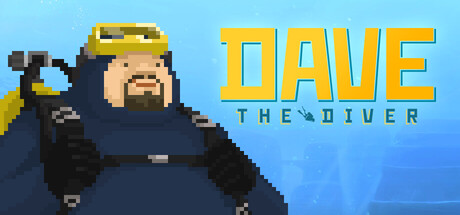
DAVE THE DIVER lands even closer in texture. Its listed dimensions—Healing & Slow Life, Melancholic Exploration, Survival & Crafting—are emotional coordinates that map perfectly onto the anime’s rhythm. Diving into the ocean’s blue hush, managing oxygen, trading fish for upgrades, tending a tiny restaurant at night… it’s all slow life as resistance, as care. Player reviews don’t mention combat stats or boss fights—they evoke immersion, routine, the soft satisfaction of small acts adding up. Like the anime’s girls repairing the train’s boiler with scavenged parts while swapping stories they’re not sure they lived, DAVE THE DIVER finds profundity in maintenance, in showing up, in the quiet labor of keeping something alive—not because it’s grand, but because it’s theirs. There’s no urgency to save the world; there’s only the next dive, the next meal, the next stretch of track humming underfoot.
And then there’s The Sims™ 4, whose description invites you to “play with life and discover the possibilities”—a phrase that sounds deceptively light until you read the player review complaining about broken DLC and “barely do[ing] a…” thing without paid content. That friction—between the game’s stated promise of boundless, gentle creation and the real-world exhaustion of sustaining it—is uncannily resonant. Train to the End of the World’s entire premise is a world where systems have frayed, where infrastructure persists but no longer serves its original logic—and yet, people still set tables, tell jokes, adjust curtains against the fading light. The Comedy & Parody dimension isn’t mockery; it’s love letter to the stubborn, slightly ridiculous persistence of domesticity amid collapse. You laugh because the train’s conductor insists on stamping tickets for stations that no longer exist—and that laughter feels warm, not hollow.
This pairing speaks to someone who carries quiet grief like a familiar coat—someone who finds solace not in fixing the unfixable, but in the precise angle of sunlight through a cracked window, the weight of a teacup in hand, the shared silence between friends who know some questions shouldn’t be answered. They’re the kind of person who replays a fishing minigame not for the catch, but for the way the water ripples. Who watches a train roll past empty fields and feels, unmistakably, held.
🎮25 Games That Match the Vibe















Match Dimensions Explained
❓Frequently Asked Questions
Why does Train to the End of the World feel so much like Prince of Persia despite having no platforming?
It’s all about that melancholic exploration vibe and quiet, healing pacing—both lean hard into atmospheric solitude and bittersweet discovery. Prince of Persia (2024) shares those same Healing & Slow Life + Melancholic Exploration dimensions, especially in its dreamlike desert ruins and introspective storytelling—no jumping required, just mood and meaning.
Is there a Train to the End of the World anime or game adaptation?
No official adaptation exists yet—but if you’re craving that same gentle, reflective energy, DAVE THE DIVER nails it with its underwater melancholy, daily rhythm of diving + running a sushi shop, and quiet character growth. It’s got the same Healing & Slow Life + Melancholic Exploration DNA, just swapped trains for submarines.
How is Bandle Tale different from The Sims 4 when both are 'slow life' games?
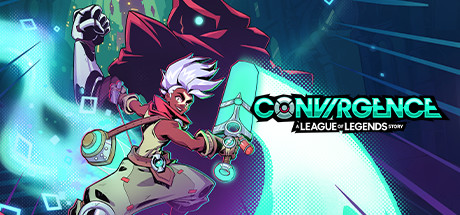
Bandle Tale leans into whimsical, story-driven Healing & Slow Life with League’s yordle characters and hand-painted exploration—think cozy quests and emotional beats in Bandle City. The Sims 4, while also Healing & Slow Life, layers in Comedy & Parody and Survival & Crafting via chaotic household management and mod-driven absurdity (like turning your Sim into a sentient toaster).
What’s the best game like Train to the End of the World if I want something soothing but with light survival elements?
Chains is surprisingly perfect—it’s a calming match-3 arcade game with physics-based bubble-linking, and it hits both Healing & Slow Life *and* Survival & Crafting. You’re not fighting monsters, but managing limited moves and chain-building strategy feels quietly urgent, like packing your train bag before departure—simple, tactile, and deeply chill.