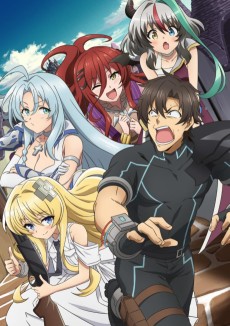
Combatants Will Be Dispatched!
Turns out, evil takes initiative! With world domination close at hand, the Kisaragi Corporation turns its sights on interstellar conquest, and who better to take over a magical world than two randomly assigned minions—Combatant Agent Six and his android partner Alice?
But Six’s path up the evil corporate ladder won’t be easy—a Demon Lord’s army is hatching its own nefarious plan!
(Source: Funimation)
📺Anime Details
📝Editorial Analysis
The fluorescent hum of Kisaragi Corporation’s war room—sterile white walls, holographic battle maps flickering with pixel-perfect troop deployments, and Combatant Agent Six standing motionless in a crisp black uniform while Alice, his android partner, quietly recalibrates her wrist-mounted plasma emitter without looking up—that’s the first breath of Combatants Will Be Dispatched! Not a spell-casting duel or a dramatic betrayal, but the absurd quiet before corporate evil goes interstellar. You feel it: the deadpan, the bureaucratic dread, the way “world domination” is treated like Q3 deliverables.

This isn’t grimdark satire or winking deconstruction—it’s tactical farce. The show makes you laugh while your brain registers the logistics: how many mana-regen clauses are in Six’s contract? What OSHA equivalent governs demon-lord labor disputes? It’s not parody of isekai—it’s parody as infrastructure, where magic systems run on quarterly reviews and harem dynamics are handled via HR-mandated rotation schedules. You don’t feel awe or dread—you feel recognition, that low-grade existential chuckle when your boss emails “synergy” at 2 a.m. The emotional core isn’t hope or despair. It’s resigned competence: Six doing his job so well he accidentally destabilizes evil hierarchies, Alice calculating optimal flirtation vectors like combat trajectories, all while the Demon Lord’s army files a formal grievance about supply-chain delays. It’s dry, precise, and weirdly tender in its commitment to process.
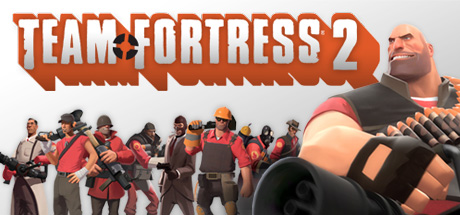
That same energy lives in Team Fortress 2, where nine wildly distinct classes don’t just fight—they perform roles with cartoonish gravity: the Heavy’s minigun spin-up is a ritual, the Spy’s disguise menu is a bureaucracy of deception, and every hat drop feels like a performance review reward. The player review nails it: chaotic, community-driven, deeply unserious—but also tactically dense, with maps designed around class synergies, flanking routes, and objective timing. Like Six and Alice, TF2 players don’t win by raw power—they win by knowing the system, then bending it just enough to make the enemy’s own protocols backfire.
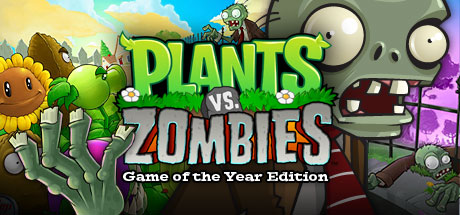
Then there’s Plants vs. Zombies GOTY Edition, where sun currency is your payroll, lawn rows are your deployment grid, and cherry bombs detonate with the cheerful finality of a terminated vendor contract. The description says it outright: “you’ll need to think fast”—not heroically, not emotionally, but logistically. That frantic, almost bureaucratic urgency—planting peas now because the zombie wave hits in 12 seconds, swapping in a squash for crowd control during peak rush hour—is pure Kisaragi ops tempo. And yes, the player review complains about bloat and AI missteps… but so does Six, muttering about Alice’s firmware update patch notes mid-battle.
Even Just Cause 2 shares that DNA—not through story, but physics-as-punchline. Its 400-square-mile sandbox doesn’t ask you to save the world despite chaos; it asks you to save it by weaponizing chaos: grapple-hooking a tank onto a radio tower, triggering a chain reaction of explosions that somehow aligns with your mission timer. The review calls it “a fun b-movie game with lots of stunts and explosions”—exactly how Combatants Will Be Dispatched! treats magical warfare: spectacle as procedure, mayhem as KPI. When Six deploys a containment field just as Alice triggers a localized gravity inversion, it’s not magic—it’s coordinated escalation, same as Rico yanking a helicopter into a dam breach.
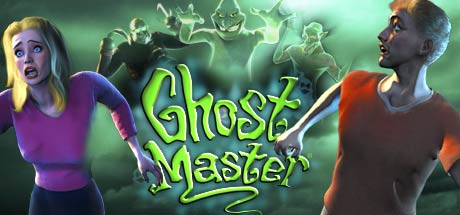
Who loves this? Not just fans of parody or isekai—but people who feel language as texture: the ones who highlight corporate jargon in novels, who name their Discord bots after middle-management titles, who find poetry in error logs and romance in perfectly timed cooldowns. They’re the players who pause Ghost Master® to admire how a banshee’s scream duration correlates with citizen panic thresholds—or the viewers who rewatch Six’s silent nod to Alice after she reroutes enemy comms exactly as scheduled. They don’t want catharsis. They want alignment: between absurd premise and meticulous execution, between laughter and laser focus, between evil empires and very good spreadsheets. That’s where the heart beats—not in the clash of swords, but in the click of a perfectly filed incident report.
🎮15 Games That Match the Vibe

Match Dimensions Explained
❓Frequently Asked Questions
Why does Combatants Will Be Dispatched! feel so similar to Team Fortress 2?
It’s all in the tone and timing—both lean hard into over-the-top parody of military tropes while letting characters like TF2’s Heavy (with his 'MEAT GRINDER' taunt) or Scout (yelling 'LEEEEEEROY JENKINS!') bounce off absurd, high-stakes chaos just like Combatants’ Yuki and Shunji do during their 'mission briefing gone wrong' cutscenes. The shared Comedy & Parody + Tactical Warfare dimensions mean they prioritize personality-driven mayhem over realism—think rocket-jumping past a burning sentry gun vs. Yuki accidentally deploying a smoke grenade *inside* the briefing room.
Is there an anime or manga adaptation of Ghost Master®?
Nope—Ghost Master® is purely a cult-classic PC game from 2003, with zero anime or manga spin-offs. But if you love its vibe—commanding gremlins to sabotage Gravenville’s mayor while banshees shriek from the clock tower—you’ll recognize that same gleefully mischievous energy in Combatants’ ghost-hunting gags, especially when Shunji tries (and fails) to summon a proper spirit only to get ambushed by a giggling poltergeist who steals his lunchbox.
How does Just Cause 2 compare to Armed and Dangerous® in terms of chaotic action?
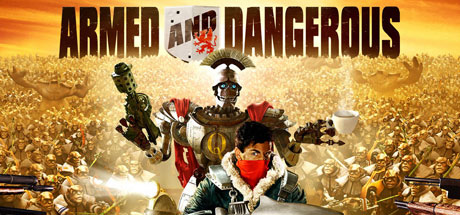
Both are gloriously unhinged, but in different ways: Just Cause 2 gives you 400 square miles to grapple onto tanks, trigger explosive chain reactions across jungle canyons, and ride a flaming biplane into a dam—pure physics-driven B-movie spectacle. Armed and Dangerous®, meanwhile, leans into scripted slapstick: imagine the Lionhearts getting flattened by a Goliath robot, then popping back up with cartoon stars spinning overhead before yelling 'WE’RE NOT DEAD—JUST TEMPORARILY FLATTENED!' It’s less open-world mayhem, more Monty Python meets Terminator.
What’s the best game like Combatants Will Be Dispatched! if I want something silly but strategic?
Plants vs. Zombies GOTY Edition is your sweet spot—its zombie waves force real tactical thinking (peashooters on the lawn, cherry bombs for crowds, sun economy management), but it’s wrapped in pure absurdity: a disco-dancing zombie, a zombie wearing a traffic cone like a helmet, and the iconic 'ZOMBIE ON LAWN!' alert that sounds exactly like Combatants’ panicked radio chatter. That perfect blend of Comedy & Parody + Tactical Warfare means you’re strategizing *while* snorting at a zombie trying to eat your sunflower’s face off.