
Daily Lives of High School Boys
Tadakuni, Hidenori, and Yoshitake are students at the all-boys academy, Sanada North High School. This is a tale about just that—their daily lives as students. Winning the basketball tournament? Finding true love? You won't find any of that here. Whether it's sparking random arguments while hanging out with friends, meeting that one weird co-worker at a part-time job, or even letting imaginations run wild on a windy afternoon, we've all experienced the show's ordinary but true-to-life themes at one point or another.
(Source: NIS America)
📺Anime Details
📝Editorial Analysis
The wind lifts a loose sheet of notebook paper off Tadakuni’s desk—just as he’s trying, with intense, unironic concentration, to fold it into a perfect crane. Hidenori leans in, squinting. “That’s not a crane,” he declares. Yoshitake, already halfway out the door, pauses, turns, and says, without breaking stride: “It’s a very committed origami pigeon.” No punchline lands. No lesson follows. The bell rings. The paper floats sideways into the hallway. And just like that—the moment dissolves, unremarkable, unrepeatable, utterly true.

That’s the quiet gravity of Daily Lives of High School Boys: not the weight of destiny or drama, but the soft, persistent pressure of being here, right now, in this sunlit, slightly dusty, hormonally confused, gloriously uneventful stretch of time. It doesn’t simulate adolescence—it inhabits it. You don’t watch it for escalation; you watch it for recognition—the flicker of déjà vu when Hidenori misreads a sign, or when the boys spend six minutes debating whether a vending machine counts as “public infrastructure.” There’s no arc, no climax, no resolution—just the gentle, rhythmic thrum of small minds bumping against small realities. It makes you feel seen, not because it’s profound, but because it refuses to inflate what’s ordinary into something grand. It’s melancholic exploration disguised as slapstick—wistful not for what’s lost, but for how vividly, how tenderly, the mundane can glow when nobody’s filming it for posterity.
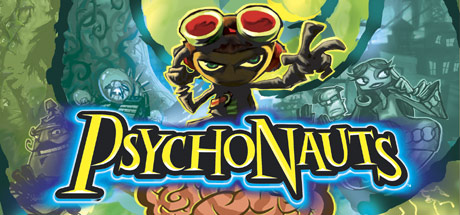
That same emotional DNA pulses through Psychonauts, where a young psychic navigates the cluttered, illogical, deeply personal interiors of other people’s minds—not as battlefields or puzzles, but as lived-in emotional geographies. The description calls it “A Psychic Odyssey Through the Minds of Misfits, Monsters, and Madmen”—and yes, there are platforming challenges and surreal set-pieces, but the heart is in the texture: the way a bully’s mind manifests as a rigid, over-polished gymnasium, or a teacher’s as a collapsing chalkboard labyrinth. Like Sanada North High, it treats interior life as messy, associative, absurd—and worthy of attention precisely because it’s unpolished. A player review notes its capacity for “in-depth milking of certain highly creamy men, his utters are beautifully rendered…”—a bizarre, oddly affectionate line that mirrors the anime’s own tone: reverent toward the ridiculous, tender toward the trivial.
Then there’s Bully: Scholarship Edition, which—despite its title—shares Daily Lives of High School Boys’ commitment to adolescent texture over plot. Its description frames Jimmy Hopkins’ story as “the hilarity and awkwardness of adolescence,” and the player review nails its spirit: “Beat the jocks at dodge ball, play pranks on the preppies, save the nerds.” No world-ending stakes—just the granular social choreography of school life: detention slips, cafeteria hierarchies, ill-advised dares, and the quiet thrill of slipping past a teacher’s line of sight. Both works understand that power in this space isn’t heroic—it’s knowing which hallway shortcut avoids Mr. O’Reilly, or how long you can hold eye contact before laughing. It’s slapstick rooted in real social physics.
Even Garry's Mod, described bluntly as “a physics sandbox” with “no predefined aims or goals,” resonates—not through narrative, but through permission. Like the anime’s episodic drift, it offers tools, not direction. You spawn a rubber duck, weld it to a shopping cart, launch it off a ramp made of stacked textbooks, and watch it spin, wobble, and collapse in slow motion. There’s no win state. Just cause-and-effect, curiosity, and the low-stakes joy of seeing what happens. That’s the emotional core: the freedom to be unproductive, to follow a thought down a hallway until it evaporates—exactly as Tadakuni does when he stares at a ceiling fan for 47 seconds, then asks, “Do you think fans dream of being propellers?”
Who loves this? Not the seeker of catharsis or spectacle—but the person who still remembers the weight of a backpack strap digging into their shoulder on a Tuesday in April; who smiles when a game lets them tilt a teacup just to watch the liquid swirl; who finds poetry in the way light hits a locker door at 3:15 p.m. They’re the ones who rewatch the episode where the boys try to build a catapult out of binder clips—not for the launch, but for the debate about leverage ratios, delivered with absolute sincerity. They love melancholy, not as sadness, but as presence. They love slapstick, not as noise, but as honesty. And they love games that, like Sanada North High, don’t ask you to become someone else—just to be here, for a little while longer, folding paper pigeons in the breeze.
🎮17 Games That Match the Vibe













Match Dimensions Explained
❓Frequently Asked Questions
Why does Bully: Scholarship Edition match Daily Lives of High School Boys so well?
Because both nail the awkward, absurd rhythm of teenage life—Jimmy Hopkins dodging jocks in Bullworth Academy feels just like Takahashi and his friends fumbling through class pranks or cafeteria disasters. The game’s tone balances slapstick (pranking preppies with stink bombs) with quiet melancholic moments (Jimmy sitting alone on the bleachers after a fight), mirroring the anime’s signature blend of comedy and bittersweet reflection.
Is there a Daily Lives of High School Boys video game adaptation?
No official adaptation exists—but Bully: Scholarship Edition is the closest spiritual cousin, capturing that same high school social ecosystem with its cliques, detention slips, and cringe-funny social navigation. Players even unlock side activities like dodgeball tournaments and lunchroom mischief that echo specific anime episodes, like the infamous 'milk carton prank' arc.
How does Psychonauts compare to Bully for high-school-vibe comedy?
Bully grounds its humor in real-world teen dynamics—hallway hierarchies, cafeteria politics, teacher-student power struggles—while Psychonauts goes surreal, exploring neuroses via literal mindscapes (like Raz’s dad’s ‘Dad’s Diner’ level, where guilt manifests as endless coffee refills). Both score 65 and share Comedy & Parody + Melancholic Exploration, but Bully’s setting and character archetypes (jocks, nerds, bullies) map way more directly to Daily Lives’ world.
What’s the best game like Daily Lives of High School Boys if I want something nostalgic, low-stakes, and full of dumb teenage energy?
Bully: Scholarship Edition is your perfect match—it’s got that warm, slightly grainy early-2000s vibe, zero life-or-death stakes, and pure dumb fun: launching flaming trashcans at teachers, skateboarding down stair railings, or getting grounded for spray-painting the principal’s car. Even the player review mentions how smoothly it runs on Steam Deck—like flipping open a well-worn manga volume.