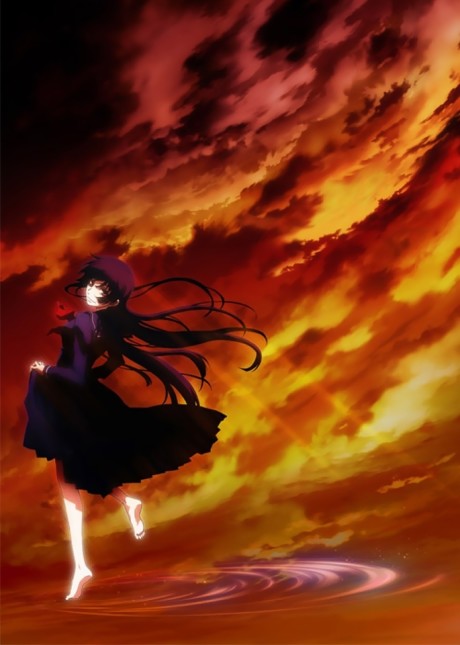
Dusk Maiden of Amnesia
60 years ago, a young woman was left to die in the abandoned school building behind the exclusive Seikyou Academy. No one knows why. No one knows how. But the horrifying tale and the legends of the ghostly haunting that followed live on to this day. Perhaps it's not so surprising then, that among Seikyou's many school clubs is one for students interested in "paranormal investigations." What might raise more than a few hairs, however, is that the founder of the club is the ghost herself. Unable to remember how she died and trapped in the grey land between life and death, Yuuko latches onto Teiichi Niiya, a freshman who can inexplicably see her, and together they and the other unsuspecting members of the club begin to unravel the many dark mysteries that surround Seikyou. Will unlocking the secret of Yuuko's gruesome death finally free her? Or will her sudden close association with a mortal have even stranger repercussions on both of their existences?
(Source: Sentai Filmworks)
📺Anime Details
📝Editorial Analysis
The air in the abandoned school building behind Seikyou Academy doesn’t just smell of dust and damp plaster—it holds its breath. You feel it when Yuu first pushes open that warped door, flashlight beam trembling across peeling wallpaper, and there she is: Tei, translucent, barefoot, her hair drifting like ink in water—not threatening, not even fully present—just waiting, hollowed out by sixty years of unanswered questions. Her voice doesn’t echo; it settles, like ash falling onto cold stone.
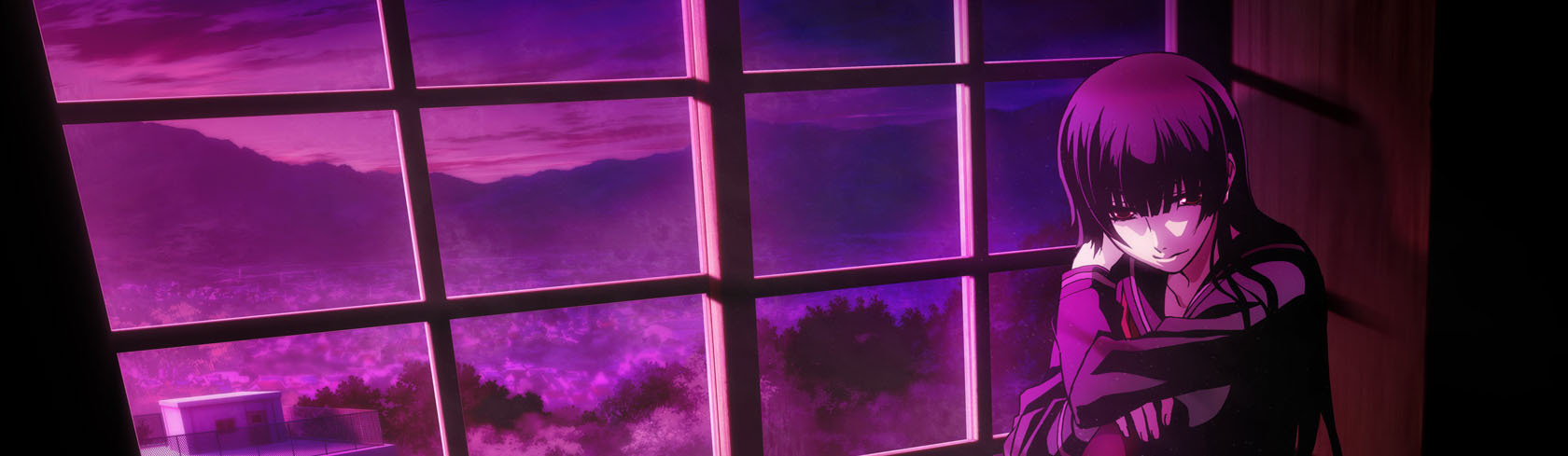
That’s the core feeling of Dusk Maiden of Amnesia: not fear of the jump-scare, but the weight of unresolved grief—the quiet, suffocating pressure of a life cut off mid-thought, mid-sentence, mid-love. It’s not about ghosts as monsters, but as unfinished sentences. The school isn’t haunted by malice—it’s haunted by silence so thick you taste it. Every hallway hums with absence. Every flicker of candlelight in the Paranormal Investigation Club room feels like a fragile pact against erasure. This isn’t horror that shouts—it whispers your name backward, makes you wonder what parts of yourself you’ve buried so deep they’ve started to forget how to speak.
Three games resonate with that same emotional gravity—not because they’re about ghosts, but because they orbit the same unbearable stillness at the center of trauma. Disco Elysium - The Final Cut shares its DNA in the way memory fractures under pressure: a detective unmoored from his own past, sifting through shards of identity while the city itself seems to exhale decay and regret. The player review nails it—“Capital has the ability to subsume all critiques into itself”—mirroring Tei’s entrapment: no matter how many times Yuu digs, the system (the school, the hierarchy, the unspoken rules) absorbs every revelation without yielding truth. Both works make you feel the futility of investigation when the crime isn’t just murder—it’s erasure, and the investigator is half-ghost too.
Then there’s Condemned: Criminal Origins, where the mystery isn’t “who did it?” but “what does it do to a person to become this?” Its description asks: What twists the mind of an ordinary human into a serial killer? That question vibrates alongside Tei’s tragedy—not as moral judgment, but as clinical, chilling empathy. The player review calls it a “gem,” insisting you “find a way” to play it—just as Dusk Maiden of Amnesia compels you to sit with Tei’s pain, not to solve it, but to witness its texture. Both reject catharsis. They linger in the muck of psychological rupture, where the horror isn’t blood on the floor—it’s the slow realization that the monster was never outside the door.
And Sherlock Holmes: The Awakened (2008)—with its blend of deduction and occult dread—mirrors the anime’s structural tension: logic versus the unspeakable. The game plunges Holmes into “a whole new dimension” of the original case, forcing him to confront forces that resist rational framing. Like Yuu poring over yearbooks and rusted lockers, Holmes pieces together clues that should add up—but keep folding back into paradox. The player review’s single-word “gg…” isn’t dismissal—it’s exhaustion, awe, the sound of someone who just stared into a void that looked back with grammar. That’s Tei’s smile when she says, “I don’t remember dying. I only remember waiting.”
This pairing isn’t for fans of jump scares or puzzle-box plots. It’s for the ones who rewatch the scene where Tei presses her palm against the classroom window—not to escape, but to feel the glass, to confirm she’s still tethered to something real. It’s for players who pause Disco Elysium mid-dialogue just to stare at a rain-slicked alley, wondering if their character’s amnesia is a flaw—or mercy. It’s for anyone who’s ever held a photograph of someone they loved, long gone, and felt the ache of their unfinished business settle into their bones—not as sorrow, but as responsibility. These stories don’t offer answers. They offer witnessing. And sometimes, in the hush between heartbeats, that’s the most human thing you can do.
🎮44 Games That Match the Vibe















Match Dimensions Explained
❓Frequently Asked Questions
Why does Condemned: Criminal Origins keep coming up in Dusk Maiden of Amnesia recommendations?
Because both dive deep into psychological unraveling and occult-tinged body horror—like when Yuu confronts the decaying, whispering spirits in the school basement, Condemned makes you feel that same dread crawling under your skin as you explore blood-smeared asylum corridors and face off against twitching, malformed killers. The game’s oppressive atmosphere, lack of HUD, and visceral melee combat mirror Amnesia’s slow-burn tension and themes of fractured identity.
Is there an anime or visual novel adaptation of Disco Elysium like Dusk Maiden of Amnesia has?
No—Disco Elysium has no anime or visual novel adaptation (and none announced), unlike Dusk Maiden, which originated as a light novel and got a full anime series. Disco Elysium stays firmly in its RPG lane: it’s all about internal monologues from your own broken detective—think Harry DuBois muttering existential rants while examining a corpse in Martinaise’s rain-soaked alleys—not scripted romance routes or school festival cutscenes.
How does Sherlock Holmes: The Awakened (2008) compare to Dusk Maiden of Amnesia in terms of occult mystery pacing?
Both lean hard into Lovecraftian dread and fragmented revelations—but where Dusk Maiden unfolds its secrets through intimate, emotionally charged flashbacks with characters like Miura and Yuu, The Awakened drops you straight into eldritch chaos: investigating cult rituals in Arkham’s fog-choked streets, finding torn pages of the Necronomicon, and watching Holmes’ sanity visibly fray during hallucinatory sequences. It’s less ‘slow-burn romance with ghosts’ and more ‘investigate before the world unravels.’
What’s the best game like Dusk Maiden of Amnesia if I want that melancholy, rainy-school-at-dusk mood with emotional weight?
Disco Elysium — The Final Cut nails that exact vibe: think walking alone through the misty, crumbling districts of Revachol at twilight, hearing your own Skills argue in your head like Yuu’s inner voices, or having quiet, devastating conversations with NPCs who carry grief like worn coats—like the scene where Kim Kitsuragi quietly shares his regrets on the wharf. It’s not supernatural romance, but it’s just as haunting, poetic, and soaked in emotional gravity.