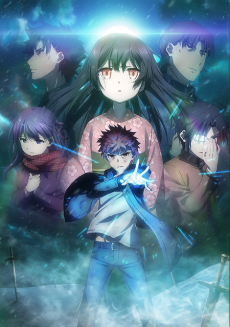
Fate/kaleid liner Prisma☆Illya: Vow in the Snow
Despite his adoptive father's warnings that the girl found in the remnants of a destroyed city is too dangerous to be considered anything other than a tool or weapon, Shirou Emiya comes to treat Miyu as a younger sister. But when Shirou relaxes his guard and Miyu starts normal school, the Ainsworth family and their agents swoop in, kidnapping the girl with the goal of sacrificing her! Faced with the realization that Miyu's ability to do good will always be equaled by her capacity for destruction, Shirou must attempt to both rescue his adopted sister, and decide how to confront the threat that her powers will always pose.
(Source: Sentai Filmworks)
📺Anime Details
📝Editorial Analysis
The snow doesn’t fall—it shatters. Not gently, not quietly, but in jagged, crystalline fragments as Shirou Emiya’s arm breaks mid-swing, bone snapping under the recoil of his own reinforced fist. He’s already bleeding from the mouth, ribs cracked, vision swimming—but he keeps stepping forward, each footfall crunching frozen ash into the ground where Miyu once stood smiling at a school gate. That image—her backpack strap slipping off one shoulder, sunlight catching the edge of her hair—is still burning behind his eyelids even as he staggers into the Ainsworths’ collapsing ritual chamber, knowing full well that every second he buys is measured in her pain, not his survival.
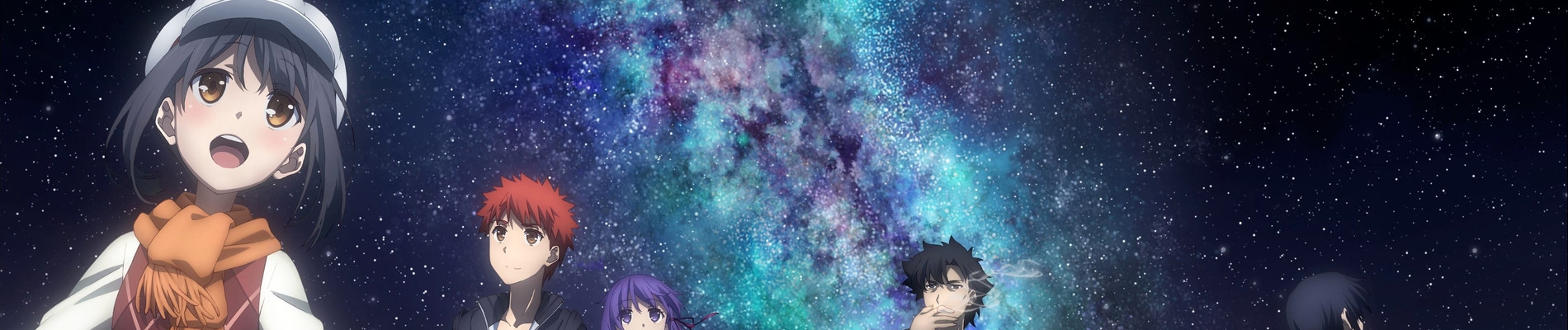
This isn’t just tragedy dressed in magic and swords. It’s the suffocating weight of irreversible choice: the moment Shirou stops calculating odds and starts measuring love against annihilation. The atmosphere isn’t dark because of blood or ruins—it’s dark because of silence after sacrifice, the hollow echo where a future used to hum. You don’t feel heroic here. You feel responsible. Haunted. Like every kind act you’ve ever made might secretly contain the seed of something ruinous—and yet, you do it anyway. That’s the core: Fate/kaleid liner Prisma☆Illya: Vow in the Snow makes you ache with the quiet, grinding certainty that good intentions are never enough, and that some bonds demand you break yourself before you let them break.
That same visceral, unrelenting pressure pulses through Quake III Arena, where warriors aren’t chosen for virtue—they’re summoned, stripped of context, and hurled into arenas built for spectacle, not salvation. The description says they fight “for the amusement of an ancient alien race”—a chilling mirror to how Miyu is treated: not as a person, but as a variable in someone else’s grand, indifferent design. And the player review? “Exelent game, just smush in ioquake3 and your good to go.” That offhand, almost weary pragmatism—just smush it in, keep going—echoes Shirou’s exhaustion: no time for ceremony, no room for doubt, just move, fight, endure, even when the rules were written without your consent.
Then there’s DOOM + DOOM II, whose description frames hell as a literal, breathing entity—“blood-thirsty orcs & lumbering ogres… destroy undead”—but the real resonance lives in the player’s memory: “This game was the reason my dad and I built our first computer.” Not lore. Not mechanics. A shared act of creation, forged in basement light and solder smoke—exactly like Shirou building Miyu’s normal life, brick by fragile brick: school lunches, homework help, the quiet pride in her first A grade. Both are about love expressed through making space, however temporary, inside a system designed to erase it. The horror isn’t just the demons—it’s how tenderly you protect what little warmth you’ve managed to kindle between them.
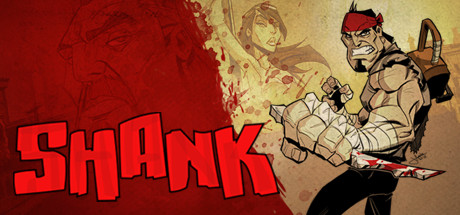
And Shank, with its grindhouse violence and “over-the-top” chaos, lands differently—not in tone, but in rhythm. Its description calls it a “cult-classic revival of the sidescrolling beat-em-up,” packed with “enemies, bosses, combos, and more.” But read the player review again: “I must have rose tinted glasses back then because I enjoy this in the past.” That wistfulness—the bittersweet ache of remembering intensity you can’t quite recapture—is Shirou’s entire emotional arc. He doesn’t get catharsis. He gets memory: Miyu’s laugh, the smell of burnt toast on a Saturday morning, the way she’d tug his sleeve before crossing the street. All of it preserved in amber, sharp and bright, precisely because it’s gone. Shank’s raw, stylized fury mirrors how grief doesn’t always scream—it sometimes dances, violently, beautifully, just to prove it still remembers how to move.
These pairings won’t comfort the casual viewer. They’ll grip the one who watches Shirou’s final breath and doesn’t look away—they’ll recognize themselves in the player who still hosts Quake servers at 2 a.m., the one who rebuilt their childhood PC just to hear that Sound Blaster crackle again, the one who replays Shank not for the combos, but for the way the music swells right before the last boss, like a promise you know you’ll break. They’re for people who understand that love and destruction wear the same boots, and that the most devastating battles aren’t fought with swords or shotguns—but with the unbearable, beautiful weight of choosing her, again and again, even when the snow is already falling upward, pulling everything back into silence.
🎮19 Games That Match the Vibe


Match Dimensions Explained
❓Frequently Asked Questions
Why does Quake III Arena show up in 'Games Like Fate/kaleid liner Prisma☆Illya: Vow in the Snow'?
It’s not about the magic girls or tsundere banter — it’s about that same high-octane, no-holds-barred Action Spectacle energy. Think Illya’s frantic Kaleidostick duels against Shirou in the snow-covered climax, but swapped for rocket-jumping across Q3A’s chaotic arenas while dodging plasma bolts and quad damage power-ups. Both lean hard into stylized, fast-paced combat where timing and spatial awareness trump narrative pauses.
Is there a Fate/kaleid liner Prisma☆Illya visual novel or RPG adaptation?
No — there’s no official visual novel or turn-based RPG based on *Vow in the Snow*. The closest tonal matches from the list are *Sacred Gold* (for its dark fantasy stakes and party-driven dungeon crawling) and *Jedi Academy*, which shares that ‘young hero stepping into a legacy of war’ vibe — like Shirou inheriting Kiritsugu’s ideals and fighting through snowbound ruins with borrowed magecraft. But neither is an adaptation; they’re just mood-aligned action spectacles.
How does Shank compare to DOOM + DOOM II for someone who loves Illya’s over-the-top fight choreography?
Shank’s sidescrolling brutality — think Illya’s kaleidoscopic sword combos against Kuro — feels more like a hyper-stylized, grindhouse cousin to DOOM’s arena chaos. DOOM throws you into wide, open demon pits with shotgun blasts and glory kills; Shank locks you in tight corridors with chainsaw dismembers and parry-based counter strings. Both deliver that same visceral, rhythmic violence — just one’s 2D and dripping with neon blood, the other’s 3D and drenched in hellfire.
What’s the best game from this list if I want something that captures the tragic, snow-blanketed intensity of *Vow in the Snow*’s final battle?
Go with *DOOM + DOOM II* — especially the newly enhanced version. That moment when Shirou stands alone in the blizzard, facing overwhelming odds with fraying resolve? It mirrors DOOM’s lone marine pushing through hellscape after hellscape, backed only by raw will and a shotgun. The oppressive atmosphere, the weight of legacy, and the sheer physicality of survival — all hit that same adult & dark seinen nerve as Illya’s frozen climax.